In our solar system, the axial tilt of planets varies significantly, shaping the seasons we experience. For instance, Earth's tilt is approximately 23 degrees, while Mars has a tilt exceeding 25 degrees. Among the more extreme cases, Uranus lies nearly on its side, and Venus rotates upside down. However, Neptune's tilt of 28 degrees presents a different narrative, as recent research suggests it may be attributed to its moon, Triton, rather than a catastrophic collision.
Triton: A Unique Moon
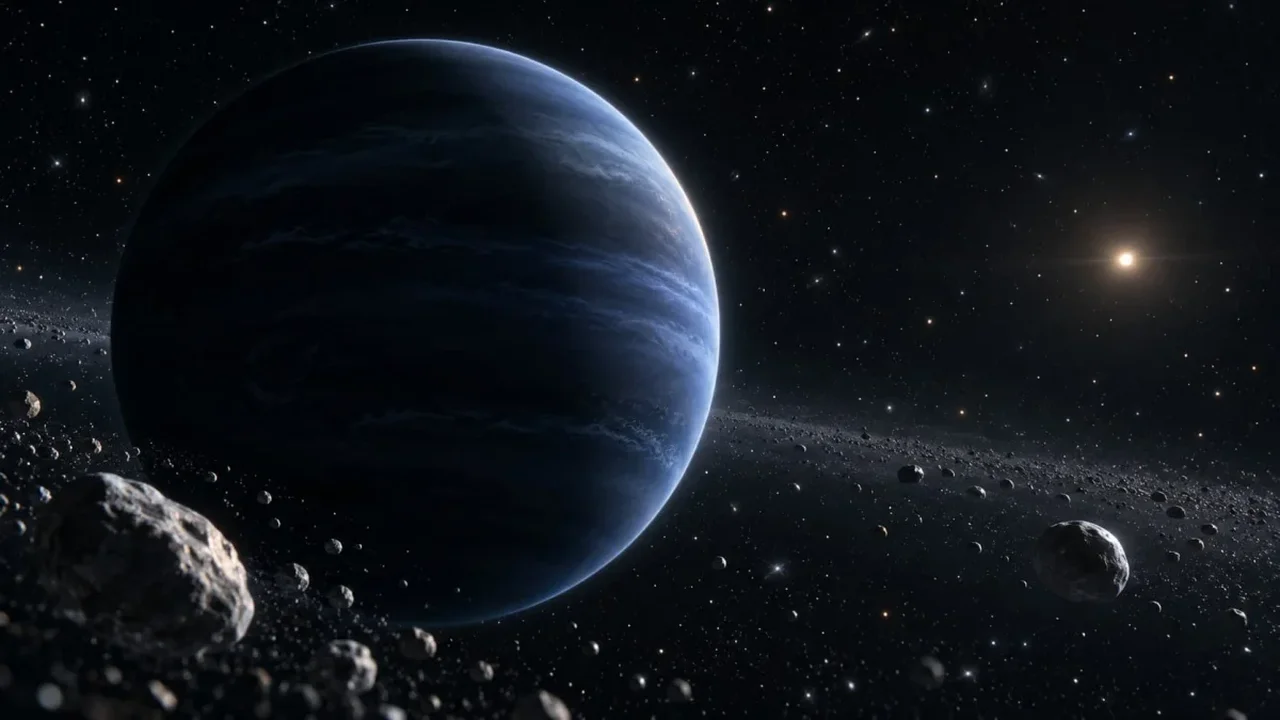
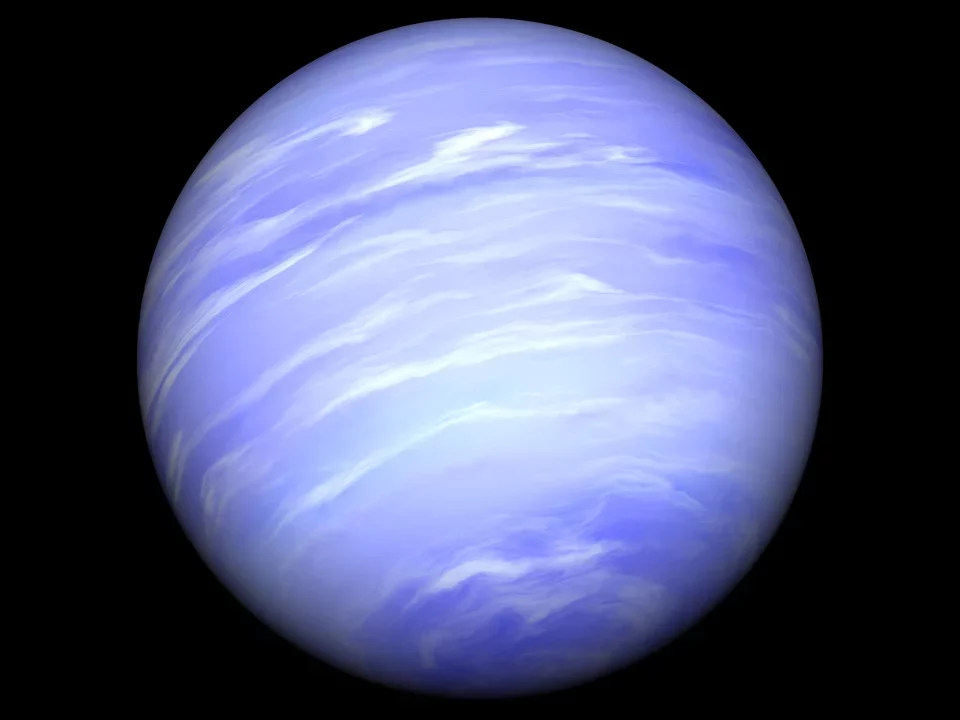
Neptune, the most distant planet from the Sun, is a massive sphere of ice and gas, situated nearly three billion miles away. Despite its isolation, Triton, Neptune's moon, adds an intriguing aspect to its dynamics. Unlike most large moons, Triton orbits Neptune in a retrograde manner, indicating it was likely captured by Neptune's gravity from the Kuiper Belt, rather than forming alongside it.
According to Rodney Gomes from São Paulo State University, Triton's initial capture resulted in an elongated orbit and a tilt that influenced Neptune's axial position. Gomes developed a sophisticated model that incorporated the gravitational effects of the Sun and other giant planets, revealing that as Triton's orbit became more circular, it created a resonance that affected Neptune's tilt.
Understanding Secular Spin-Orbit Resonance
Secular resonance occurs over extended periods, aligning the wobble of a planet's axis with fundamental frequencies of the Solar System. This phenomenon can be likened to a swing being pushed at just the right rhythm to amplify its motion. In Neptune's case, Triton's gravitational influence serves as that rhythmic push, resulting in a significant tilt.
Gomes' simulations indicated that in about one-third of scenarios, Neptune achieved a tilt exceeding 20 degrees, with some instances pushing it beyond 50 degrees. The observed tilt of 28 degrees aligns well with these models, suggesting a stable equilibrium shaped by Triton's gradual orbital evolution.
Implications of This Discovery
This finding not only clarifies the mystery of Neptune's tilt but also prompts a reevaluation of our understanding of planetary evolution in the Solar System and beyond. Gomes' research indicates that the axial tilts of ice giants may not necessarily stem from violent impacts.
Furthermore, this study could reshape our comprehension of planetary formation processes. The theory of "pebble accretion," which posits that planets grow by capturing smaller particles rather than through catastrophic collisions, has struggled to explain axial tilts. Gomes' insights may bridge this gap, suggesting that moons like Triton could play a crucial role in the tilting of planets.
Ultimately, this research hints at the possibility that tilted planets may be more common throughout the galaxy, as any exoplanet with a large, captured moon could similarly exhibit significant axial tilts.