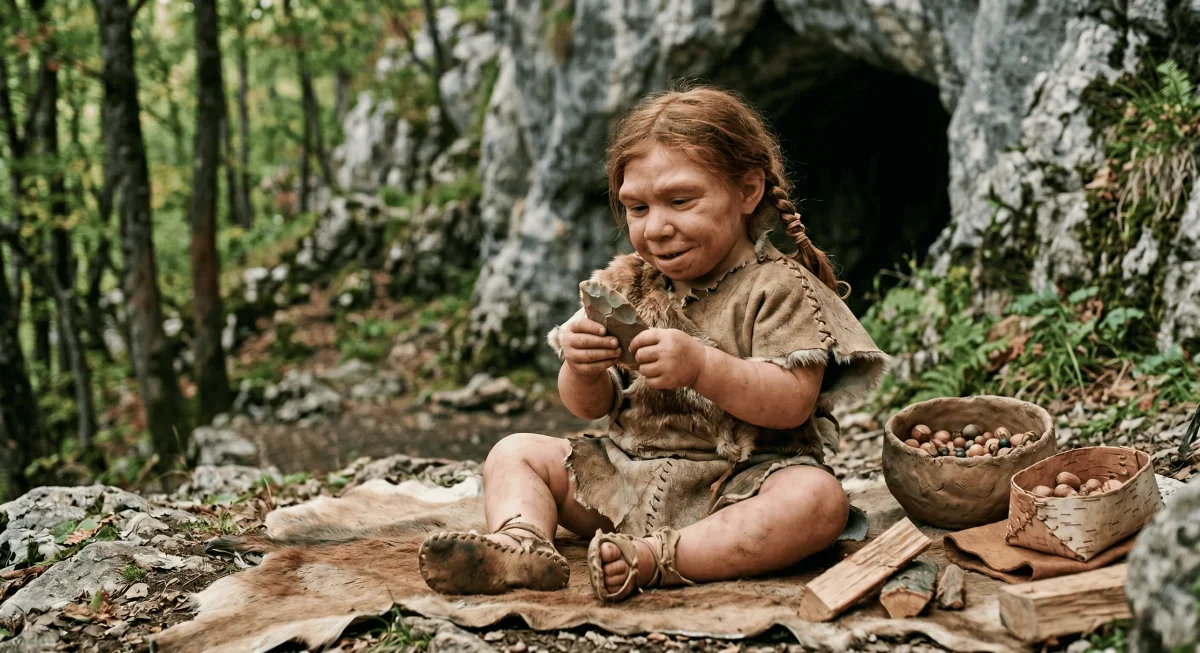
A remarkably preserved Neanderthal infant from an Israeli cave is offering a fresh look at how our ancient relatives developed. The skeleton, known as Amud 7, was about six months old, yet its body and brain were already comparable to those of a modern human child closer to one year old.
What the bones revealed
Researchers reconstructed the 111 bone fragments recovered from the cave floor and found clear Neanderthal traits at an unusually early age: sturdy bones, a large braincase, no chin, and limb proportions that suggest a fast-paced growth pattern. Teeth and microscopic enamel lines helped determine the infant's age, while the long bones pointed to a much more advanced skeletal stage.
The study suggests that Neanderthal children developed faster than Homo sapiens in the earliest years of life. By modern human standards, Amud 7's limb structure resembled that of a toddler, while the brain volume was estimated at nearly 880 cubic centimeters.
A strategy shaped by environment
Scientists say this accelerated development may have helped Neanderthals adapt to Ice Age conditions across Eurasia. Growing quickly could have supported earlier physical independence and better heat retention in demanding climates. At the same time, this pace likely required a high-energy diet and strong caregiving networks.
Evidence from other Neanderthal children, including finds from Syria and France, points to the same pattern. The research also suggests that solid foods were introduced at around five to six months, similar to modern humans, highlighting a shared biological rhythm despite different growth timelines.
The findings, published in Current Biology, add a new layer to the story of human evolution. They show that Neanderthals followed a distinct developmental path, one that may help scientists better understand how biology and environment shape childhood across species--and how future discoveries could refine our view of human origins.