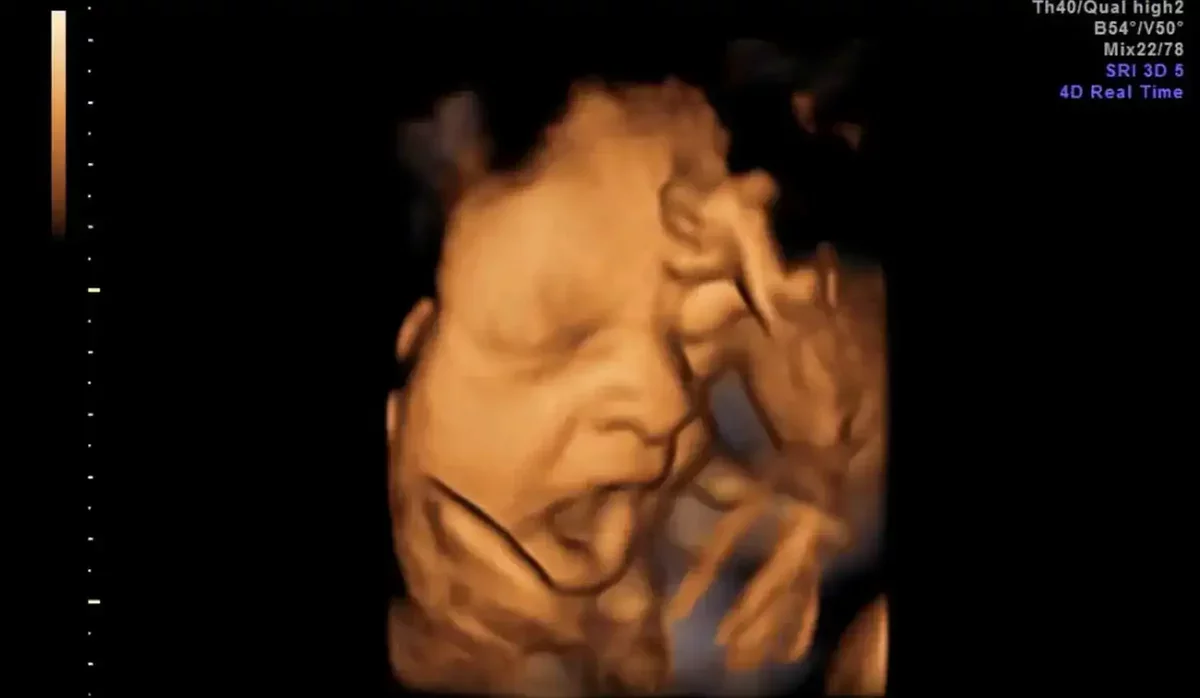
The womb, often perceived as an isolated haven for developing life, is proving to be a more interactive space than previously thought. A recent study indicates that fetuses may yawn in response to their mothers, suggesting a remarkable connection that transcends mere biological separation.
Yawning, a behavior known for its contagious nature among humans, has typically been viewed as a social phenomenon. However, researchers have found that when pregnant women yawn, their fetuses frequently mirror this action shortly thereafter. This phenomenon hints at a profound physiological interaction rather than a visual imitation.
A Shared Experience Before Birth
Research has shown that fetuses can yawn as early as the first trimester. Observations using 4D ultrasound technology reveal that fetal yawning follows distinct patterns, decreasing in frequency as the pregnancy progresses. This behavior may play a role in early brain and motor development.
To explore the connection between maternal and fetal yawning, Giulia D'Adamo and her team from the University of Parma studied 36 pregnant women, aged 28 to 32 weeks. Participants viewed videos designed to evoke yawning while their facial movements and fetal responses were recorded through ultrasound.
Reflexes in Rhythm
The results were compelling: nearly two-thirds of mothers yawned during the yawning videos, while over half of the fetuses responded similarly. In contrast, both mothers and fetuses exhibited significantly fewer yawns during control videos, indicating a clear link between the two.
This study challenges the notion that fetal behavior is solely reflexive. Instead, it suggests that fetuses are attuned to their mothers' physiological changes, such as alterations in breathing and abdominal pressure caused by yawning. These shifts create a shared biological environment that fosters this synchronized behavior.
The Implications of Fetal Yawning
While the findings do not imply that fetuses possess empathy or social awareness, the statistical correlation between maternal and fetal yawns is striking. Machine-learning models further supported these observations by recognizing patterns in yawning movements, indicating a potential shared motor signature that extends from prenatal development into postnatal life.
Although the study's sample size was limited and focused on a narrow gestational period, it contributes to the understanding of the womb as an active and responsive environment. Fetuses are not merely passive; they can hear, taste, and respond to stimuli, enriching our comprehension of prenatal life.
Published in the journal Current Biology, this research opens new avenues for exploring the intricate connections between mothers and their unborn children, highlighting the potential for further studies that may reveal even more about the early stages of human development.