A groundbreaking study led by Slava Turyshev, a physicist at NASA's Jet Propulsion Laboratory, delves into the intriguing possibility of a "fifth force" of nature that could be concealed within our solar system. This research highlights the necessity for precise and selective experimental designs to uncover potential signs of dark energy and dark matter in our immediate cosmic vicinity.
The "Great Disconnect" in Physics
The central challenge arises from what scientists refer to as the "Great Disconnect." The laws governing physics appear to vary based on the scale of observation. In areas with minimal matter, effects associated with dark energy and modified gravity become significantly more pronounced. Conversely, in regions with dense matter and strong gravitational forces, these effects seem to diminish, at least according to current observational tools.
Within our solar system, conventional physics holds true. Celestial bodies follow predictable orbits, and measurements of spacetime around the Sun align perfectly with theoretical predictions. Spacecraft traversing the solar system exhibit behavior consistent with standard gravity, lacking any overt indications of anomalies.
Galactic Evidence of Expansion
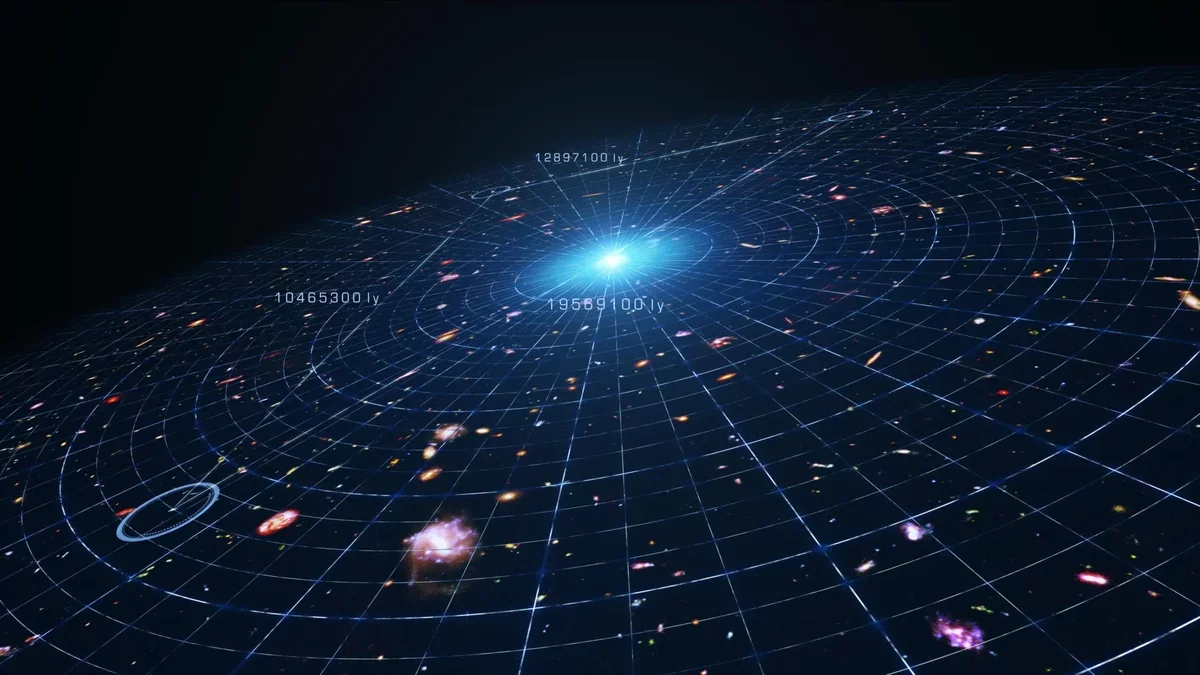
However, the narrative shifts dramatically when we examine the cosmos beyond our local environment. On a galactic scale, the Universe is undergoing expansion. While the precise rate of this expansion is still debated, compelling evidence suggests that there are influences on gravity and spacetime that current theories do not fully account for.
Currently, dark energy is the leading explanation for these phenomena, despite its elusive nature.
Screening Effects and the Potential "Fifth Force"
One proposed explanation is a phenomenon termed "screening." This concept posits that the cause of the observed discrepancies may change its behavior based on the surrounding environment. As density increases, its effects could become less pronounced or harder to identify.
There are two primary screening models. The first, the "chameleon" model, suggests that this hypothetical fifth force adjusts its strength depending on nearby matter. In low-density regions, it manifests strongly, producing effects linked to dark energy. In denser areas, its influence diminishes to the point where current instruments fail to detect it, even though it remains present.
The second model, known as Vainshtein screening, proposes that the force itself does not weaken; rather, its impact is suppressed by surrounding gravity. This model introduces the Vainshtein Radius, the distance at which the force regains its full strength, estimated to extend around 400 light years from the Sun, encompassing numerous stars.
The Need for Targeted Solar System Missions
Both screening models could leave subtle traces detectable by large-scale missions like Euclid and The Dark Energy Spectroscopic Instrument (DESI). However, these surveys primarily focus on distant galaxies, making it challenging to observe how such forces operate within our solar system.
To explore these concepts locally, dedicated missions tailored for this purpose are essential. Moreover, researchers require a falsifiable theory that outlines what these missions should aim to detect.
Importance of Testable Predictions
Dr. Turyshev underscores that without clear, testable predictions, further solar system experiments might not yield new insights. While observations have consistently validated general relativity, continuing similar endeavors without fresh theoretical frameworks may not be fruitful.
Nevertheless, if scientists can leverage data from extensive cosmological surveys to formulate precise hypotheses applicable to the solar system, it opens avenues for targeted experiments.
Future Instrumentation Development
Developing sensitive instruments capable of detecting these subtle effects may take time. Incremental advancements will be crucial, focusing on enhancing measurement capabilities gradually. If a well-defined, testable prediction arises from ongoing research, and if an experiment can be realistically constructed to test it, this pursuit could lead to a significant breakthrough, fundamentally altering our comprehension of gravity, dark energy, and the Universe's workings.