The Orion spacecraft has successfully completed a remarkable journey, covering 694,481 miles around the Moon before reentering Earth's atmosphere and landing in the Pacific Ocean near San Diego on April 10. During its reentry, Orion reached speeds nearly 35 times that of sound, relying on its robust thermal protection system to ensure the safety of both the crew and the vehicle.
Initial evaluations suggest that the heat shield functioned effectively, with no significant anomalies detected. Divers captured images shortly after splashdown, and subsequent inspections aboard the recovery ship revealed a notable reduction in the charring observed during the Artemis I mission. These findings align with predictions made by engineers based on ground testing in arc jet facilities.
In the coming weeks, additional imagery collected from aircraft during reentry will be scrutinized to identify the precise moments of minor surface changes and to gain deeper insights into the heat shield's performance under extreme conditions.
Post-Flight Inspections and Heat Shield Analysis
The crew module is set to return to NASA's Kennedy Space Center this month for comprehensive evaluation and servicing at the Multi-Payload Processing Facility. Engineers will conduct in-depth inspections, gather flight data, and remove reusable components, addressing any potential hazards such as excess fuel or coolant.
This summer, the heat shield will be sent to NASA's Marshall Space Flight Center in Huntsville, Alabama, where teams will extract samples and perform internal X-ray scans to analyze how materials reacted during reentry.
The ceramic tiles on the spacecraft's upper backshell also met expectations. The reflective thermal tape, which is designed to burn away during reentry, remains visible in several areas, aiding in temperature regulation while in space, though it does not contribute to atmospheric entry protection.
Orion's landing was impressively accurate, coming down just 2.9 miles from its target. Initial analyses indicate that its entry speed was within one mile per hour of predicted values.
Recovered Components and Ongoing Investigations
After splashdown, recovery teams in San Diego retrieved several components for inspection and reuse before transporting the spacecraft back to Kennedy. These included seats, video processing units, camera controllers, storage equipment, and suit umbilicals from the Orion Crew Survival System.
Engineers are also investigating hardware related to a urine vent line issue that arose during the mission, gathering data to identify the cause and develop solutions ahead of Artemis III.
SLS Rocket Performance Meets Mission Goals
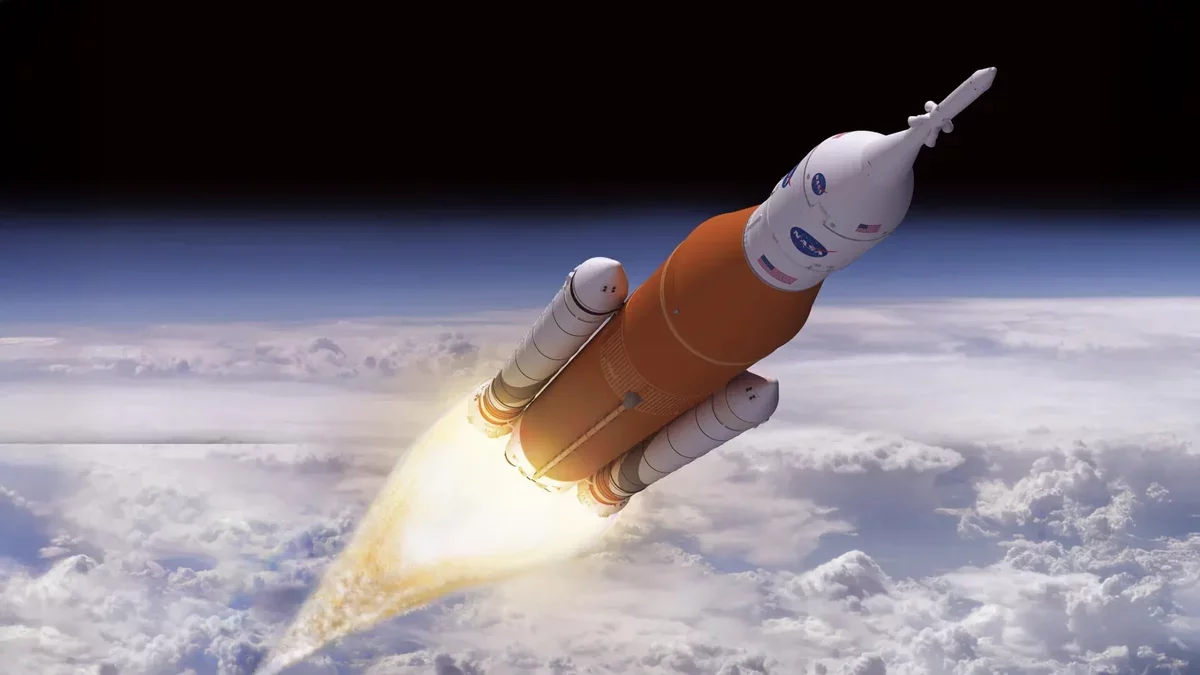
The SLS rocket that launched Artemis II performed admirably, successfully placing Orion on its intended trajectory. At main engine cutoff, the RS-25 engines had propelled the spacecraft to speeds exceeding 18,000 miles per hour, achieving high precision in orbital insertion.
Launch Pad and Ground Systems Hold Up Under Stress
Post-launch reviews of the launch pad and mobile launcher systems revealed that enhancements made after Artemis I were effective, as the structures sustained minimal damage despite the intense forces generated during liftoff.
Recovery Operations and Next Steps for Artemis Program
Recovery teams, in collaboration with military partners, successfully retrieved the crew and spacecraft. Navy divers assisted each crew member out of Orion and transported them aboard the USS John P. Murtha. The spacecraft was then returned to Naval Base San Diego.
Data from Artemis II, the inaugural crewed mission of the Artemis program, is now being utilized to prepare for the next phase. NASA aims to launch Artemis III in 2027, paving the way for lunar surface missions starting in 2028.