Museo Reina Sofía presents Félix González-Torres: Sweet Revenge, a large-scale exhibition examining the artist's connection to Madrid, memory and the evolving life of an artwork. The show marks a major solo presentation of González-Torres's practice in the Spanish capital.
Spread across seven galleries in the Sabatini Building, the exhibition brings together more than 50 works, including the artist's celebrated candy installations, paper stacks, text portraits, puzzles, bead curtains and photographic pieces. Rather than following a chronological route, the presentation creates a dialogue between recurring ideas of intimacy, absence, repetition and collective participation.
Madrid as a point of return
The exhibition title draws on "Untitled" (Revenge) from 1991, a blue candy spill associated with González-Torres's return to Madrid as an adult. Curators Alejandro Cesarco and Nancy Spector use this idea of "sweet revenge" to frame the artist's early experience in the city and his later artistic relationship with place, identity and remembrance.
A central feature of the project is its attention to the operational principles behind González-Torres's works. An introductory text, titled "Methodology", explains how installations can be replenished, reconfigured and activated over time. This approach highlights the role of museums, exhibition teams and visitors in sustaining works designed to remain open to change.
Artworks designed to evolve
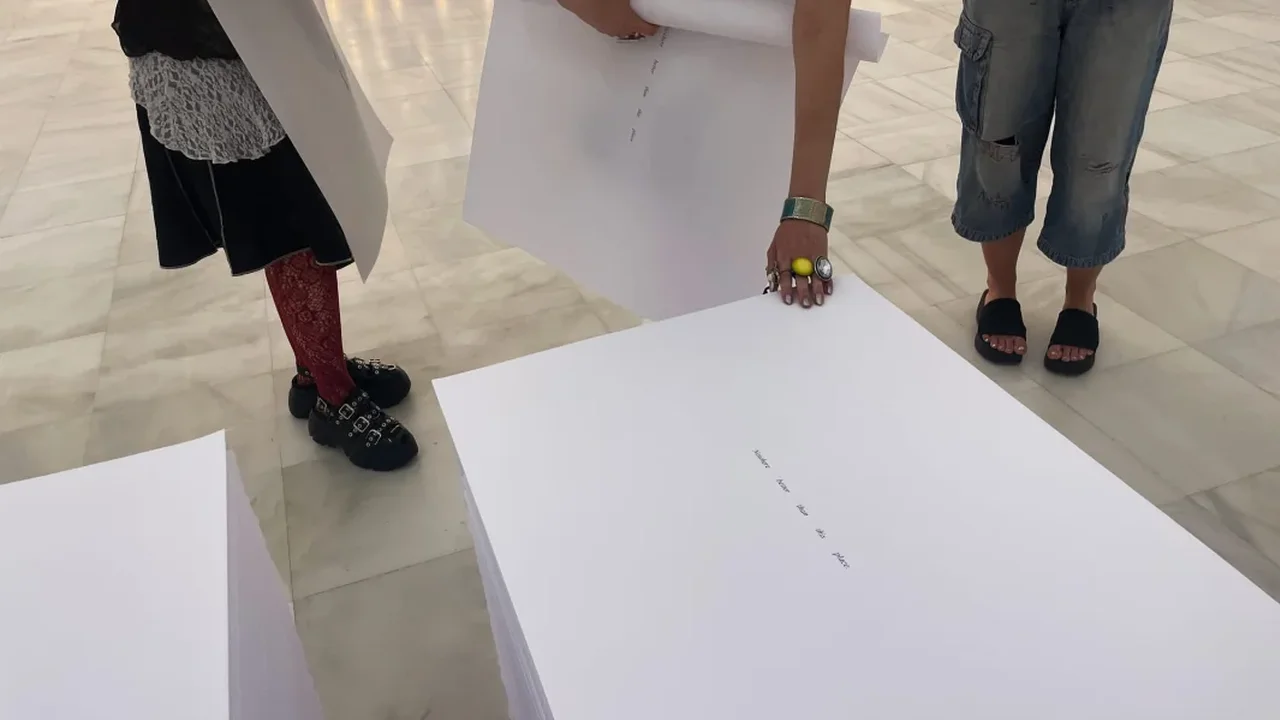
Many of González-Torres's best-known pieces challenge the traditional notion of an artwork as fixed and untouchable. Candy can be taken, paper sheets can be carried away, and text-based works may shift according to their presentation. Through these gestures, the exhibition emphasizes art as a shared experience shaped by care, interpretation and participation.
By placing material instructions alongside the artist's poetic visual language, Sweet Revenge invites audiences to consider how contemporary art can preserve meaning while remaining responsive to new contexts. The exhibition points toward a future in which museums increasingly treat artworks as living cultural systems rather than static objects.