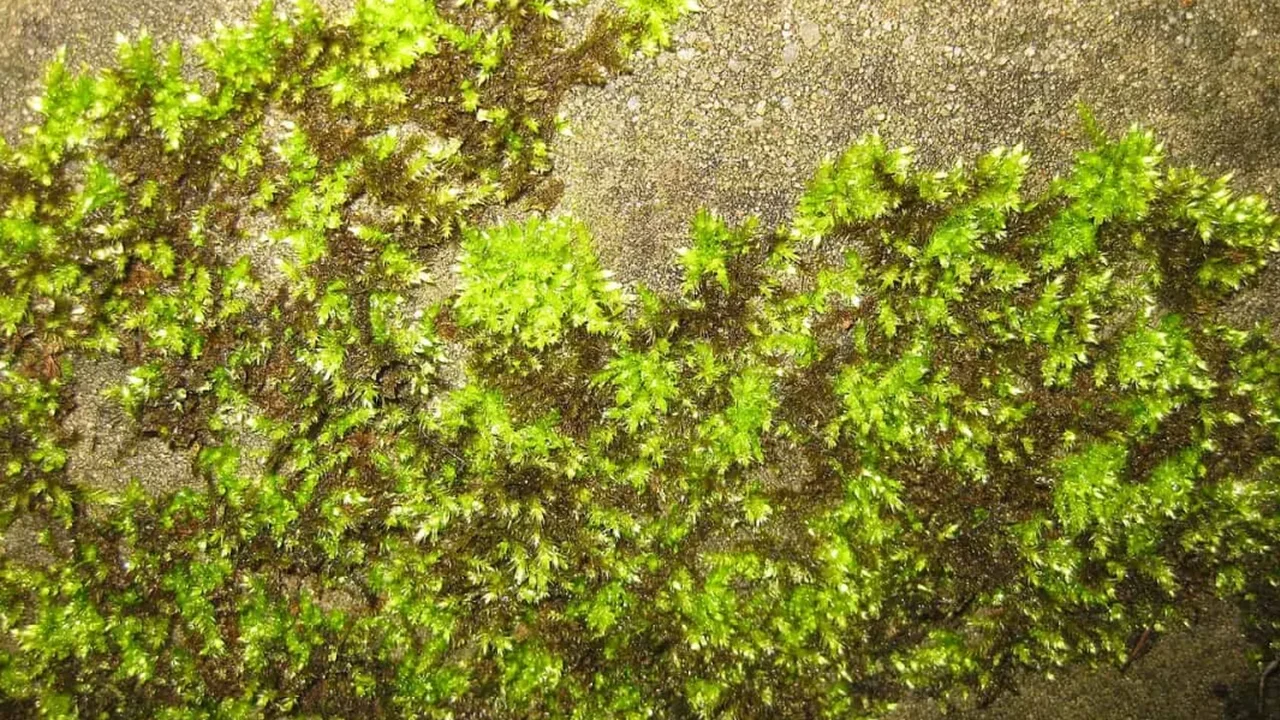
Scientists have found that moss may be far more electrically active than it appears. In a seven-day observation, common rough-stalked feather moss produced repeating spikes and slow voltage waves that seemed to move across the plant cushion.
A Quiet Plant With a Measurable Signal
The study focused on Brachythecium rutabulum, a widespread moss species. Researchers placed moss samples in a humid setting, added tiny electrodes, and tracked electrical changes for 178 hours. The setup captured more than 5 million measurements, revealing activity at different speeds and patterns.
Some signals appeared as sharp spikes, while others formed slower rhythmic shifts or long voltage waves. The fastest movements traveled at about 0.2 millimeters per second, with other waves moving more gradually across the moss mat.
Andy Adamatzky, a computer scientist at the University of the West of England, led the work as part of his broader research into unconventional computing. His studies often explore how living systems can process information without traditional silicon-based hardware.
What the Recordings Suggest
The findings do not mean moss has a brain or nervous system. Still, the electrical patterns were structured enough to suggest that the plant may coordinate activity across distance through a distributed living network.
The paper points to possible future uses in biohybrid sensors, living building surfaces, and other materials that combine biology with electronics. Such systems could one day respond to environmental changes in real time.
The authors also note that the result is an early step. Future studies will need tighter controls, stable lab conditions, and deliberate stimuli such as light, heat, or touch to understand what the signals truly represent.
Published in Royal Society Open Science, the research adds a new layer to how scientists view moss: not just as a simple plant, but as a living material with promising technological potential. It may help shape the next generation of responsive, nature-inspired systems.