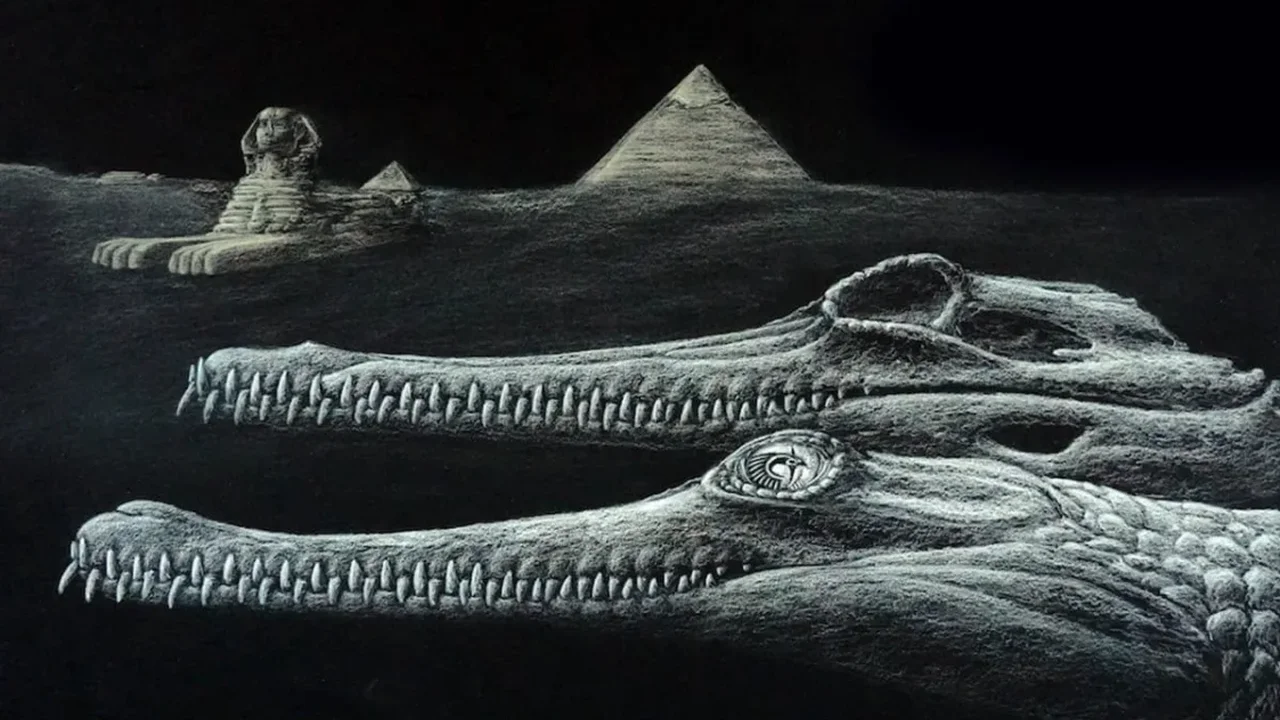
A long-snouted crocodilian that lived in northern Egypt around 45 million years ago has been identified as a species new to science. Named Herugavialis cairensis, the animal's remains were preserved in the Mokattam Formation, a limestone deposit later used in monuments including the Great Sphinx.
A fresh look at historic fossils
The fossils, first excavated during the 1920s, include an almost complete skull. Earlier researchers classified the specimen within Tomistoma, the modern false gharial genus, due to its similarly elongated snout.
An international research team revisited the material using CT scanning technology. Their analysis revealed distinctive anatomical features that justified placing the reptile in its own genus and species. The findings were published in Royal Society Open Science.
An ancient resident of Egypt's shallow seas
Herugavialis cairensis belonged to gavials, a branch of crocodilians recognised for their narrow, fish-catching jaws. Fossil evidence indicates that relatives of today's gharials once occupied marine and coastal environments across a far wider geographic range than their surviving counterparts.
The species name honours Cairo, while the genus references Heru, an Egyptian deity associated with the cultural legacy surrounding the Sphinx. Its discovery adds a new chapter to Egypt's deep natural history, showing that the region's iconic limestone landscapes preserve evidence of ecosystems that existed long before human civilisation.
Modern imaging and renewed study of museum collections continue to reveal overlooked biodiversity, suggesting that historic fossils can play an important role in mapping the evolutionary story of life on Earth.