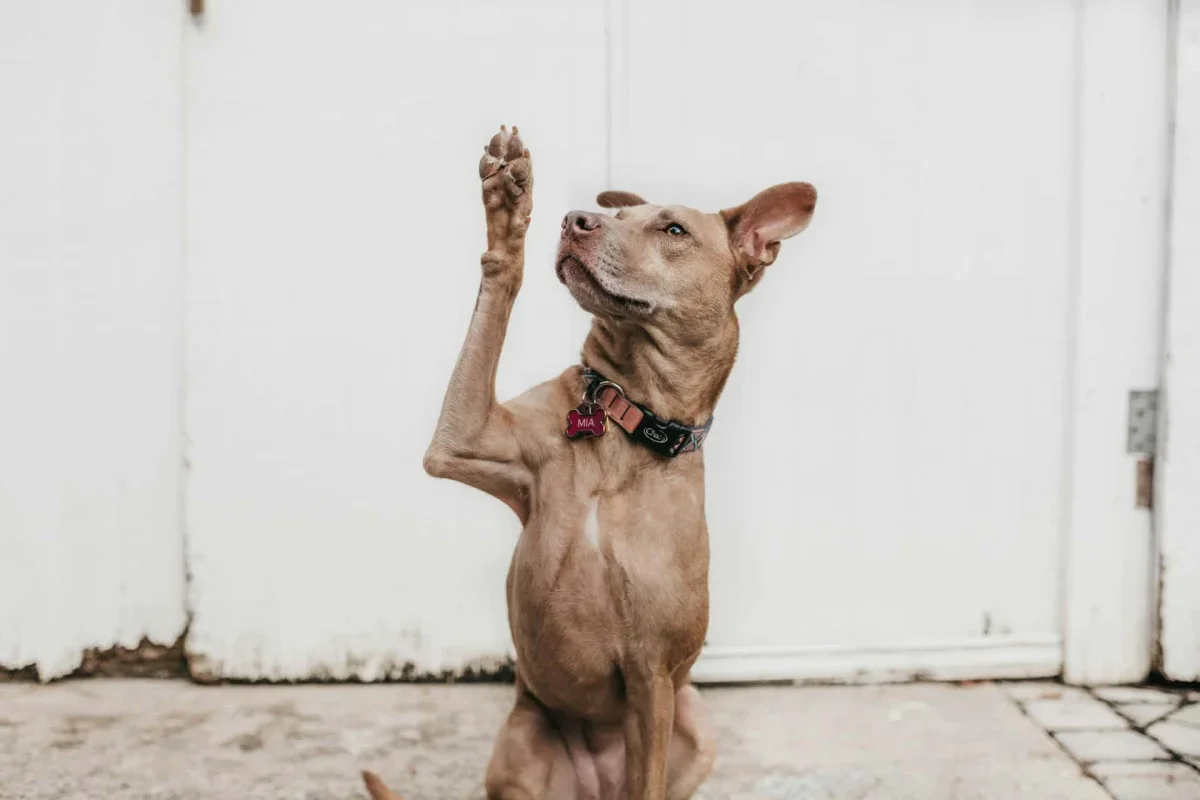
Researchers have introduced a more structured way to determine whether a dog tends to favor the left paw, the right paw, or neither. The new approach, published in Royal Society Open Science, comes from the University of Bari Aldo Moro in Italy and adapts a classic human handedness survey for dogs.
The tool, called the Doginburgh Inventory, was designed to solve a long-standing problem in canine behavior research: many earlier tests measured paw use in only one situation, which could blur the difference between a true preference and a task-specific habit.
In the study, 43 healthy pet dogs completed a set of four activities. They held a food toy, reached for treats under furniture, stepped down a short staircase, and moved off a platform. By combining these tasks, the researchers could measure both the direction of preference and its strength.
The results showed that paw preference is more nuanced than a simple left-or-right label. Around one-fifth of the dogs were ambilateral, meaning they showed no clear favorite. About one-third had a strong preference for one paw, while the rest leaned slightly left or right. Overall, the group showed a mild left-side tilt, with males displaying that pattern more clearly.
The study also highlights why laterality matters. In animals, side preference can reflect how the brain organizes movement, perception, and behavior. Scientists believe this may help explain broader questions about cognition across species, especially in animals that live closely with humans.
Although the researchers stress that the inventory is still a proof of concept, it offers a promising framework for future studies involving more breeds, larger samples, and different living environments. It may also help scientists explore whether paw preference connects with temperament, learning, or training styles.
For now, the main takeaway is simple: a dog's favorite paw is not just a cute detail, but a small clue to the brain's inner architecture. In the future, tools like this could deepen our understanding of animal behavior and sharpen how we read the minds of the companions that share our lives.