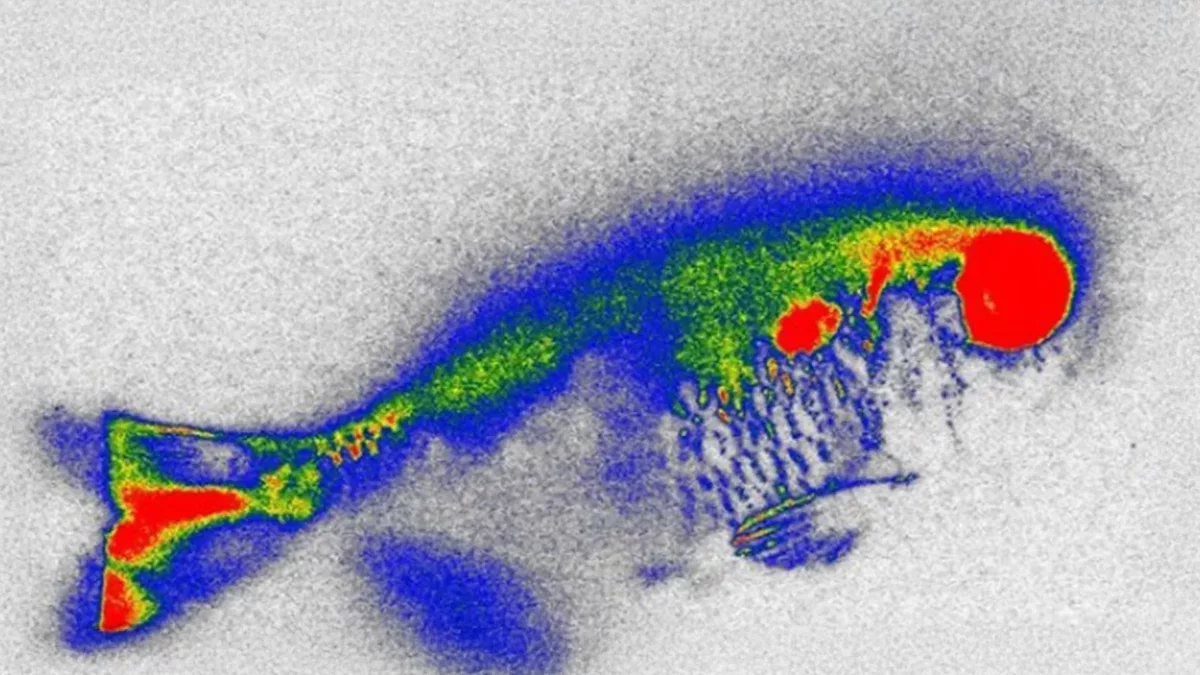
Recent research published in ACS Omega, a journal by the American Chemical Society, reveals that moringa seeds could play a crucial role in purifying drinking water from microplastics. Native to India, moringa thrives in tropical climates and is valued not only for its nutritional benefits but also for its potential in water treatment.
Moringa Seed Extract: A Green Alternative
Gabrielle Batista, the lead researcher from the Bauru School of Engineering (FEB) at UNESP, highlighted that the saline extract from moringa seeds performs comparably to aluminum sulfate, a common coagulant used in water treatment plants. Interestingly, in alkaline conditions, moringa extract outperformed its chemical counterpart.
The study was spearheaded by Professor Adriano Gonçalves dos Reis, who oversees a project focused on the removal of microplastics from drinking water, funded by FAPESP. Reis noted that while aluminum sulfate increases dissolved organic matter, making the process potentially costly, moringa presents a cost-effective solution for rural areas and small communities.
The Science of Coagulation
This research emphasizes in-line filtration, where water is treated with a coagulant before passing through a sand filter. This method is particularly effective for clearer water, minimizing the need for extensive preliminary treatments. Coagulation is essential because microplastics carry a negative charge, causing them to repel one another. Coagulants like moringa extract neutralize these charges, allowing particles to clump together, facilitating easier removal during filtration.
Previous studies by the same group affirmed that moringa seeds are effective throughout various treatment stages, including flocculation and sedimentation. Luiz Gustavo Rodrigues Godoy, another contributor to the research, conducted his master's studies at FEB-UNESP with FAPESP's support.
Laboratory Evaluations
To assess the effectiveness of the moringa method, the researchers introduced polyvinyl chloride (PVC) microplastics into tap water. PVC, known for its harmful properties, is prevalent in water bodies and resistant to traditional treatment methods. The team simulated natural aging of the PVC by exposing it to ultraviolet radiation.
Using a Jar Test system, which replicates small-scale water treatment processes, they compared the results of moringa extract with those treated with aluminum sulfate. Scanning electron microscopy (SEM) was employed to analyze microplastic counts pre- and post-treatment, revealing similar removal efficiencies for both methods.
Field Testing
The researchers are currently applying moringa seed extract to water sourced from the Paraíba do Sul River, which serves São José dos Campos. Initial results indicate that this natural method is effective under real-world conditions.
As concerns grow regarding the environmental impact of traditional coagulants, the search for sustainable alternatives like moringa is becoming increasingly vital. This research positions moringa as a promising solution for enhancing drinking water quality, particularly in resource-limited settings.