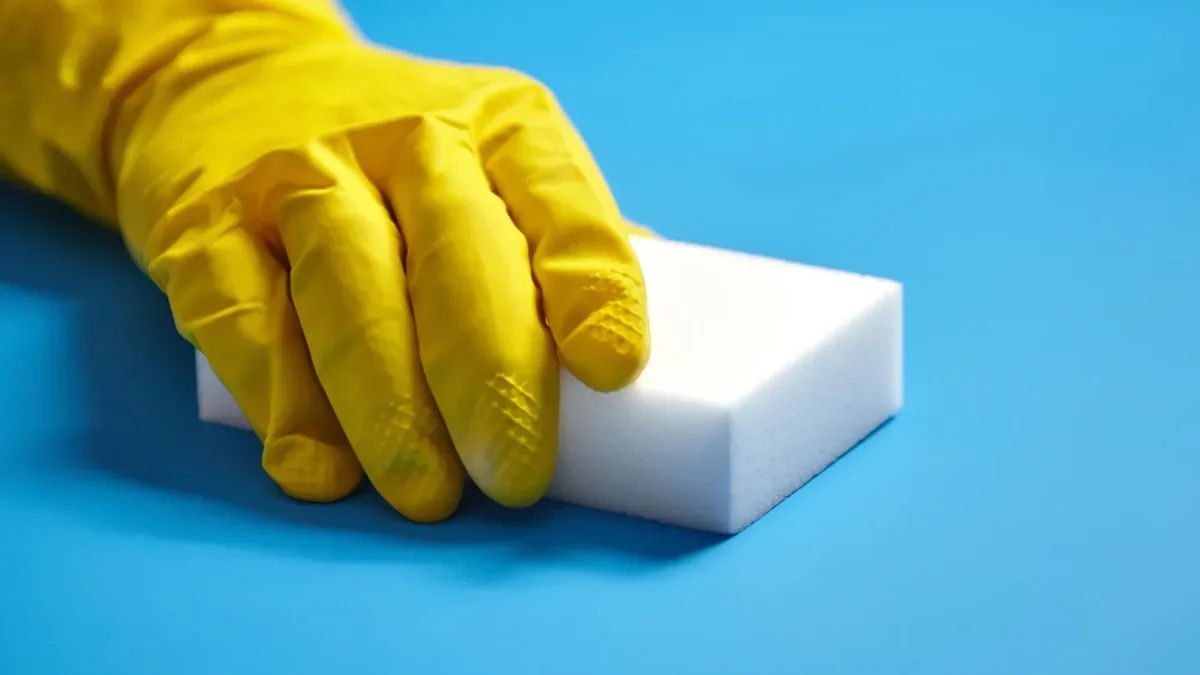
A recent study published in ACS Environmental Science & Technology has unveiled that melamine sponges, a staple in many households, could be a significant contributor to microplastic pollution. Researchers estimate that these cleaning tools release over a trillion microplastic fibers globally each month as they are used and disposed of.
Why Melamine Sponges Excel
Made from poly(melamine-formaldehyde) polymer, melamine sponges feature a unique web-like structure that creates a lightweight foam. Despite their soft texture, the internal composition functions like very fine sandpaper, enabling them to effectively "erase" stains without the need for soap or chemicals. However, this abrasive property also leads to the gradual disintegration of the sponge itself.
Microplastic Release Mechanism
As these sponges are employed, tiny particles break away, eventually forming microplastic fibers, which are defined as plastic pieces smaller than 5 millimeters. Once rinsed away, these fibers can infiltrate wastewater systems, potentially bypassing treatment facilities and contaminating natural water bodies. This poses a risk to aquatic life and may ultimately affect human health through the food chain.
Insights from the Research
Researchers Yu Su, Baoshan Xing, Rong Ji, and their team examined various products from three prominent brands, simulating real-world usage by scrubbing the sponges against rough surfaces. Their findings revealed that sponge density significantly impacts the release of microplastic fibers. Denser sponges tend to last longer and emit fewer fibers, while their less dense counterparts deteriorate more rapidly.
Through their analysis, the researchers estimated that a single sponge can release approximately 6.5 million fibers for every gram of material lost. Considering that an average sponge loses about 10% of its mass during use, they extrapolated this data alongside sales figures from Amazon in August 2023, concluding that around 1.55 trillion microplastic fibers could be released monthly. This figure, based on a single retailer, suggests the actual total could be even higher.
Mitigating Microplastic Emissions
The study proposes several strategies to minimize the environmental impact of these widely used cleaning tools. Manufacturers are encouraged to create denser, more resilient sponges that would decrease wear and fiber release. Consumers can also play a role by opting for natural cleaning alternatives devoid of plastic and enhancing filtration systems to capture microplastics before they enter the ecosystem.
Addressing an Overlooked Pollution Source
While melamine sponges are effective cleaning aids, their extensive use may contribute to a significant environmental challenge that often goes unnoticed. Recognizing the implications of everyday products is crucial in addressing larger global issues.
The research received support from the National Natural Science Foundation of China and the Key-Area Research and Development Program of Guangdong Province.