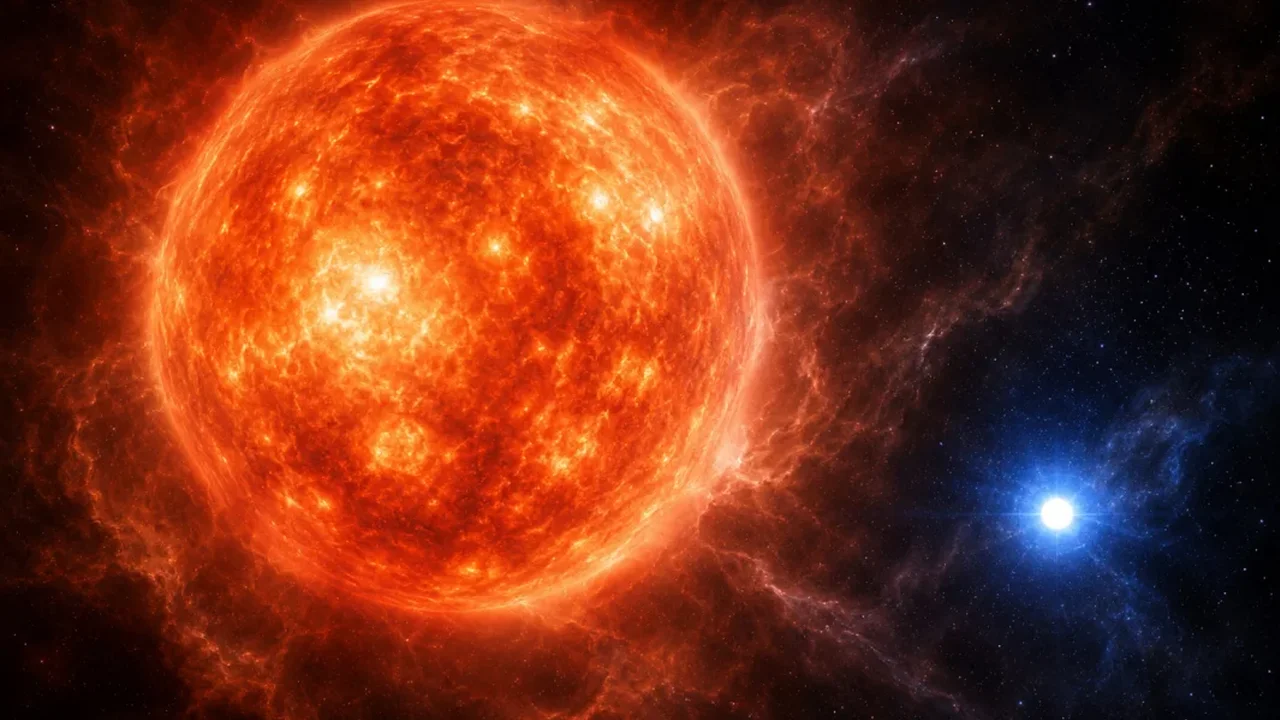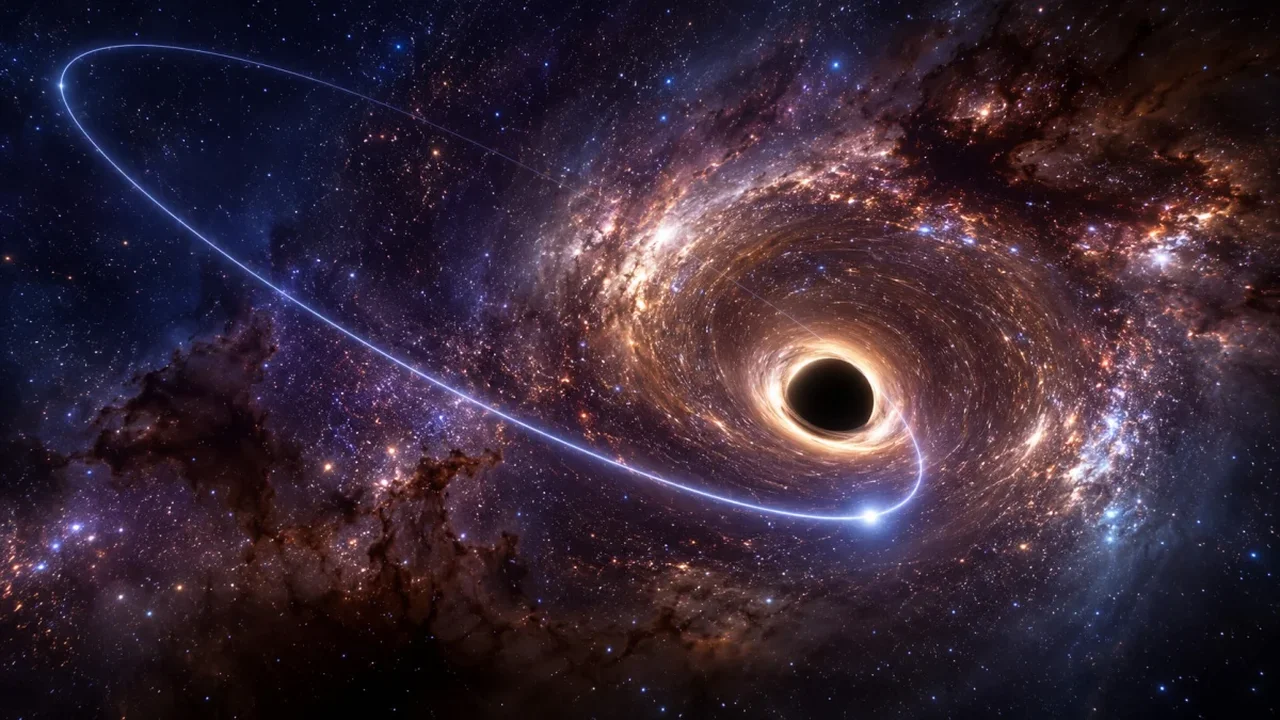
At the heart of the Milky Way, astronomers have identified a star that is rewriting expectations about motion near a supermassive black hole. The star, known as S301, completes one orbit around Sagittarius A* every 8.7 years and reaches an estimated 25,000 kilometers per second at its closest point -- more than 8% of the speed of light.
What makes S301 especially valuable is not only its speed, but how tightly it circles the galaxy's central black hole. Its path brings it far closer than the well-studied star S2, placing it in a region where gravity is strong enough to reveal subtle effects predicted by Einstein's theory of relativity. Researchers say continued monitoring could help measure the spin of Sagittarius A* directly for the first time.
A rare orbit in a crowded galactic center
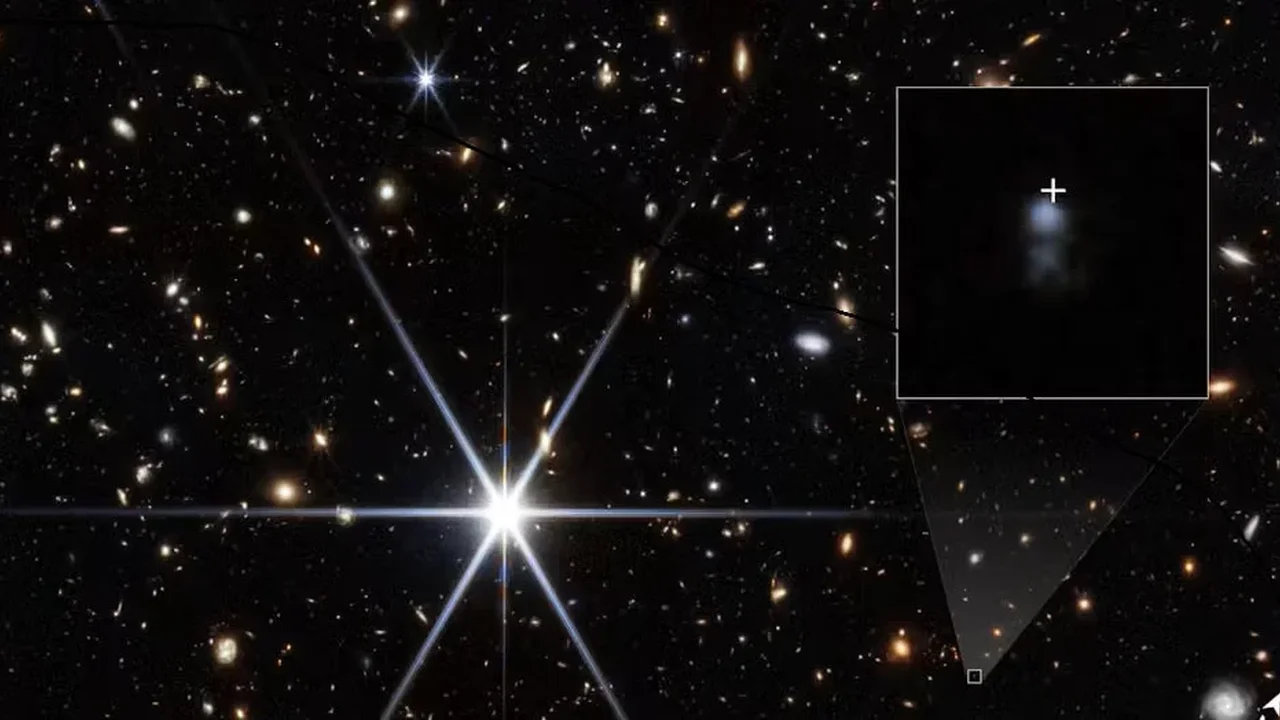
The star was first spotted in infrared observations from the GRAVITY instrument at the European Southern Observatory's Very Large Telescope Interferometer in Chile. Although S301 is far dimmer than S2, its rapid movement stood out immediately. Astronomers then traced its motion through several years of data, extending the orbit back through older observations and building a detailed track from 19 measurements.
Its trajectory is highly elongated, carrying it to a distance of only about 136 to 142 Schwarzschild radii from Sagittarius A*. That makes S301 one of the most extreme stellar probes ever found near a black hole. Previous stars around the same region have already helped confirm gravitational redshift and orbital precession, and S301 pushes those tests into even stronger gravity.
Why this discovery matters
In a rotating black hole, spacetime itself is expected to twist slightly around the object, a phenomenon known as frame dragging. Scientists believe S301's orbit may capture that effect with enough precision over time to reveal how fast Sagittarius A* is turning. Because black hole spin is one of the most difficult properties to measure, this star could become a key benchmark for future studies.
Researchers also suspect S301 may have formed as part of a binary system that was disrupted near the galactic center. If so, it could be linked to another fast-moving star now traveling away from the Milky Way's core. The next close pass of S301 is expected around 2031, and future instruments such as the Extremely Large Telescope may sharpen the picture even further.
As observations continue, S301 could help turn the Milky Way's center into one of astronomy's most precise laboratories, opening a clearer path to understanding how black holes shape space, time, and motion in the universe.