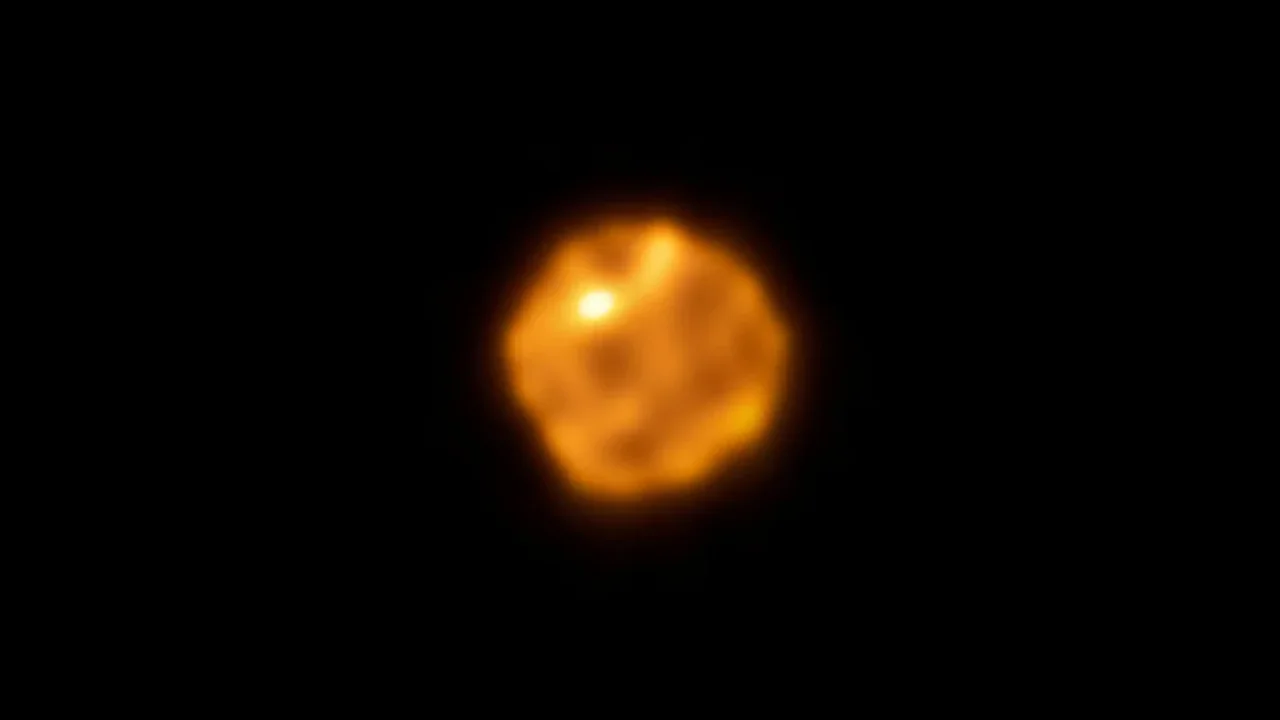
For centuries, Betelgeuse has stood out as one of the sky's most studied stars. Now, astronomers may have uncovered a hidden partner orbiting the famous red supergiant, reshaping how this stellar giant is understood.
A Faint Companion Emerges
Using the Very Large Telescope in Chile, researchers captured the clearest evidence yet of a dim object beside Betelgeuse. The source appeared exactly where earlier predictions suggested a companion should be, and two separate image-processing methods recovered it from the star's intense glare.
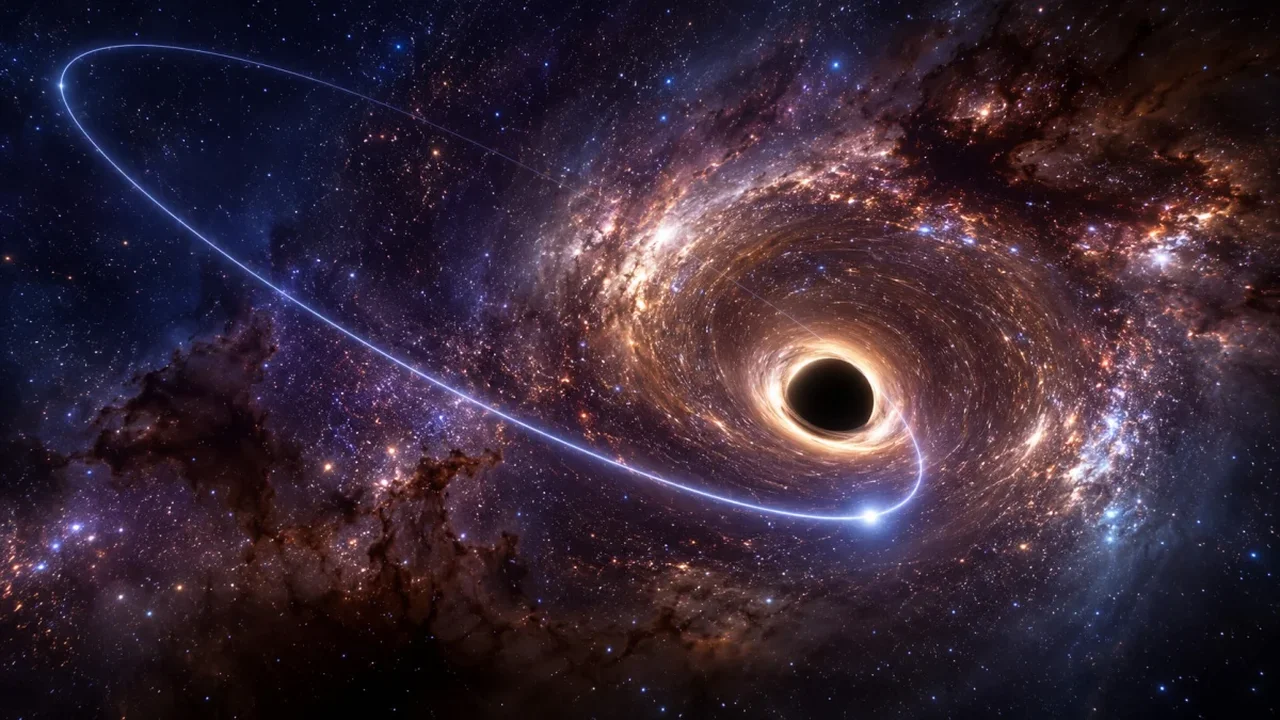
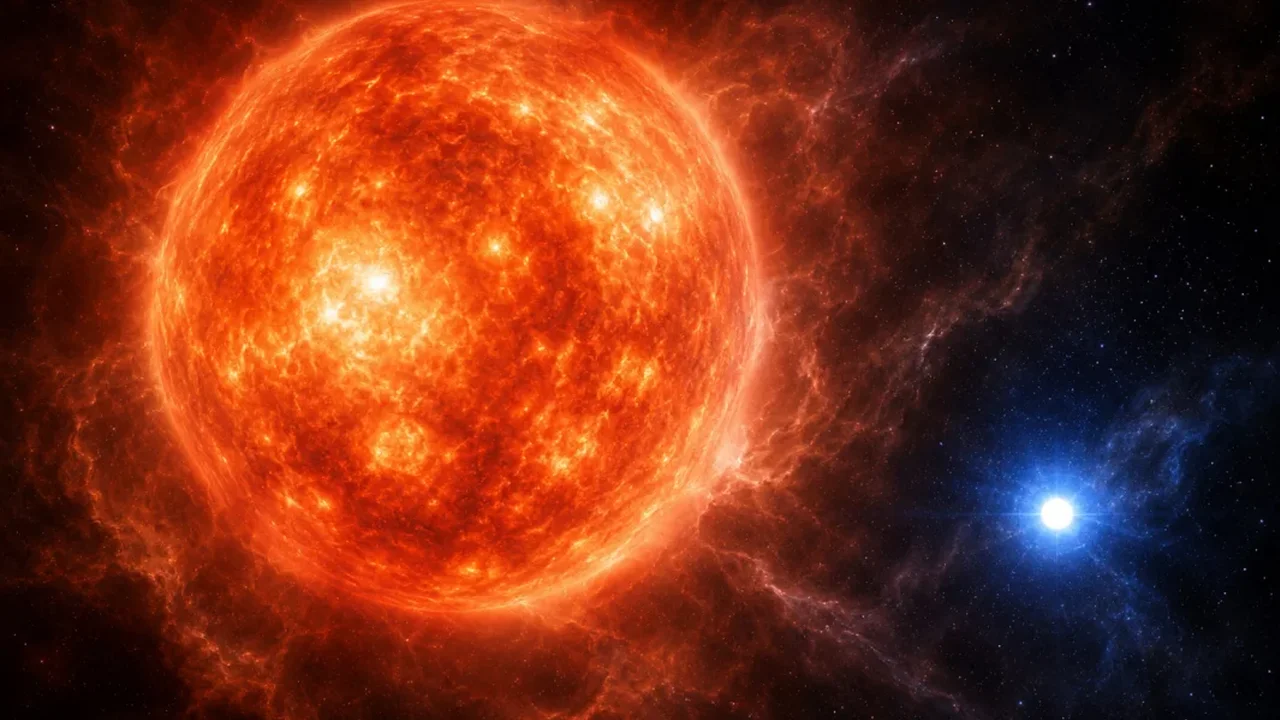
The candidate, known as Betelgeuse B, is thought to be a young hot star with a mass between 2.6 and 3.1 times that of the Sun. It orbits at a distance roughly comparable to the space between Saturn and the Sun, making it extremely difficult to isolate next to Betelgeuse's brilliant glow.
Why Astronomers Suspected It
Interest in a companion star grew because Betelgeuse follows unusual brightness cycles, including a long secondary period of about 2,200 days. A nearby partner could naturally explain that rhythm. Earlier hints existed, but the star's turbulent atmosphere and shifting dust clouds made confirmation elusive.
To improve the view, the team used the SPHERE instrument on the European Southern Observatory telescope in December 2024. After subtracting atmospheric and instrumental effects, the object appeared in nearly the same place through two independent analyses, with strong statistical confidence.
A New Piece in the Stellar Puzzle
The findings suggest Betelgeuse and its companion likely formed together 8 to 10.5 million years ago. While Betelgeuse evolved rapidly into a red supergiant, Betelgeuse B seems to have only recently entered the stable main-sequence phase.
Beyond solving a long-running mystery, the discovery could help astronomers better understand how massive stars form in pairs, how red supergiants lose mass, and how their late-stage behavior is shaped by hidden companions. It may also offer a new way to identify similar systems across the galaxy. In the future, discoveries like this could refine the map of stellar evolution with far greater precision.