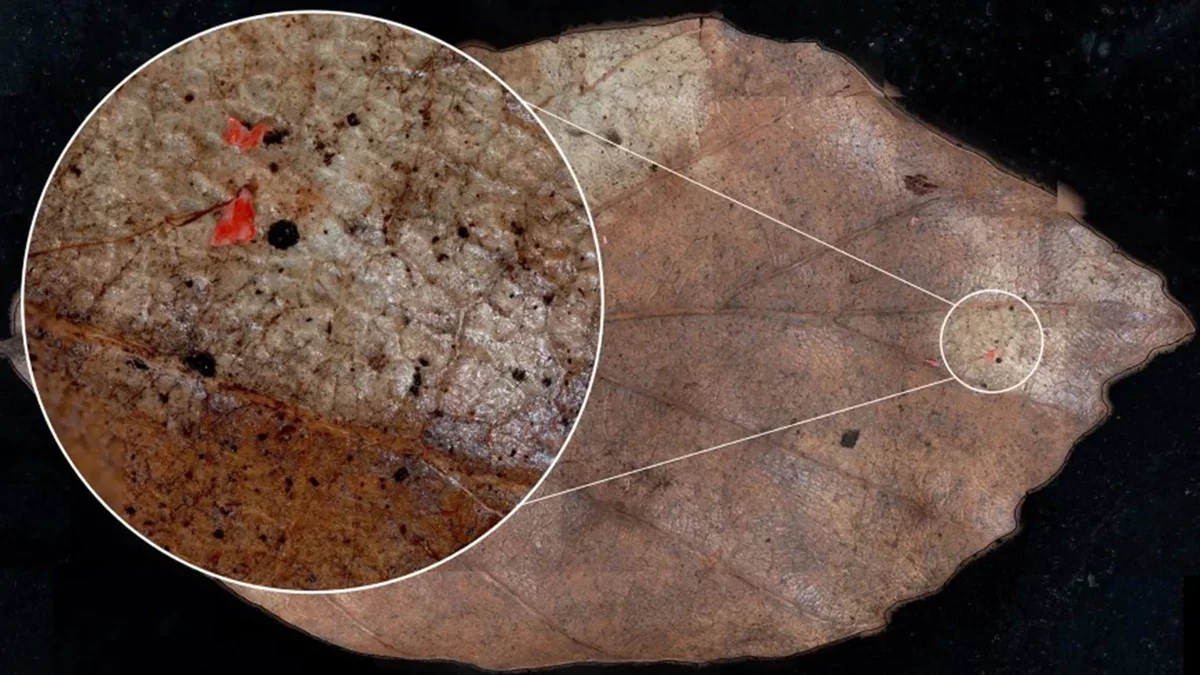
A recent study has uncovered that forests are impacted not solely by local pollution, but significantly by airborne microplastics that accumulate in forest soils over time. Researchers found that these minuscule plastic particles initially settle on the leaves of trees, particularly in the upper canopy.
Lead researcher Dr. Collin J. Weber from the Institute of Applied Geosciences at TU Darmstadt elaborates, "Microplastics from the atmosphere first land on tree crowns, a phenomenon we term the 'comb-out effect.' Subsequently, in deciduous forests, these particles are washed down to the forest floor through rain or fall with the leaves during autumn."
Transport Mechanisms of Microplastics into Soil
Once they reach the forest floor, natural processes play a crucial role in the entrapment and retention of microplastics within the soil. The study highlighted that the highest concentrations of microplastics were found in the upper layer of leaf litter, where decomposition is just beginning. Notably, considerable amounts were also detected at deeper soil levels.
This infiltration into lower soil layers is attributed not only to the breakdown of organic matter but also to biological activities, such as those performed by organisms that aid in decomposing leaves and redistributing particles.
Analyzing Microplastics Across Environments
To gain insights into the accumulation of microplastics, the research team gathered samples from four forest sites located east of Darmstadt, Germany. They analyzed the soil, fallen leaves, and atmospheric deposition using an innovative method combined with spectroscopic analysis.
Additionally, the scientists developed a model to estimate the volume of microplastics that have entered forests from the atmosphere since the 1950s. This model allowed them to evaluate how much of the total pollution stored in forest soils can be attributed to airborne sources.
Forests as Indicators of Airborne Microplastic Pollution
Dr. Weber notes, "Our findings indicate that the microplastics found in forest soils primarily originate from atmospheric deposition and litterfall. Other sources play a minor role." This suggests that forests serve as effective indicators of airborne microplastic pollution, with high concentrations in forest soils reflecting significant atmospheric input as opposed to direct sources like agricultural fertilizers.
A Growing Environmental and Health Concern
This groundbreaking research is the first to explicitly demonstrate how forests become contaminated by microplastics and link this contamination to airborne transport. The implications of these findings are profound, as they establish a foundation for assessing the environmental risks posed by microplastics in both air and soil.
As Dr. Weber points out, "Forests are already under threat from climate change, and our results indicate that microplastics could introduce an additional risk to these vital ecosystems." Furthermore, the research raises concerns about potential human health implications, highlighting how microplastics may circulate globally through the atmosphere and enter the air we breathe.