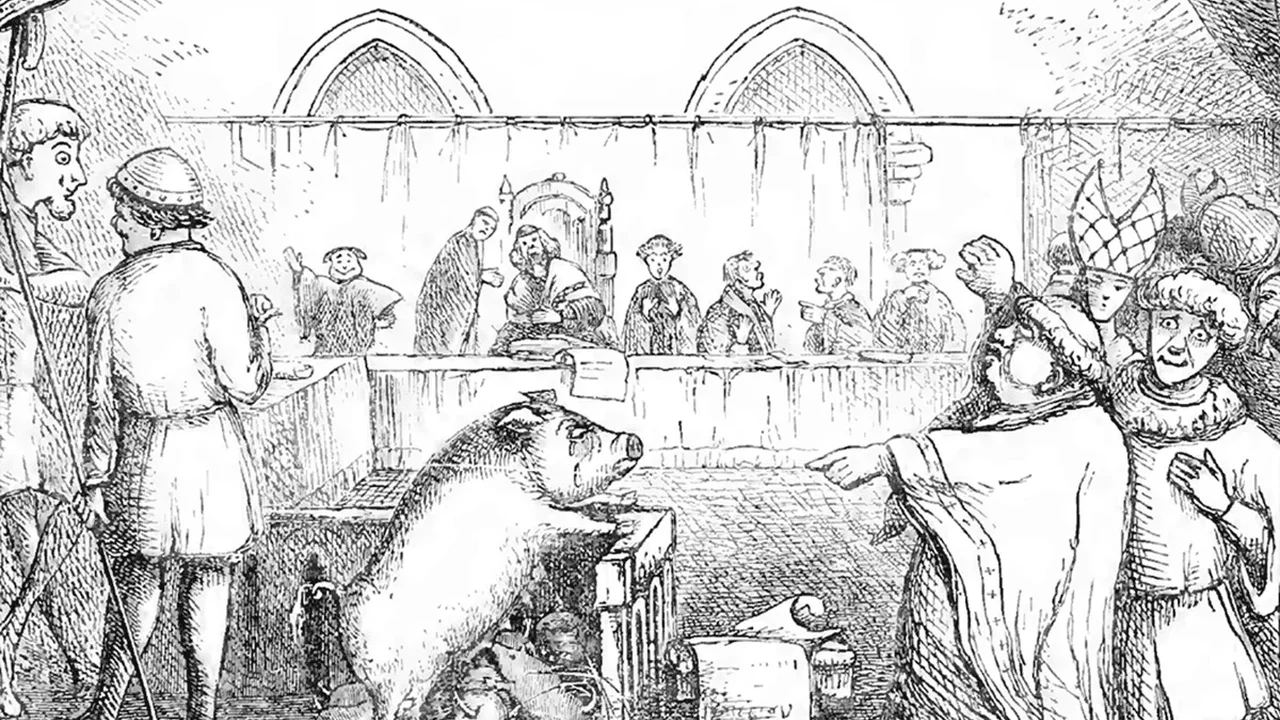
Medieval France preserved one of history's most unusual legal traditions: when a pig harmed a person, it could be formally arrested, tried, and punished. Far from being a comic anecdote, these cases were treated as serious public proceedings.
One of the best-known examples comes from Savigny-sur-Étang in 1457, where a sow and her piglets were found near the body of a five-year-old boy. The court heard testimony, reviewed local Burgundian customs, and ordered the sow to be executed in public. The piglets were spared because their direct involvement could not be proven.
A study in Sophia by historian Sven Gins of the University of Groningen shows that such trials were part of a broader legal culture in premodern Europe. Researchers have identified more than 200 animal-related cases, with pigs appearing especially often in France. These proceedings were not random spectacles; they helped communities express authority, assign responsibility, and restore social balance after a violent incident.
Medieval pigs were also very different from today's domesticated farm animals. They often roamed freely, were physically strong, and resembled wild boars more than the familiar animals seen now. That made them a real part of village life, but also a potential source of danger.
There were two main legal paths. Secular courts handled animals accused of harming people, while church courts dealt with pests threatening crops. In the second case, symbolic summonses and formal warnings were used against creatures such as locusts, snails, and caterpillars. The goal was less about the animal itself and more about protecting community order.
What makes these records so striking is their precision. They name judges, prosecutors, witnesses, and executioners, while the animals often remain anonymous. In that sense, the trials reveal as much about human society as they do about animal behavior. They show how law, ritual, and public authority were woven together in medieval life.
Seen through a modern lens, these cases may feel extraordinary. Yet they also highlight a timeless idea: societies often use justice not only to punish, but to explain, organize, and reaffirm the rules that hold communities together. That perspective continues to shape how future cultures may balance law, symbolism, and public trust.