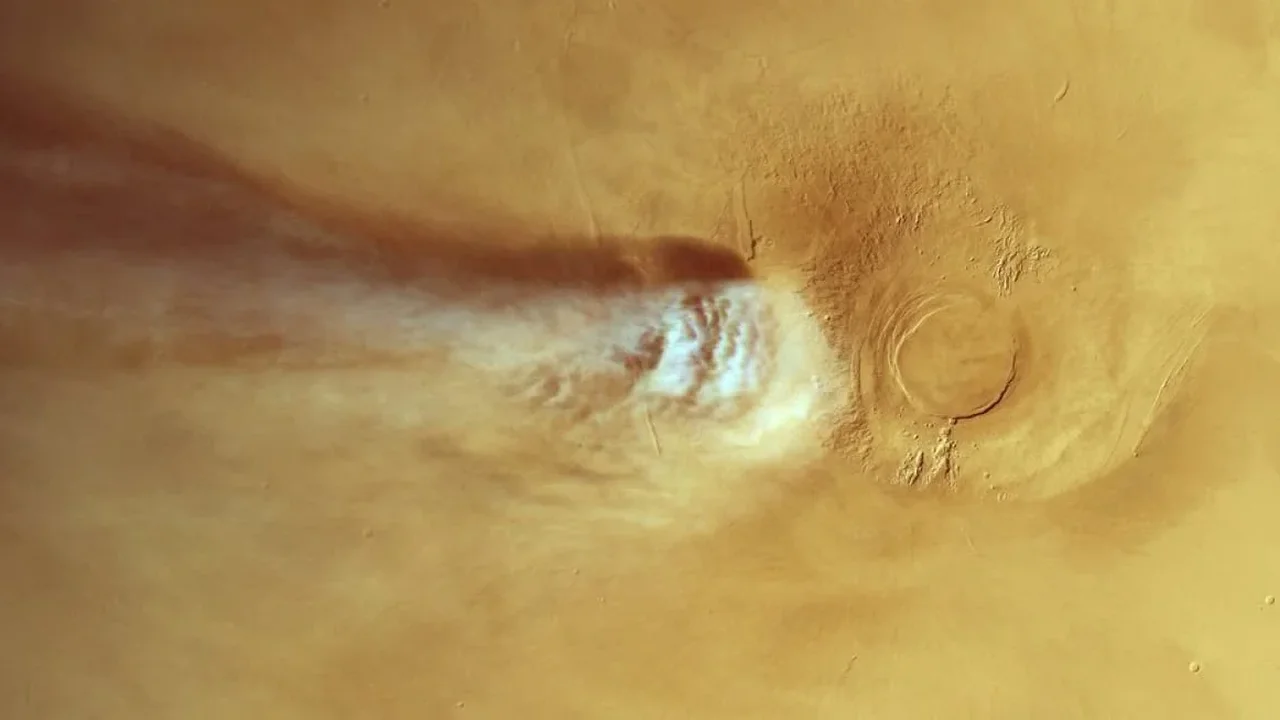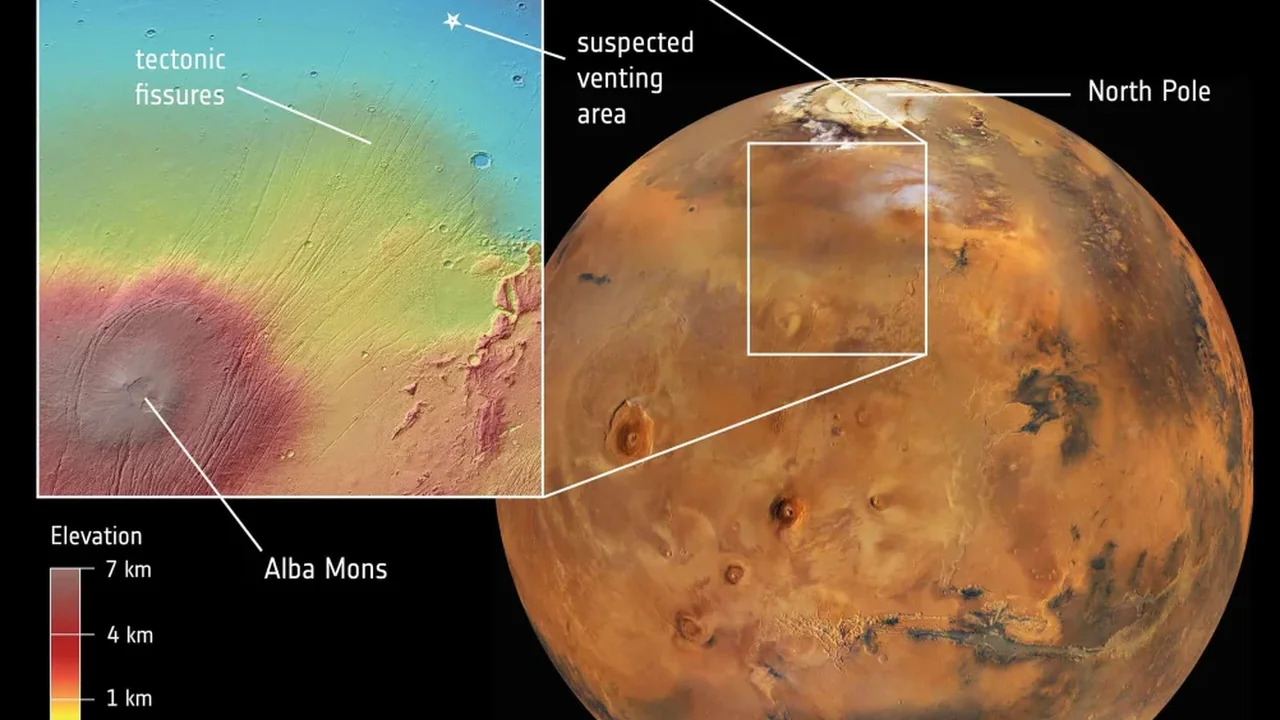
Hydrogen chloride detected in the atmosphere above Mars has renewed questions about whether the planet remains geologically active. The gas appeared near Alba Mons, a vast volcanic region, and may be escaping through cracks in the surface.
Data from the European Space Agency's ExoMars Trace Gas Orbiter showed that the gas usually followed seasonal patterns. But across two Martian years, researchers recorded eight detections during early northern summer near Alba Mons--an unexpected location and time for the signal.
Cracks offer a possible pathway
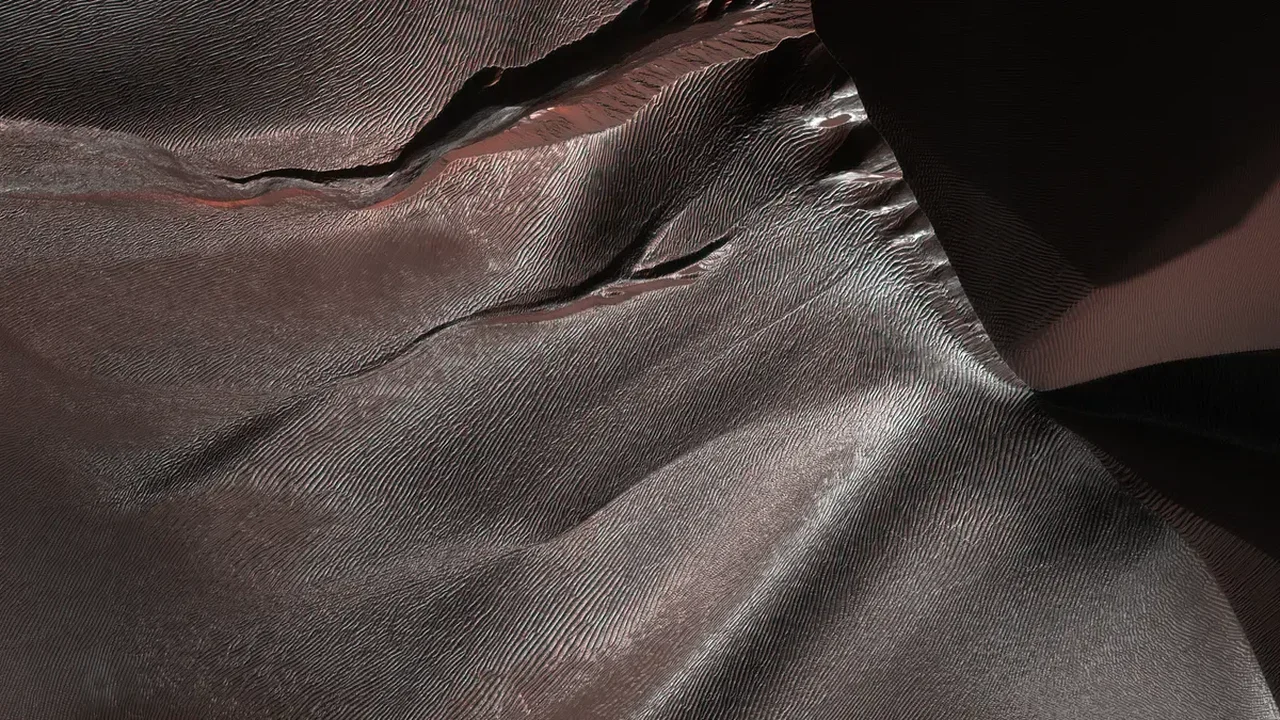
Researchers examined surface data from the orbiter's CaSSIS camera and NASA's HiRISE instrument, finding narrow fractures near the gas detections. Some extend for kilometers, and several are associated with dark deposits. The fractures cut through relatively young ice-rich terrain and follow broader geological patterns linked to Alba Mons.
The team, whose findings were published in Science Advances, suggests that underground magma could be releasing hydrogen chloride through these fissures. Seasonal changes may help explain the timing: winter ice could trap gas, with summer warming and sublimation allowing it to escape.
A clue, not proof of an eruption
The observations do not confirm that Alba Mons is erupting. Hydrogen chloride can also form through reactions involving Martian dust, water vapor and sunlight, while gas can escape from magma without lava reaching the surface. The researchers say the localized detections and nearby fractures make a volcanic explanation worth investigating, but further evidence is needed.
If underground heat interacts with water or ice, it could create environments of interest in the search for life. That possibility remains speculative; the study does not establish that liquid water or habitable conditions exist beneath Alba Mons. Continued exploration of the region could clarify whether Mars still has active processes below its surface, helping shape future investigations of the planet's interior and potential habitats.