Traditional methods of desalination, such as reverse osmosis and thermal distillation, often come with high costs and energy demands. These processes typically require chemical treatments and produce significant amounts of concentrated saltwater, known as brine, which can harm marine ecosystems when released back into the ocean.
Researchers from the University of Rochester have unveiled a groundbreaking solar-powered desalination system that efficiently generates fresh water while eliminating the need for chemical pretreatment and avoiding brine waste. The project, led by Chunlei Guo, a professor of optics and physics, is detailed in the journal Light: Science & Applications.
Innovative Solar Panel Design
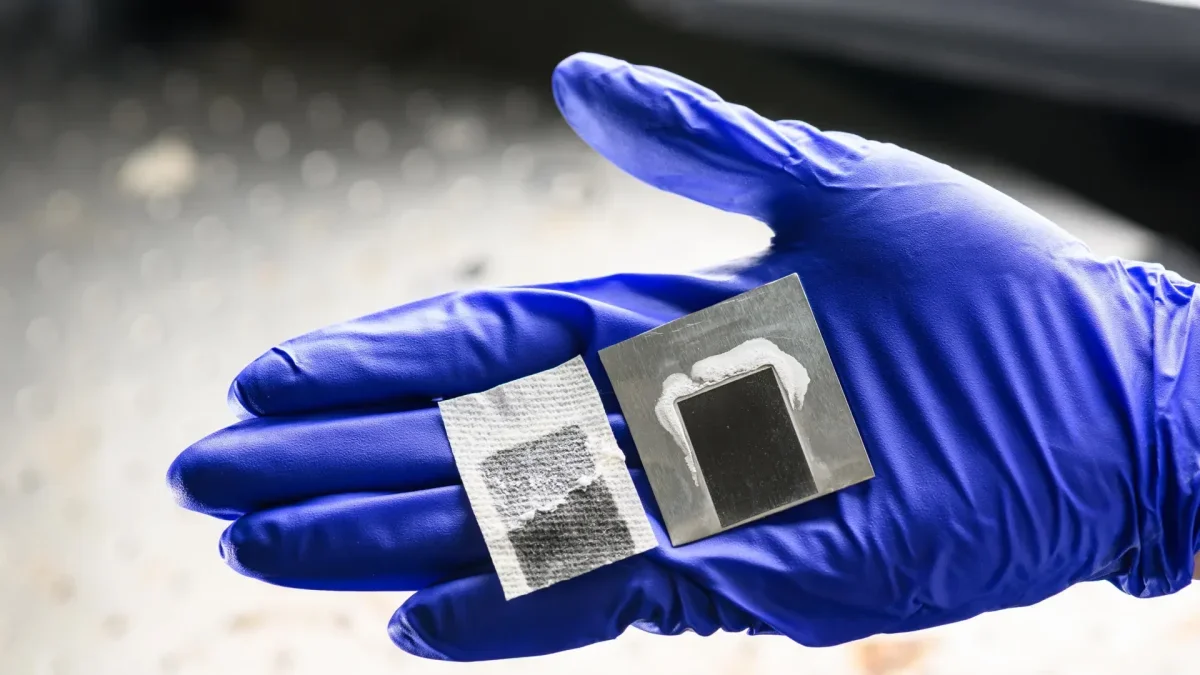
The new system employs specially designed solar panels made from black metal, which have been treated with femtosecond lasers. This unique treatment enhances the panels' ability to absorb sunlight and promotes a phenomenon known as superwicking, which allows water to be drawn across the panel's surface.
As sunlight heats the seawater, it evaporates, transforming into fresh water. Meanwhile, dissolved salts are redirected to untreated areas of the panel, preventing any buildup that could disrupt the desalination process.
Utilizing Natural Phenomena to Enhance Efficiency
Guo highlights that prior studies have shown promise for solar thermal desalination using simplified seawater. However, real seawater presents additional challenges due to its complexity, containing various dissolved minerals that can form hard deposits and obstruct water flow.
To tackle this, the Rochester team designed microscopic grooves on the panel's surface that facilitate the movement of salts away from the evaporation area. They also leveraged the coffee ring effect, where evaporating water leaves behind concentrated particles at the edges, to guide salts to passive regions.
In tests using water samples from the Pacific, Atlantic, and Indian Oceans, the system effectively maintained its cleaning process, continuously extracting fresh water while transporting salts to areas where they could be collected later.
Transforming Waste into Valuable Resources
A key advantage of this innovative system is its ability to recover nearly all dissolved salts in solid form, rather than producing harmful brine. This approach not only reduces environmental impact but also allows for the extraction of valuable minerals, such as lithium, essential for lithium-ion batteries in electric vehicles and electronics.
In a related study published in the Journal of Materials Chemistry A, Guo's team demonstrated that the same superwicking technology can effectively separate lithium from other salts using embedded nanoparticles.
Guo asserts that extracting lithium from saltwater could offer a sustainable alternative to traditional mining methods, which are often energy-intensive and environmentally damaging. Their experiments have shown promising results, successfully recovering around 50 percent of lithium from saltwater sourced from Utah's Great Salt Lake.
Future Implications for Water and Mineral Resources
While the technology has only been demonstrated in proof-of-concept devices, Guo is optimistic about its scalability. If expanded successfully, this system could play a crucial role in enhancing access to clean drinking water and providing sustainable sources of critical minerals in the future.