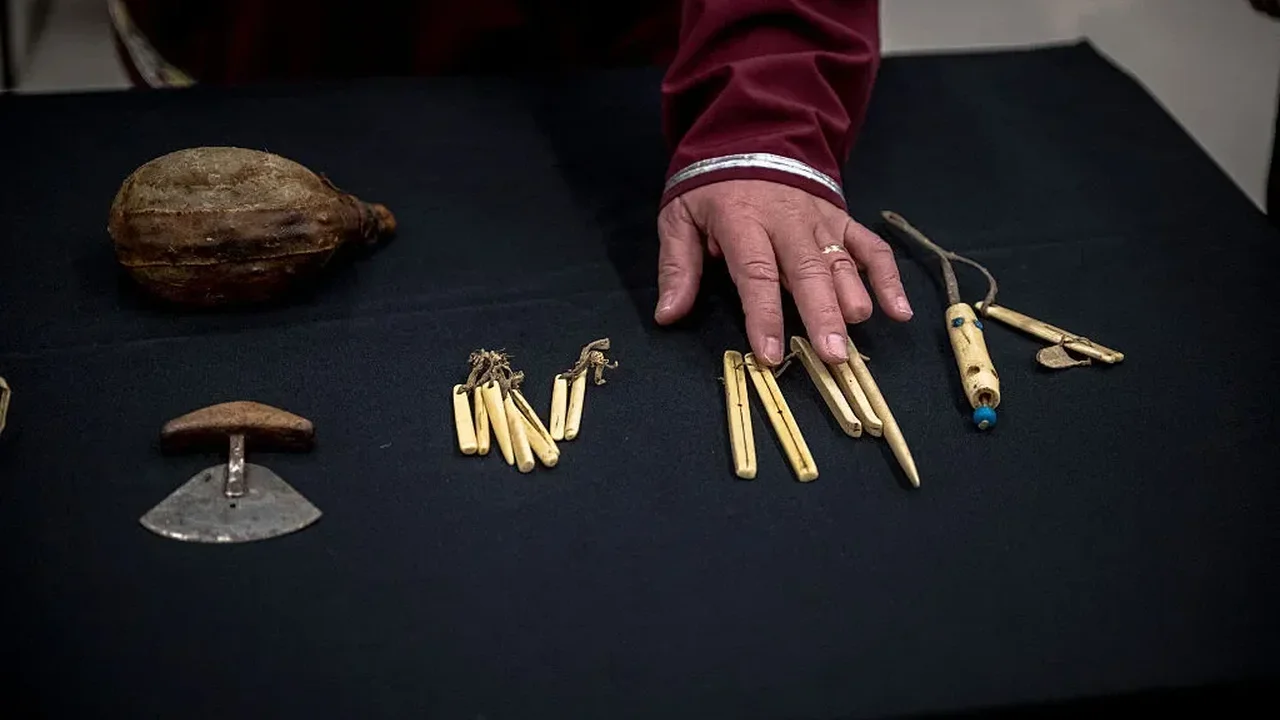
Roughly 30 Indigenous cultural objects in Canadian businessman John Risley's art collection have prompted calls for communities of origin to be consulted before the artifacts are sold or transferred. The items include baskets, moccasins, textiles and bone carvings.
Some are associated with Inuit, Mi'kmaq or Cree makers, while others are identified only as Indigenous, with no artist or date listed. Western University professor Cody Groat says communities should have a say in decisions involving objects connected to their cultural heritage.
Consultation and provenance
Risley supports repatriation in principle but disputes that his collection contains artifacts that should be returned, saying he acquired works through established dealers and auction houses. The Indigenous Council of the Canadian Museums Association argues that communities themselves are best placed to assess an object's cultural significance.
The artifacts are part of a broader dispute over 669 objects whose ownership is contested after the collapse of Risley's investment company, CFFI Ventures. The wider collection includes more than 1,200 artworks and antiques, valued at about $8.1 million. In September, a Nova Scotia court approved the transfer of most company assets to New Tide Capital.
Canada has no comprehensive legal framework for repatriating Indigenous cultural objects, and private collections can be difficult to assess when provenance details are limited. Inuit Tapiriit Kanatami has offered to help review potentially significant Inuit works and support their return where appropriate.
No evidence has established that the artifacts were improperly acquired, and no specific community has formally claimed the objects identified in court proceedings. Greater documentation and direct consultation could help shape more informed, community-centered stewardship of cultural heritage in the years ahead.