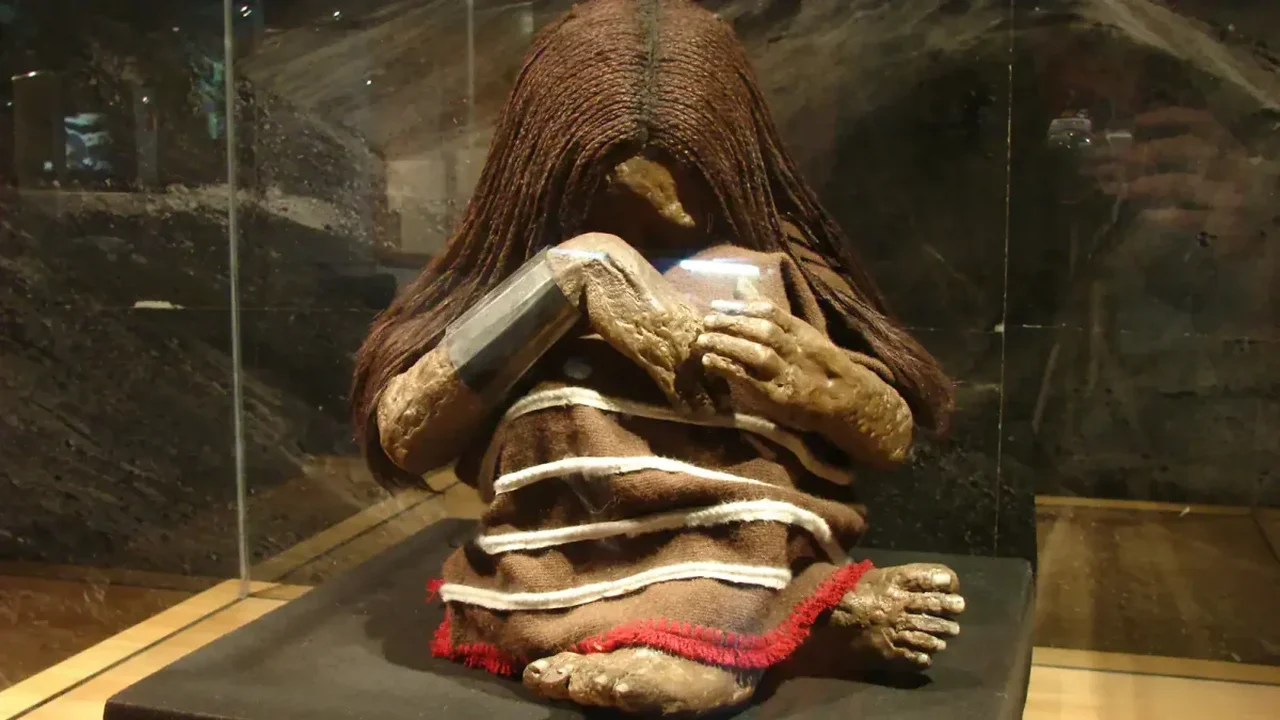
New forensic research is reshaping what scientists know about the El Plomo boy, the naturally mummified remains of an Inca child found in the Chilean Andes in 1954. Long thought to have died from exposure at high altitude, the boy now appears to have been part of a far more complex ritual journey.
A journey traced through science
Using CT scans, biomechanical modeling and isotope analysis of hair, researchers reconstructed the child's final months with remarkable detail. The evidence suggests he traveled roughly 2,600 to 2,800 kilometers before reaching Cerro El Plomo, likely moving through regions connected to the Inca heartland near Cusco.
His hair also reveals changing diet and environment over time, including a growing presence of maize, a crop closely linked to Inca ceremonial life. The findings point to a structured process that involved travel, community participation and carefully prepared offerings along the way.
What the skull revealed
The most striking result came from the boy's head. Researchers identified a fracture in the left frontal region and a matching injury pattern that could have been caused by a star-shaped blunt weapon. That evidence makes cranial trauma a more likely explanation than freezing conditions.
The study also revisited two individuals from Cerro Esmeralda in northern Chile. Their remains, once interpreted as evidence of strangulation, now appear less clear-cut. The broader picture suggests that Capacocha, one of the Inca Empire's major state ceremonies, was not a single event but a long ritual sequence involving movement, offerings and sacred landscapes.
For the Inca, these children may have been seen as intermediaries between communities, mountain deities and the imperial state. For modern science, they offer a rare window into how ritual, mobility and empire were woven together in the Andes.
As museum collections meet advanced imaging and chemical analysis, more historical lives can be read with new precision, opening fresh perspectives on the cultural worlds that shaped them and the future of archaeological science.