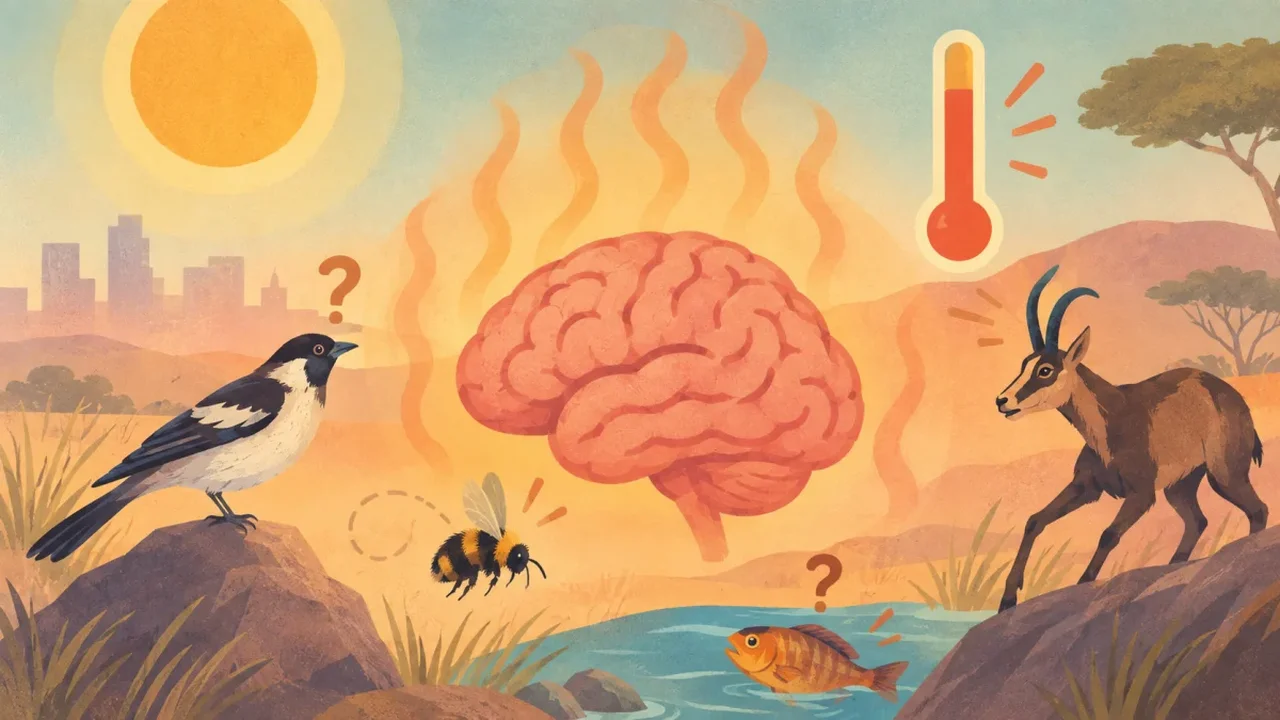
New research is revealing a striking pattern: as temperatures rise, many animals do not just slow down physically -- their behavior and decision-making can shift in measurable ways. In South Africa's Kalahari, female southern pied babblers were found to struggle with a simple learning task during hotter periods, repeatedly pecking at a barrier instead of adapting their approach.
Behavioral ecologist Amanda Ridley of the University of Western Australia says this fits a broader trend seen across species. Heat can reduce time spent foraging, feeding young, and even singing in birds. Bees may cool themselves in flight, while other animals seek shade or burrows, often at the cost of missing meals or reducing activity.
Studies in humans have long suggested that high temperatures can affect judgment and memory, and similar patterns are now appearing in wildlife. Dogs have been observed biting more often on hot, sunny days, while research in China suggests that snakes and cats may also become more prone to biting when temperatures climb.
Heat can also intensify competition. On the Italian Apennine Mountains, chamois became more territorial and reactive as conditions warmed and food became scarcer. In tropical waters, golden julie fish showed stronger aggressive responses in hotter conditions, including biting and tail-slapping at their mirror image.
Cognitive performance is another key concern. In experiments with southern pied babblers, zebra finches, mice, guppies and bumblebees, heat made learning, navigation and memory tasks harder. Bumblebees, for example, were far less successful at linking colors with rewards when temperatures rose to 90 degrees Fahrenheit.
Scientists say these findings matter because temperature affects not only individual animals, but also ecosystems. If pollinators misread floral cues, plants and crops can be affected. If birds and small mammals lose vigilance, survival becomes more difficult. As climate patterns continue to warm, animal intelligence and adaptability may become even more central to ecological balance. The future may depend on how well species can think, learn and adjust in a hotter world.