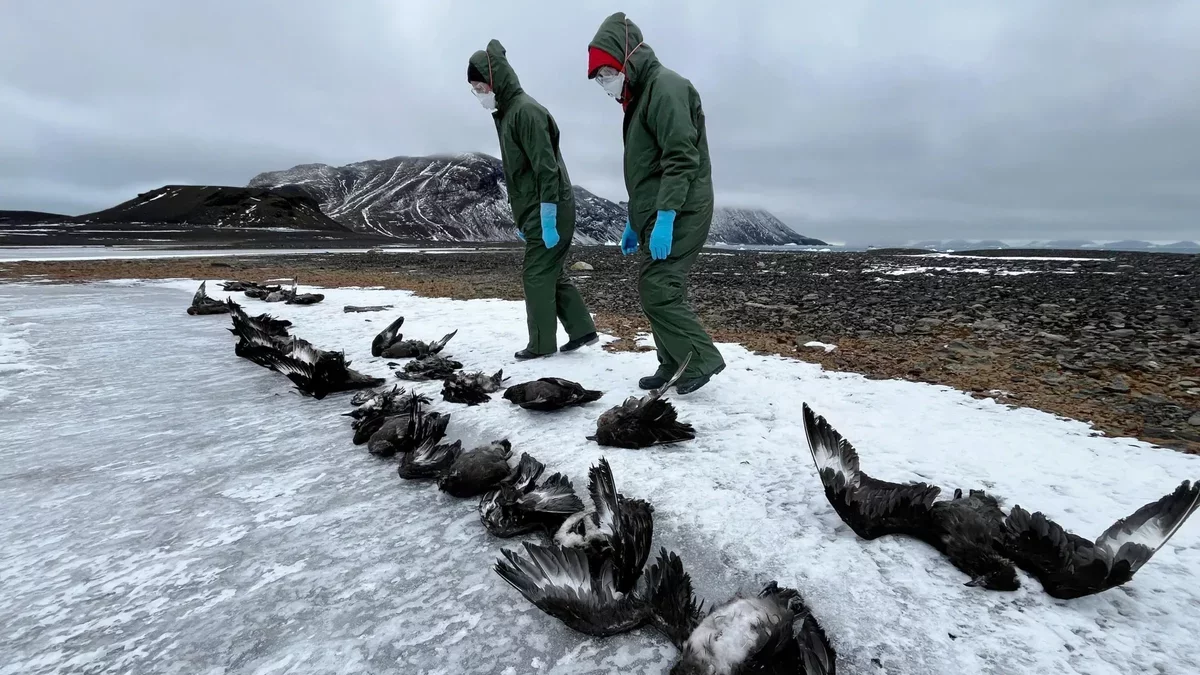
Skuas, the large brown seabirds closely related to gulls, inhabit mainly polar and subpolar regions. As predators and scavengers, they play a crucial role in cleaning up animal remains, which may inadvertently increase their susceptibility to diseases like the H5N1 virus, as noted by researchers.
Earlier in 2024, the presence of H5N1 was confirmed in a kelp gull and two skuas found deceased in January and February. However, it had not been established until now that the virus was the direct cause of their demise.
According to Ralph Vanstreels, a wildlife veterinarian from the UC Davis One Health Institute, "We were aware of infected animals, but this is the first research confirming that they succumbed to the viral infection. This distinction is critical in the early stages of an outbreak."
Research Expedition in Antarctica
In March 2024, a research team journeyed to Antarctica shortly after the breeding period for skuas and penguins. They assessed wildlife across ten locations, including the South Shetland Islands, the northern Weddell Sea, and the Antarctic Peninsula.
During their exploration, the scientists collected tissue and environmental samples from sick or deceased animals and performed necropsies to ascertain the causes of death. They examined gentoo penguins, Adélie penguins, and Antarctic fur seals, but did not find H5N1 as a contributing factor in these species.
"It quickly became evident that skuas were severely affected," noted Vanstreels.
The virus was identified in skuas at three sites: Hope Bay, Devil Island, and Beak Island, where a significant die-off of south polar skuas occurred.
Matteo Iervolino, a Ph.D. candidate at Erasmus MC in Rotterdam, stated, "We diagnosed highly pathogenic avian influenza as the cause of death for nearly all the skuas found at Beak Island. Witnessing the virus's impact on these populations was striking."
Vanstreels described the situation as a "crisis in animal suffering." H5N1 targets the brain, resulting in severe neurological symptoms, such as twisted necks and unusual body contortions. Infected birds may exhibit erratic behavior, including walking or swimming in circles and crashing into objects. The researchers emphasize that human activities have contributed to the virus's emergence and are crucial in controlling its spread.
Global Spread of H5N1
The H5N1 virus was first identified in 1996 on a domestic goose farm in Southeast China. It circulated among poultry for years before spilling into wild bird populations and spreading across Europe, the Middle East, Africa, and eventually reaching North and South America and, by early 2024, Antarctica.
This strain, now affecting Antarctic skuas, previously caused significant declines among elephant seals and sea lions in Argentina. It has resulted in the deaths of over 400 million poultry globally and has infected various mammals, including dairy cows, mink, foxes, bears, and otters.
H5N1 can also infect humans, with around 1,000 reported cases, approximately half of which have been fatal.
Thijs Kuiken, a professor at Erasmus MC, remarked, "We lost control of the virus when it first emerged in the poultry industry. Once it entered wild bird populations, our ability to manage it diminished. Now, it has established itself in wild bird populations across all continents except Oceania."
Need for Enhanced Surveillance in Antarctica
Antarctic wildlife already confronts numerous challenges, including climate change, increased tourism, invasive species, overfishing, and pollution. The emergence of avian influenza adds further strain. The study highlights the urgent need for enhanced surveillance and monitoring to mitigate the risk of further outbreaks.
One challenge is the lack of recent population data. The last census of Antarctic skuas occurred in the 1980s, estimating around 800 breeding pairs. Without updated figures, assessing the significance of the loss of 50 birds becomes challenging.
Kuiken stated, "All indicators suggest the virus will continue to spread. Without monitoring, we won't understand what is happening."
The HPAI Australis Expedition received funding from the International Association of Antarctica Tour Operators (IAATO) and Ocean Expeditions, with additional support from the European Union, Consejo Superior de Investigaciones Científicas (CSIC), and PTI Global Health.