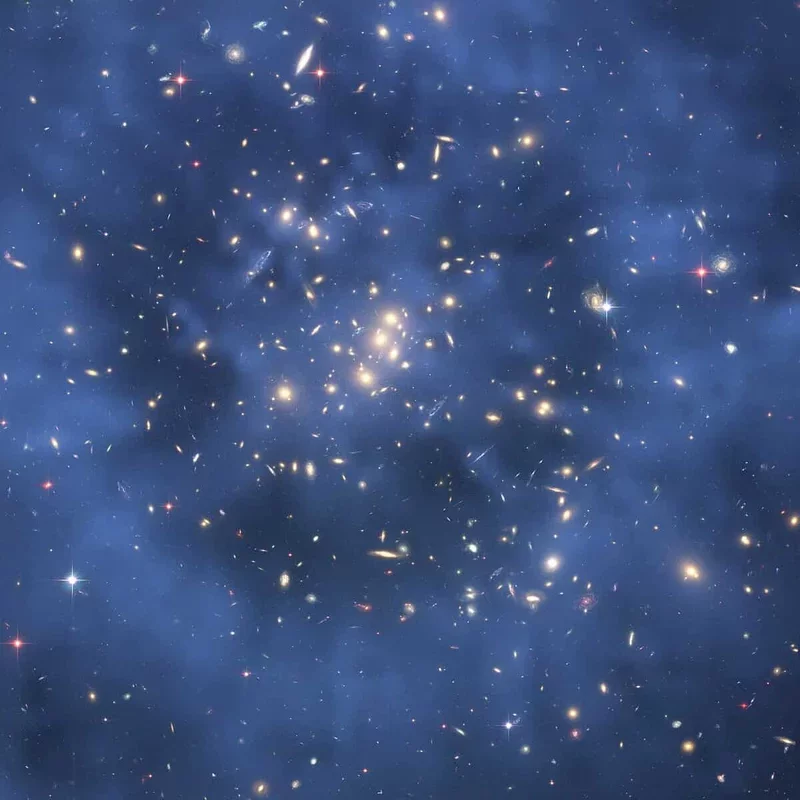
Recent research delves into one of the most profound mysteries in particle physics: the nature of dark matter. While visible matter, which includes planets, stars, and living organisms, constitutes merely about four percent of the universe, dark matter accounts for approximately 23 percent, remaining largely elusive to scientists.
Dark matter plays a crucial role in the cosmos, influencing the structure of galaxies and the formation of vast cosmic entities. Despite its significant presence, the exact composition of dark matter remains unknown, prompting ongoing theories and experiments aimed at revealing its secrets.
The Role of Gravitational Waves
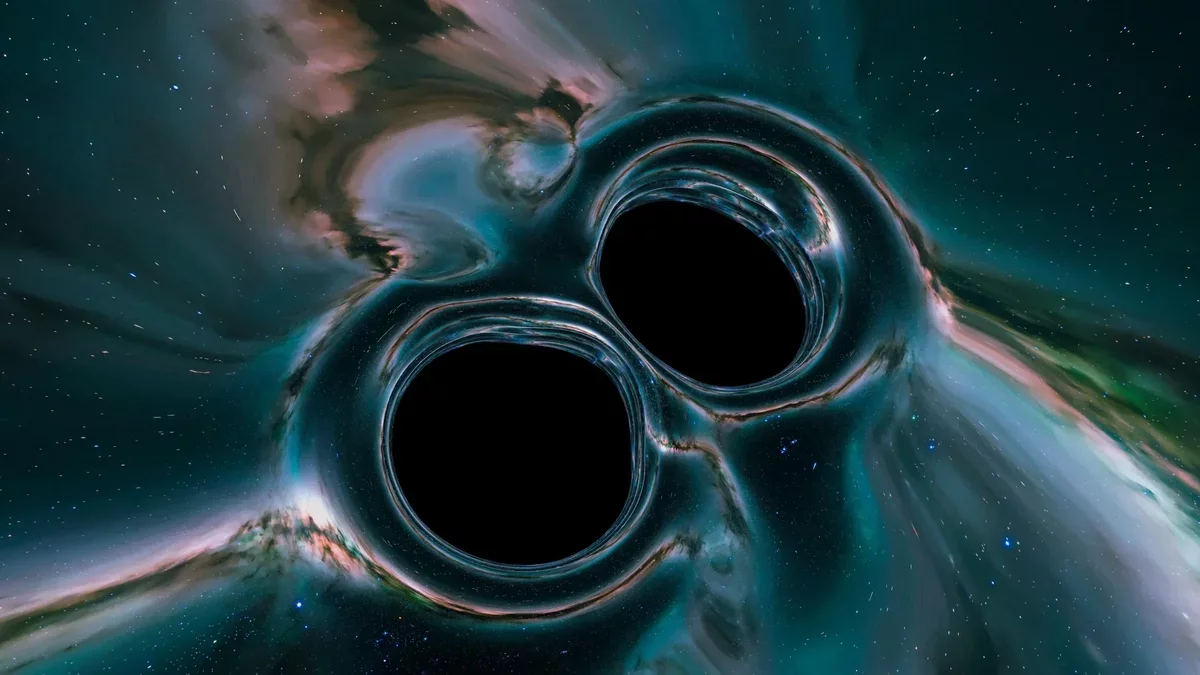
Gravitational waves are the ripples in spacetime generated by some of the universe's most energetic events, such as black hole collisions or neutron star mergers. However, not all gravitational waves stem from these monumental occurrences. Stochastic gravitational waves emerge from various processes that do not involve massive celestial bodies.
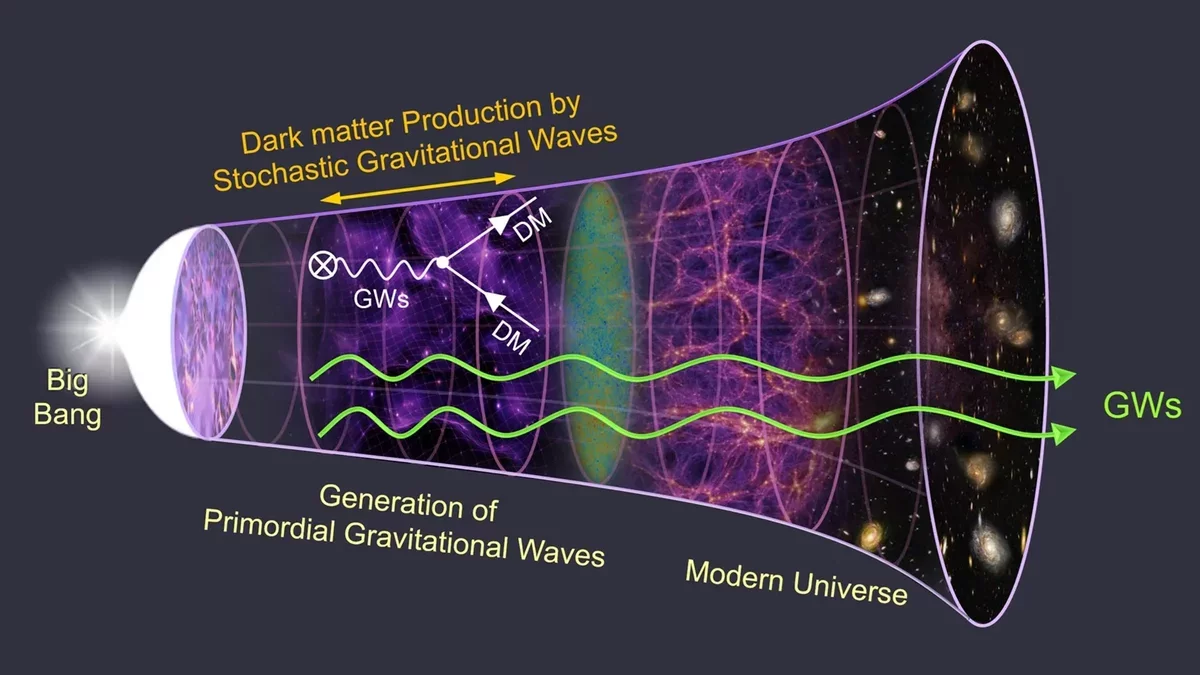
These weaker waves contribute to a background signal that permeates the universe, with many dating back to the earliest moments following the Big Bang. They may have been produced during critical phases in cosmic history, including the cooling of the universe or from primordial magnetic fields.
Research led by physicist Kopp explores the intriguing possibility that these early gravitational waves could have been partially transformed into dark matter particles. "This leads to a new mechanism of dark matter production that has not been researched before," Kopp stated.
Transforming Waves into Particles
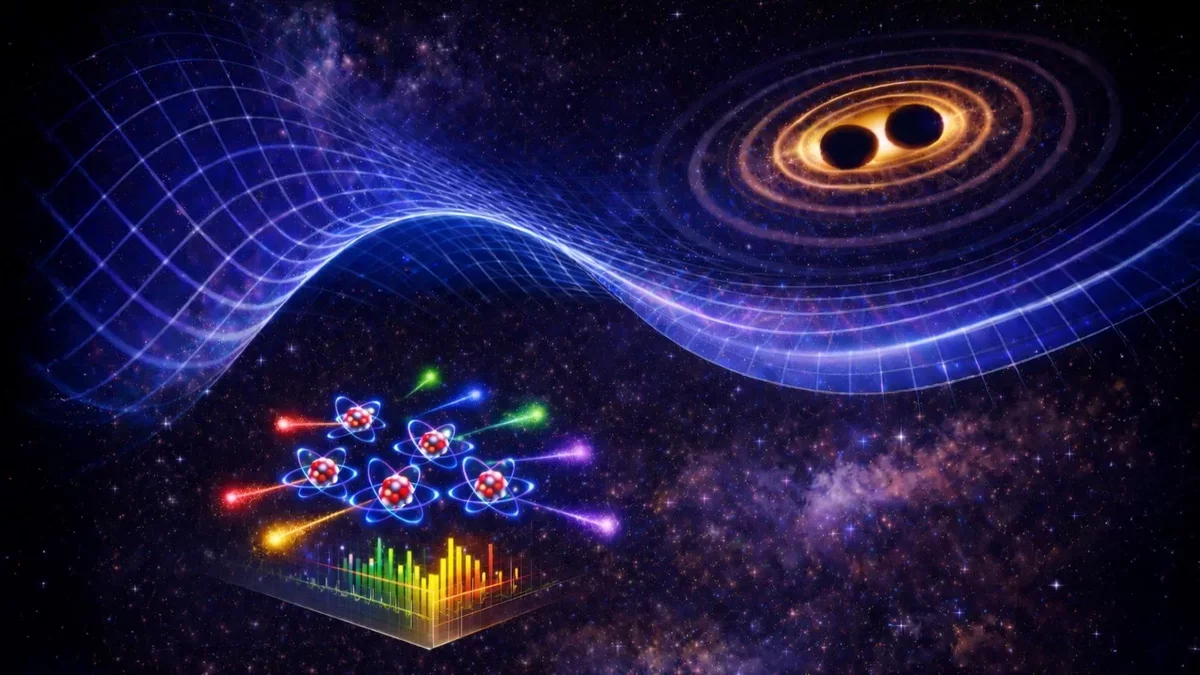
The findings suggest that the gravitational waves from the early universe might have generated fermions--particles that include well-known entities like electrons, protons, and neutrons--that initially possessed little or no mass. Over time, these primordial fermions could have acquired mass, evolving into the dark matter particles we observe today.
Future Directions in Research
Looking ahead, Kopp emphasizes the importance of advancing this research further. "We aim to move beyond our analytical estimates and perform numerical calculations to enhance the precision of our predictions. Additionally, we plan to explore other potential effects of gravitational waves in the early universe, such as mechanisms that could explain the disparity between particles and antiparticles," he explained.