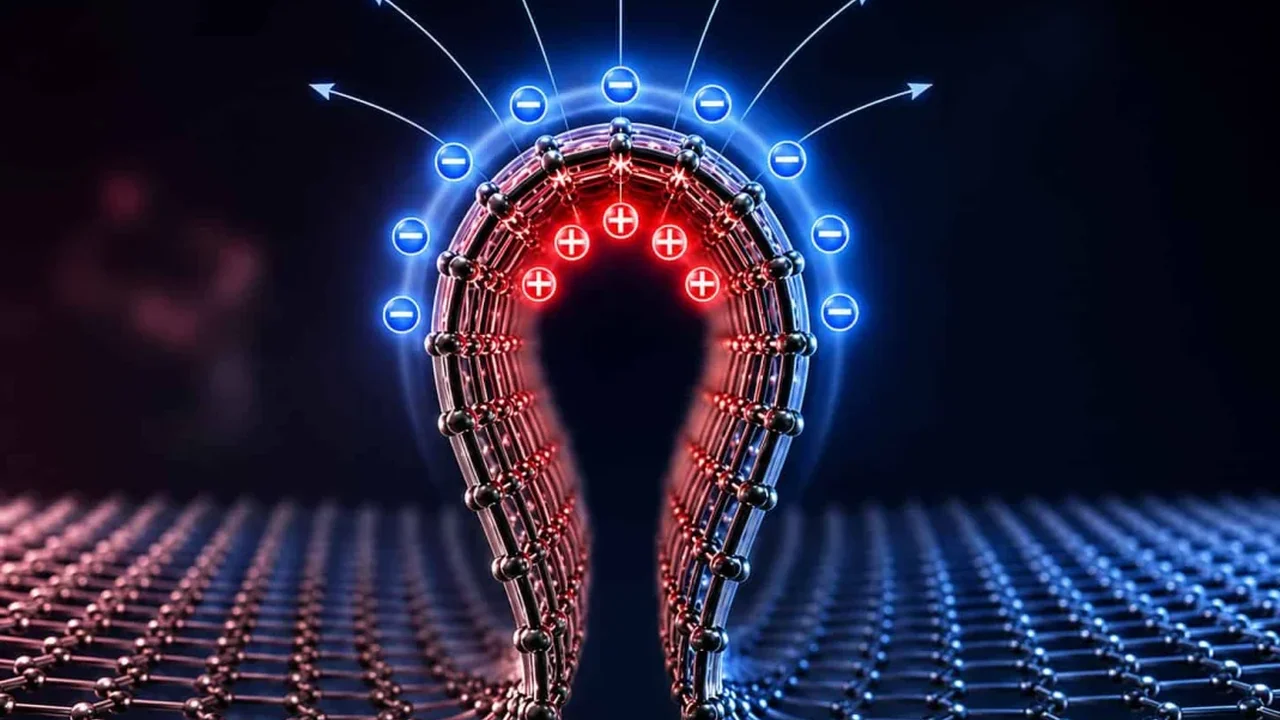
Researchers have found that when graphene bends at near-atomic sharpness, its electrical behavior can shift in unexpected ways. The effect was first predicted in 2008, when physicists suggested that extreme curvature could disturb electron balance and create polarization from shape alone.
In a new study, scientists in the US and UK report that tiny, naturally formed wrinkles in graphene produced electrical changes consistent with those predictions. The team observed that the sharpest bends altered the local electrical potential in a way that matched atomic-scale calculations.
The work points to a form of flexoelectricity, where uneven bending separates charge. But in graphene, the researchers say the effect appears even more distinctive: extreme curvature changes how electron orbitals overlap, shifting electrons around the wrinkle. They describe this as quantum orbital flexoelectricity.
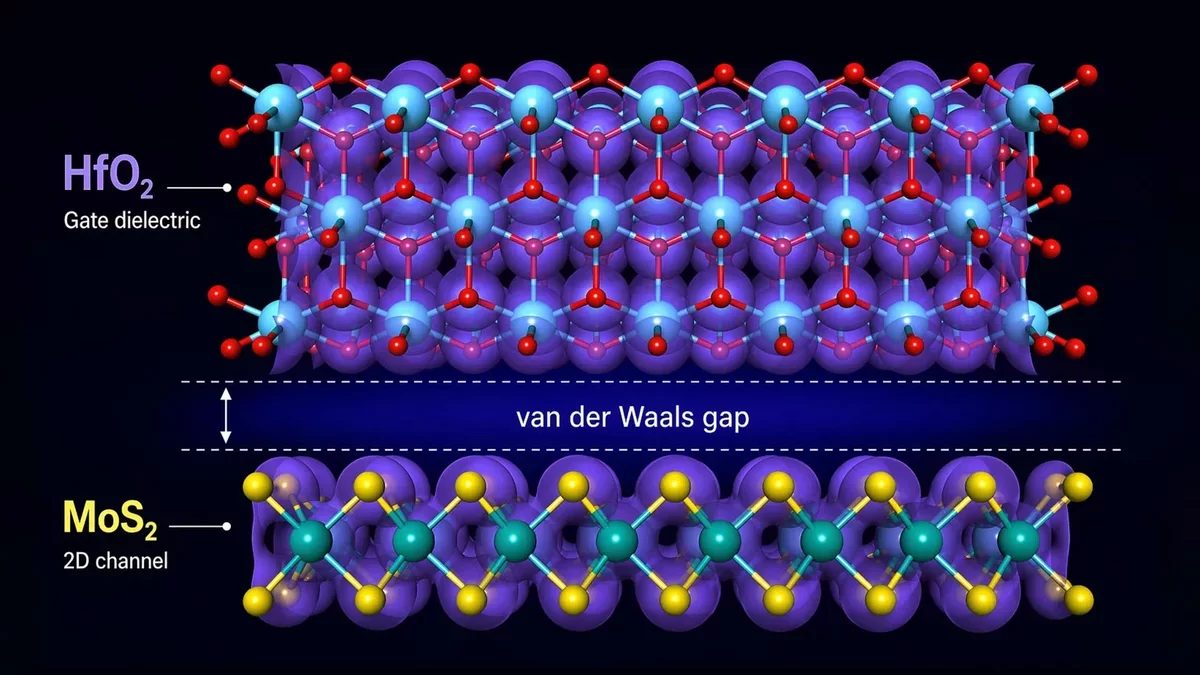
The wrinkles formed where graphene sat on molybdenum disulfide, another atomically thin material. Because the two layers respond differently to stress, graphene buckled into narrow ridges without direct mechanical pushing, giving the team a cleaner way to study extreme curvature.
The results also showed that sharpness mattered more than height. Taller wrinkles with gentler curves had less impact, while the most pointed bends produced the strongest electrical imbalance. The researchers estimate the polarization was far greater than in many larger flexoelectric systems.
Published in Advanced Materials, the study suggests a future in which nanoscale electronics could be tuned by design, simply by controlling how atom-thin materials bend. That could open new paths for flexible devices, smart sensors, and next-generation quantum materials.
This discovery may help shape a new era of electronics where geometry becomes a tool for engineering performance.