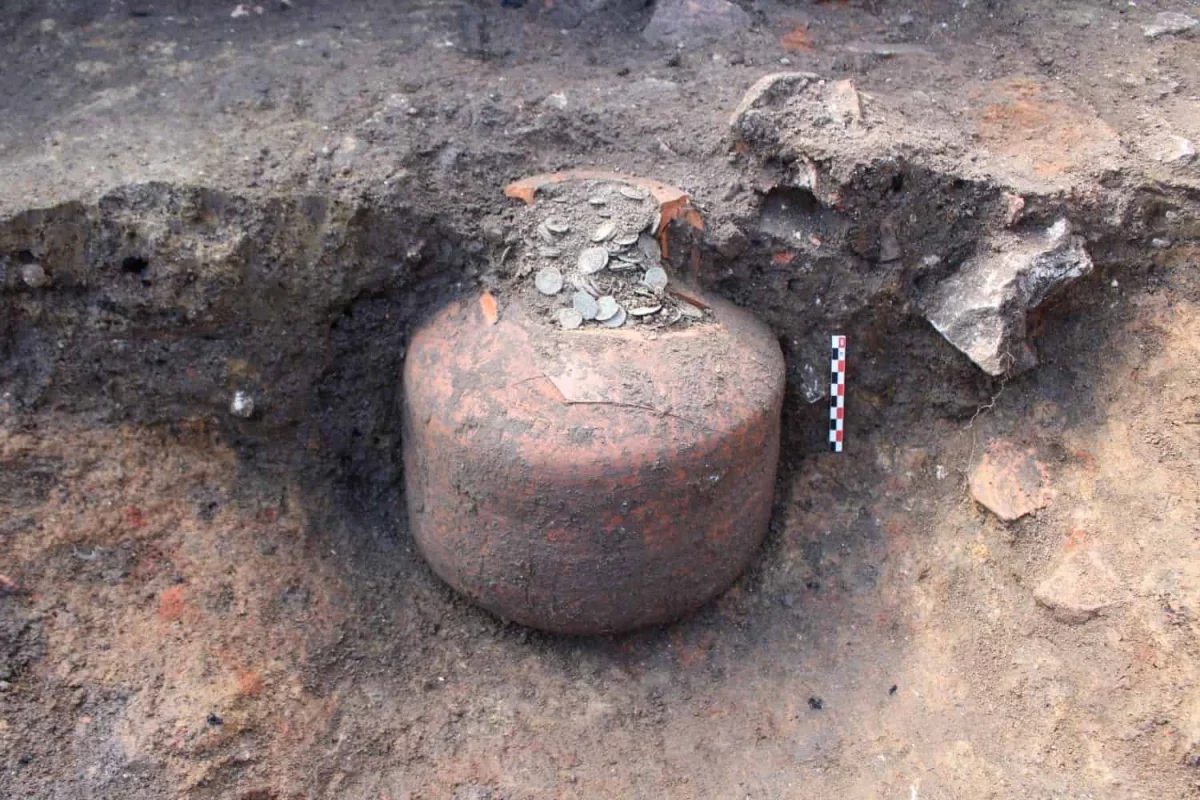
Archaeologists in northeastern France have uncovered a remarkable Roman-era deposit beneath the town of Senon: three ceramic jars filled with tens of thousands of coins. The find, made during a routine preventive excavation, includes at least 25,000 bronze and copper pieces dating to the 3rd century CE, with the full hoard possibly exceeding 40,000 coins.
A window into daily life in Roman Senon
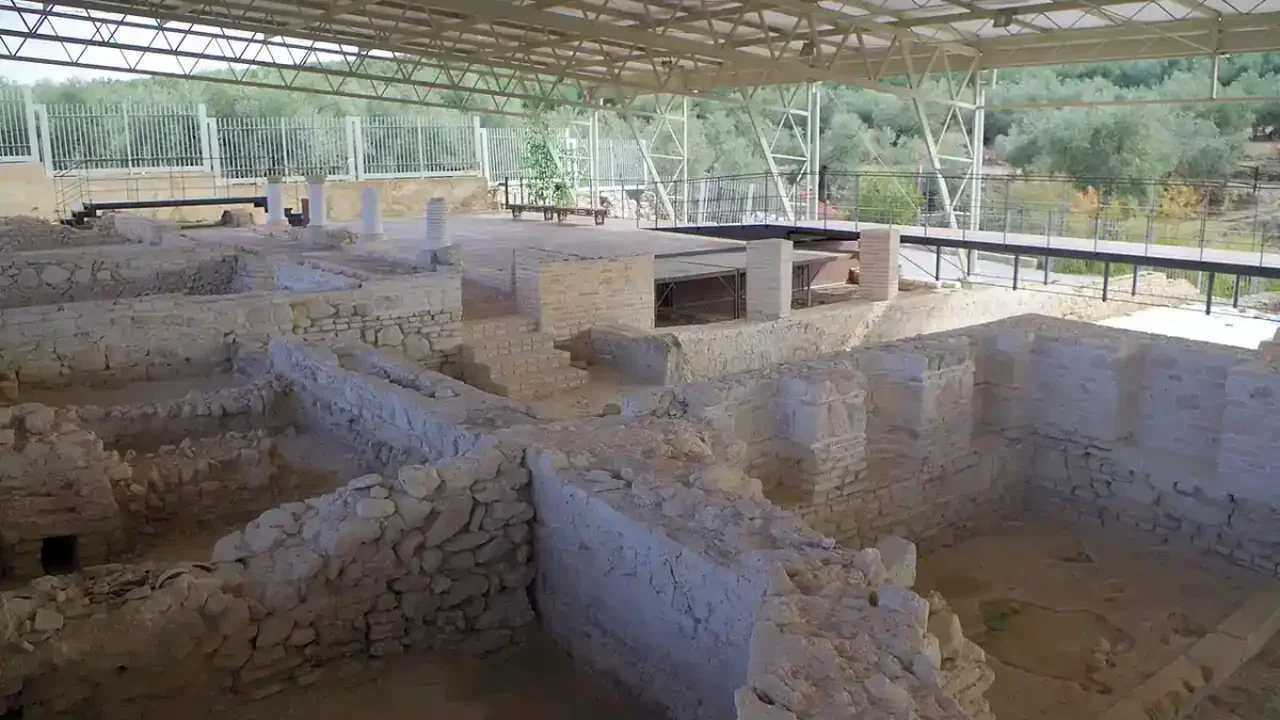
The excavation, carried out by INRAP, covered about 1,500 square meters and revealed the long history of the settlement. Beneath later layers, researchers identified traces of an earlier Gallic village, including pits, ditches, and postholes that point to a compact, well-organized community before Roman rule.
As the town developed under Roman influence, Senon expanded into a structured neighborhood with paved streets, stone houses, lime floors, ovens, cellars, and hypocaust heating systems. The layout suggests a prosperous district likely inhabited by artisans or merchants.
The hidden jars
The coin-filled vessels were buried beneath the floor of one of these homes. According to INRAP numismatist Vincent Geneviève, one jar alone held an estimated 23,000 to 24,000 coins, while another may have contained as many as 19,000 more. The coins feature emperors such as Victorinus, Tetricus I, and Tetricus II, figures associated with the short-lived Gallic Empire.
Researchers say the jars may not have been emergency caches. Evidence suggests they could have served as household storage systems, with coins added and withdrawn over time. In two cases, coins were found attached to the outside of the jars, reinforcing the idea that the openings remained accessible from above.
Fire, rebuilding, and rediscovery
Archaeological layers also show that the district experienced major fires in the 4th century. Residents rebuilt using recycled materials, including old stones and columns, before the area was eventually abandoned. Over time, the neighborhood disappeared beneath farmland and orchards until modern construction brought it back into view.
Today, the hoard is being cleaned and studied, while the site has been digitally preserved in 3D. Discoveries like this deepen our understanding of how Roman communities lived, saved, and adapted, offering a clearer picture of economic life in antiquity and how archaeology can still reshape the future of historical knowledge.