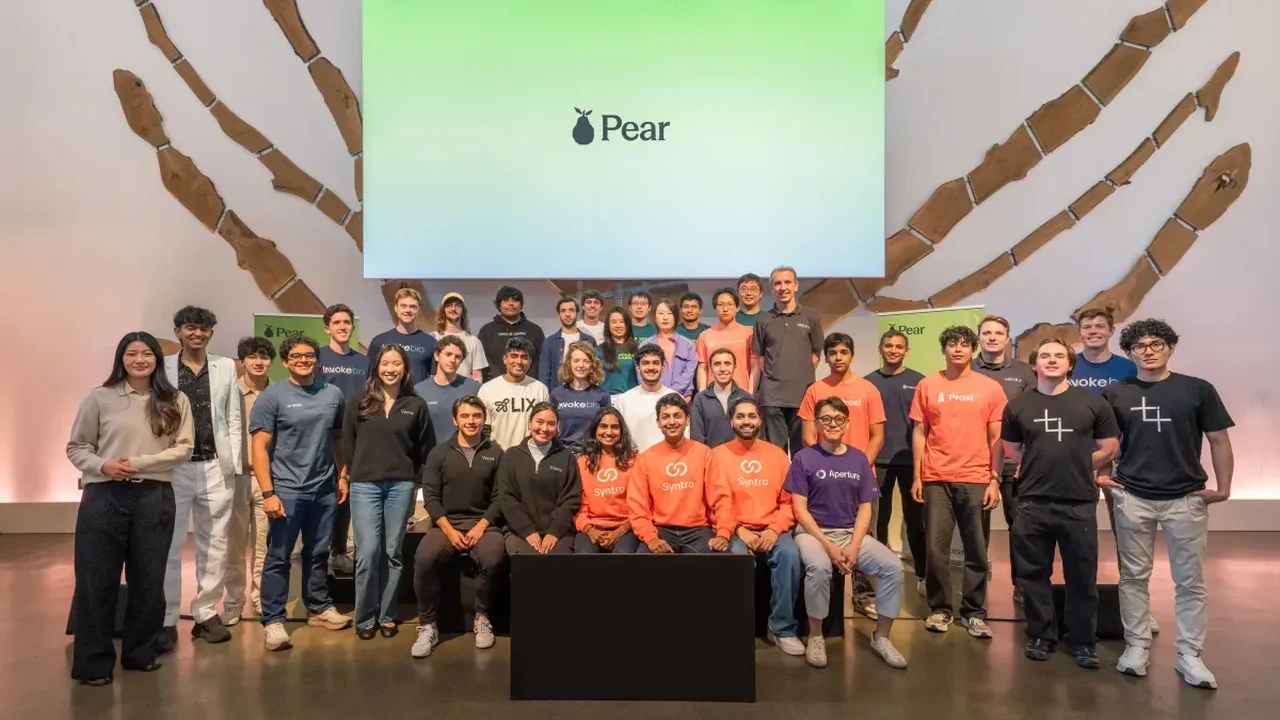
PearX, the selective 12-week accelerator backed by Pear VC, introduced a new cohort of 16 early-stage companies in San Francisco. Five ventures drew particular attention for applying artificial intelligence, advanced computing and automation to practical challenges across industries.
From spatial AI to edge computing
Speridlabs is developing spatial foundation models for robotics, gaming and visual effects. Its Mundus platform is designed to create editable 3D environments while preserving geometric consistency when individual elements are changed, aiming to make complex digital worlds more flexible for creators and developers.
Saia is building an on-device AI inference chip designed to reduce reliance on conventional high-power memory. The company says its approach runs AI workloads from flash storage, with ambitions to deliver greater capacity and energy efficiency for local computing devices. Test-chip fabrication is planned for next year, followed by a potential production path toward 2028.
AI designed around privacy and real-world workflows
Ren is creating a personal AI assistant centered on privacy and user control. Its system is designed to keep information on devices when possible, use a secure private cloud when needed, and follow user-defined action limits. The company also uses automated voice technology rather than human call operators.
Veros applies AI to trust and estate planning, a field often associated with lengthy administrative processes. The platform recommends trust structures and supports long-term asset administration. Veros says it currently manages $250 million in assets and is working toward becoming a regulated trust company.
Datum focuses on industrial design workflows. Its technology indexes corporate libraries of 3D models and uses Geometric Fingerprint technology to identify components by shape. By making past designs easier to discover and reuse, the company aims to accelerate physical product development.
Collectively, these ventures reflect a broader shift toward AI systems that are more efficient, privacy-aware and deeply integrated into creative, industrial and financial workflows. Their progress could help define how intelligent tools move from experimentation into everyday infrastructure.