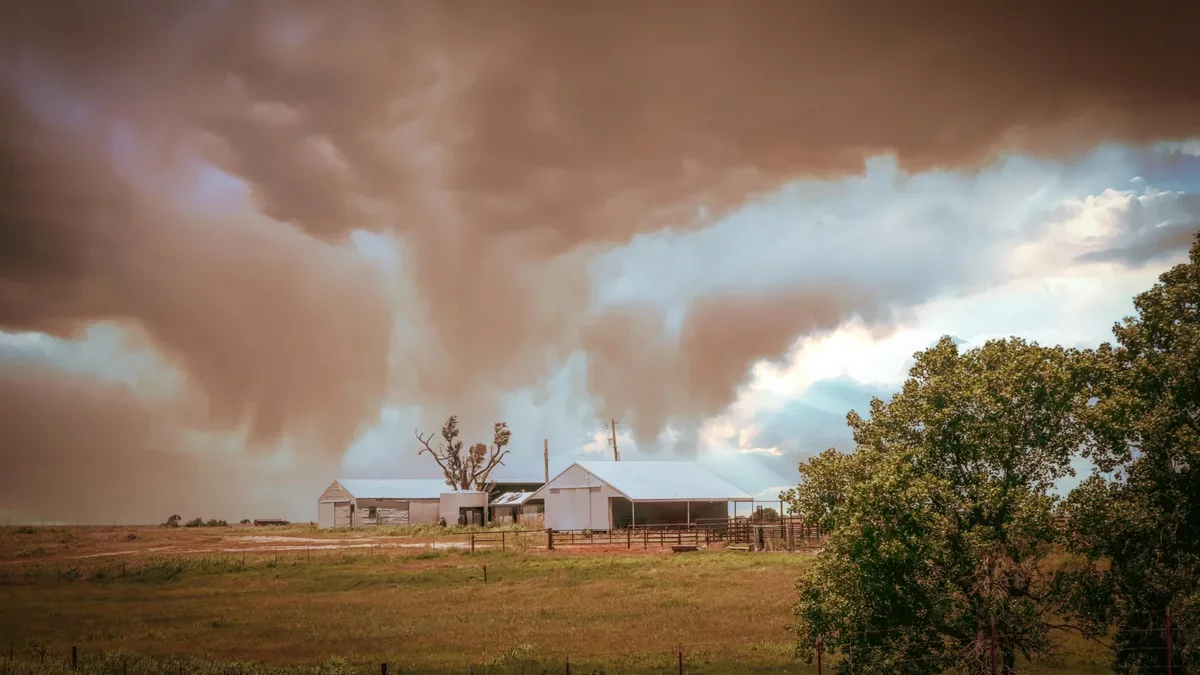
A recent field study conducted by the University of Colorado Boulder in Oklahoma has led to a groundbreaking discovery: the first airborne detection of Medium Chain Chlorinated Paraffins (MCCPs) in the Western Hemisphere. Utilizing advanced instruments to explore the formation and evolution of tiny airborne particles, the researchers stumbled upon this unexpected finding, which has been detailed in the journal ACS Environmental Au.
Lead author Daniel Katz, a chemistry PhD student at CU Boulder, expressed his enthusiasm: "It's very exciting as a scientist to find something unexpected like this that we weren't looking for. We're starting to learn more about this toxic organic pollutant that we know is out there, and which we need to understand better."
Understanding MCCPs and Their Significance
MCCPs are currently under evaluation for potential regulation under the Stockholm Convention, an international treaty aimed at safeguarding human health from persistent chemicals. Previously detected in regions like Antarctica and Asia, their presence in the air over the Western Hemisphere had remained elusive until this study.
These compounds are widely used in various industrial applications, including metalworking fluids and the production of PVC and textiles. They often appear in wastewater and can be found in biosolid fertilizers, commonly known as sewage sludge, produced during wastewater treatment. The researchers suspect that the MCCPs detected in Oklahoma likely originated from fields treated with such fertilizers.
"When sewage sludges are spread across the fields, those toxic compounds could be released into the air," Katz explained. "While we can't definitively prove this, it's a plausible pathway for their presence in the atmosphere, as similar compounds have been shown to be released from sewage sludge fertilizers."
Regulatory Implications
MCCPs are closely related to Short Chain Chlorinated Paraffins (SCCPs), which have been regulated under the Stockholm Convention and by the U.S. Environmental Protection Agency since 2009 due to their long-range transport, environmental persistence, and potential health risks. Researchers speculate that the regulation of SCCPs may have inadvertently led industries to substitute them with MCCPs, thus increasing their prevalence.
"Regulations can lead to unintended consequences, where the need for certain products persists, prompting a switch to alternatives," noted Ellie Browne, a CU Boulder chemistry professor and co-author of the study.
Monitoring and Future Research Directions
The discovery was made through continuous air monitoring at the Oklahoma site, utilizing a nitrate chemical ionization mass spectrometer capable of identifying specific airborne compounds. Data was collected continuously for a month, revealing unusual isotopic patterns linked to MCCPs.
Katz emphasized the importance of understanding the behavior of MCCPs in the atmosphere, especially as they share similarities with PFAS, often referred to as "forever chemicals" due to their slow degradation. Following concerns about PFAS contamination, the Oklahoma Senate recently banned biosolid fertilizers.
With the ability to detect MCCPs confirmed, researchers aim to monitor their levels over time, exploring seasonal variations and the potential impacts of these chemicals once airborne. "We identified them, but we still don't know exactly what they do when they are in the atmosphere, and they need to be investigated further," Katz stated, underscoring the need for ongoing evaluation and regulation to protect public health.