In a groundbreaking achievement, scientists from CERN's BASE collaboration have successfully transported antimatter by road for the first time. They loaded 92 antiprotons into a portable trap, disconnected it from the antimatter factory, and drove it across CERN's main site in a truck.
This remarkable feat is significant because antimatter cannot come into contact with ordinary matter; otherwise, both would annihilate each other instantly. Transporting such a delicate substance over real roads, with their inevitable bumps and vibrations, underscores the ingenuity of the researchers involved.
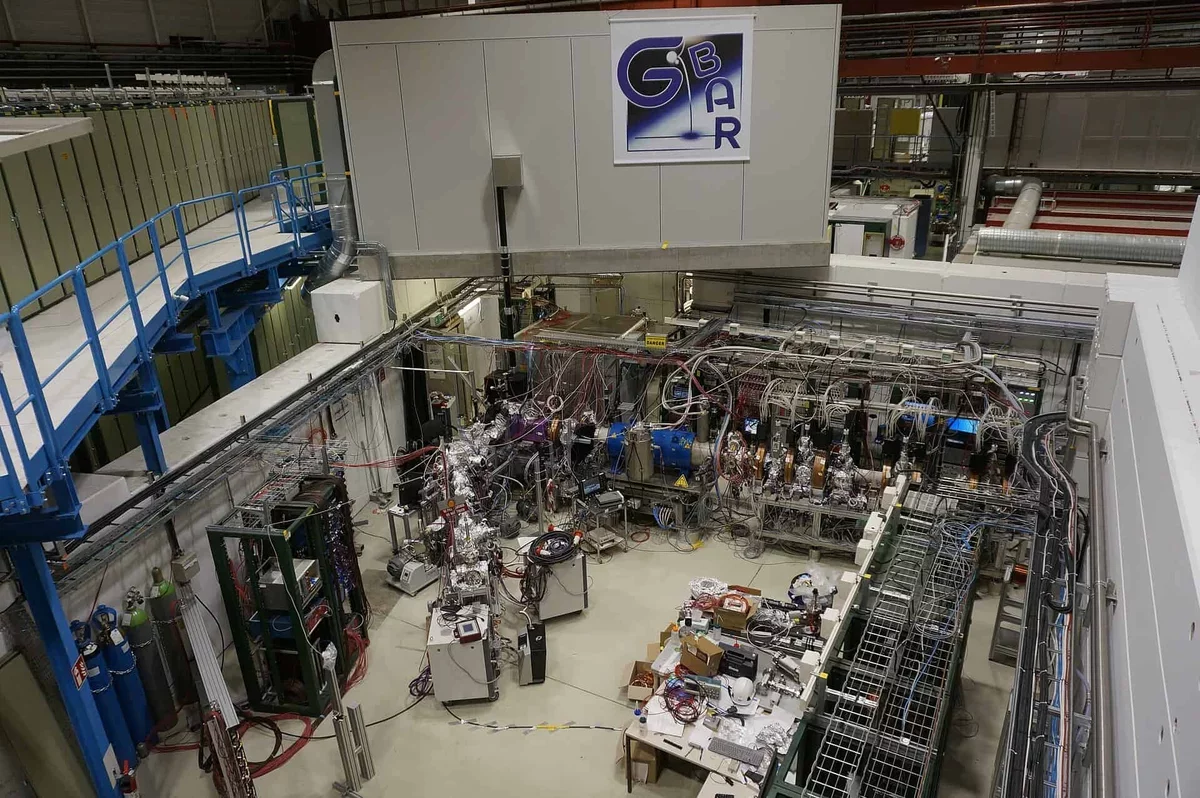
CERN's antimatter factory is the only facility capable of routinely producing usable antiprotons. However, the environment is quite noisy for precision measurements. By relocating these antiprotons to quieter laboratories, scientists aim to enhance measurement accuracy and explore fundamental questions in physics, such as why matter persisted after the Big Bang while antimatter seemingly did not.
"Transporting antimatter is a pioneering and ambitious project. I congratulate the BASE collaboration on this impressive milestone. We are at the beginning of an exciting scientific journey that will further deepen our understanding of antimatter," stated Gautier Hamel de Monchenault, CERN's Director for Research and Computing.
Understanding Antimatter
Antimatter is composed of particles that mirror the mass of ordinary matter but possess opposite electric charges and certain magnetic properties. The question of why our universe is predominantly made up of matter, with virtually no antimatter, remains one of modern physics' most profound mysteries. While theories exist, empirical testing is essential for validation.
Since its first creation in 1932 by physicist Carl D. Anderson, antimatter has been a topic of intrigue. Currently, only about 20-30 nanograms of antimatter have been produced globally, a minuscule amount that wouldn't even generate sufficient energy to boil a cup of tea. The challenges lie not in safety, but rather in ensuring that antimatter is securely stored, given the high costs associated with its production.
The CERN Antimatter Factory is a unique establishment, the only one worldwide capable of producing, slowing down, storing, and studying antiprotons in significant quantities. However, the machinery required generates magnetic fluctuations that can disrupt ultra-precise measurements. To truly comprehend why the universe is composed of matter rather than nothingness, physicists need to transport these particles away from CERN's magnetic influences and into dedicated labs.
A Promising Future
During this initial test, the antiprotons were only transported within CERN, but it serves as a proof-of-concept for future journeys, including a potential 700-kilometer trip to Düsseldorf, Germany. "To reach our first destination--a dedicated precision laboratory at HHU in Germany--would take at least 8 hours," explained Christian Smorra, Leader of BASE-STEP. This ambitious endeavor requires maintaining the trap's superconducting magnet close to absolute zero, necessitating a generator for a cryocooler on the truck.
While this initial transport involved just 92 particles over a short distance, it marks a significant step forward. The successful execution of this task opens avenues for experiments that may illuminate why the universe exists as it does.