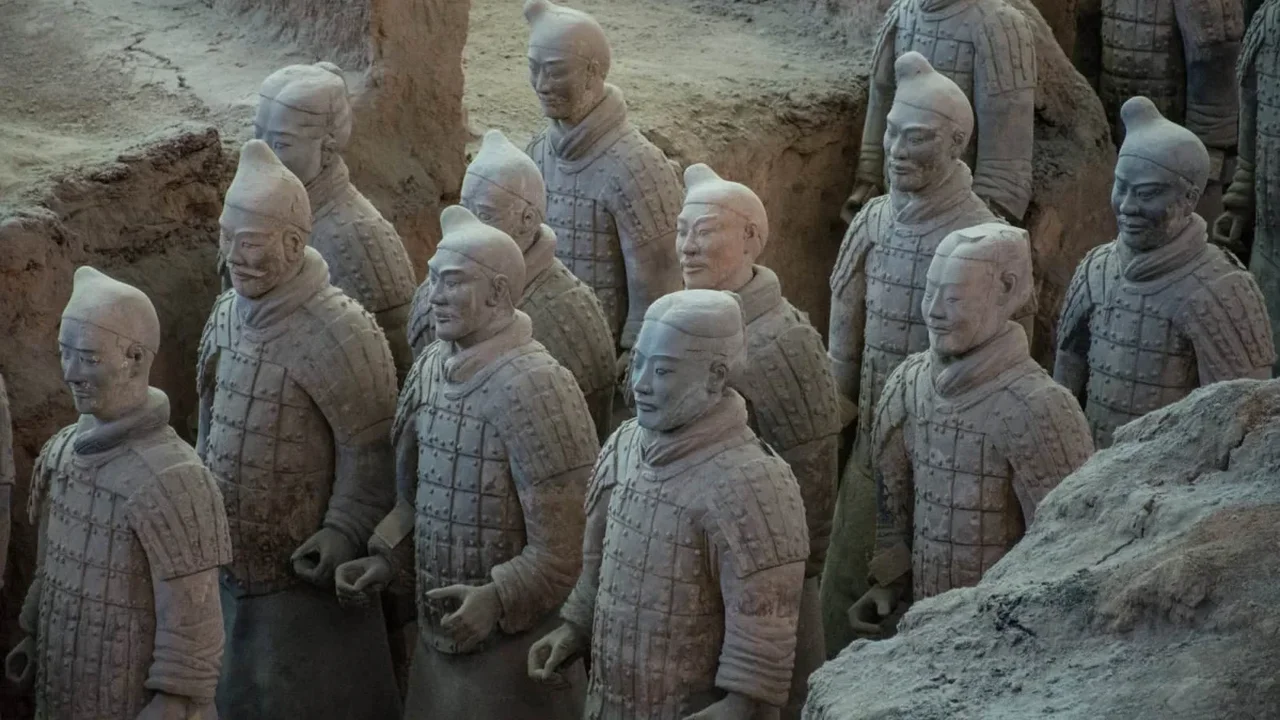
A set of ancient fingerprints is offering new clues about the people behind one of China's best-known archaeological discoveries. Researchers examined 79 impressions on 36 Terracotta Army figures from Pit 1 at the mausoleum site near Xi'an.
The study, led by Xiaoxi Li of the Emperor Qinshihuang's Mausoleum Site Museum and published in the Journal of Cultural Heritage, used a Bayesian statistical model to estimate the age and sex groups represented in the fingerprints. Its results suggest about 45% may belong to adult men, 32.7% to adult women and 22.3% to people younger than 15.
What fingerprints can reveal
Rather than identifying individual workers, the model assessed patterns in fingerprint ridge spacing across the sample. These measurements can offer statistical clues about age and sex, but the groups overlap: for example, an adolescent's prints may resemble those of an adult. The researchers also note that their reference data and possible clay shrinkage during firing introduce uncertainty.
The findings therefore do not establish who made each figure or how many workers took part. A person may have left several impressions, while others left none. Still, the evidence is consistent with women and younger people contributing directly to production.
The Terracotta Army was created for Qin Shi Huang, who unified China in 221 BCE. Making thousands of detailed clay figures required coordinated work across sculpting, assembly, drying, firing and finishing. The fingerprints add a rare human dimension to what is known about that vast undertaking.
As researchers apply improved analytical methods to more ancient objects, small traces left by craftspeople may help build a fuller picture of how historical societies organized work.