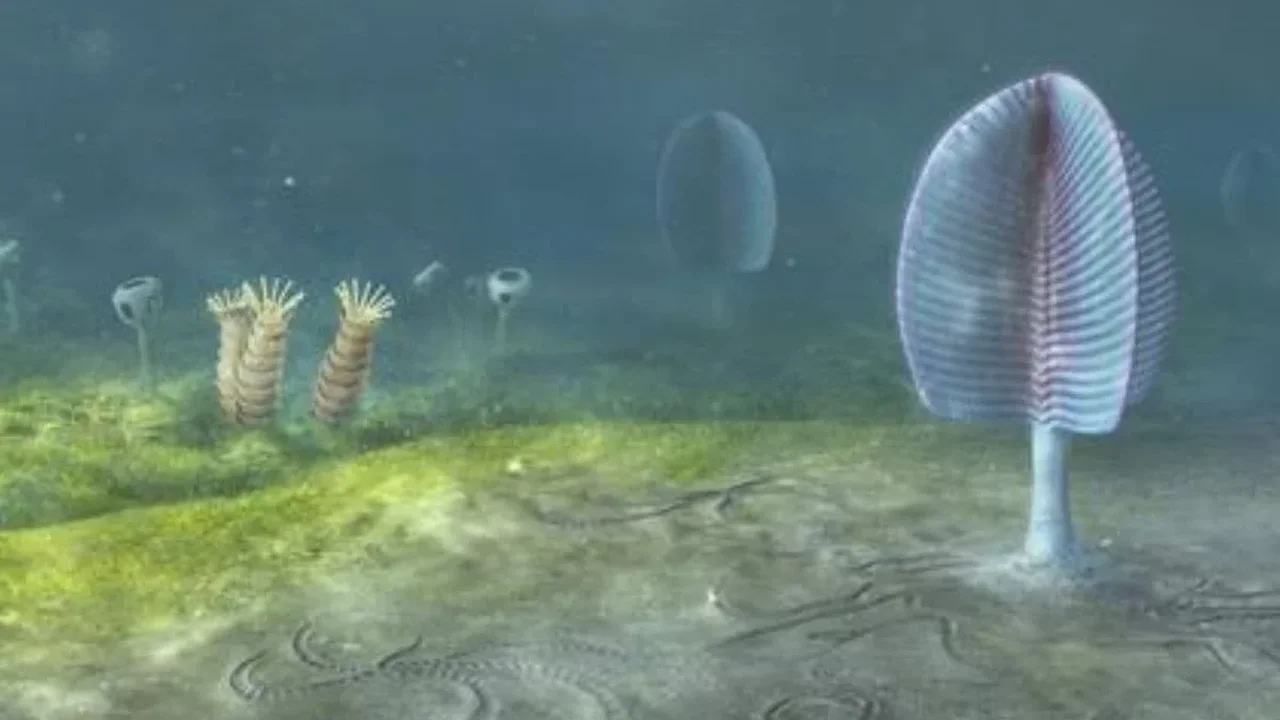
A new analysis suggests the animal kingdom may have begun far earlier than its familiar fossil record indicates. Researchers estimate that animals could have emerged between 800 million and 700 million years ago--as much as 200 million years before the oldest widely accepted animal body fossils.
Rethinking what the fossil record can show
The study, published in Science Advances, revisits how scientists estimate the timing of major evolutionary events. The fossil record appears to show animals emerging around 574 million years ago, but an absence of recognizable fossils does not necessarily mean animals were absent.
To explore that possibility, researchers from the University of Oxford and collaborating institutions examined more than 140 samples from Mongolia's Kheseen Biota. Although these rocks preserve microscopic organisms in fine detail, they contain no definitive animal fossils. The deposits date to roughly 550-526 million years ago, when animals are known to have existed elsewhere--showing that some environments may preserve microscopic life while leaving animals unrecorded.
The team reconsidered how this kind of fossil evidence is used to calibrate the molecular clock, a method that estimates when evolutionary lineages diverged by comparing genetic differences among living organisms. Using alternative constraints from older fossil-rich deposits in Norway, Australia and the United States, the analysis produced an earlier range for animal origins.
A possible link to ancient ice ages
If animals arose toward the older end of that estimate, they may have existed before the Cryogenian glaciations, often called "Snowball Earth," which began around 720 million years ago. That possibility remains unconfirmed: the analysis does not prove animals were present then, and further fossil and chemical evidence is needed.
The revised timeline offers researchers a new framework for investigating early animal evolution. Future discoveries could clarify whether the first animals emerged before Earth's most extreme ice ages and how life adapted to a changing planet.