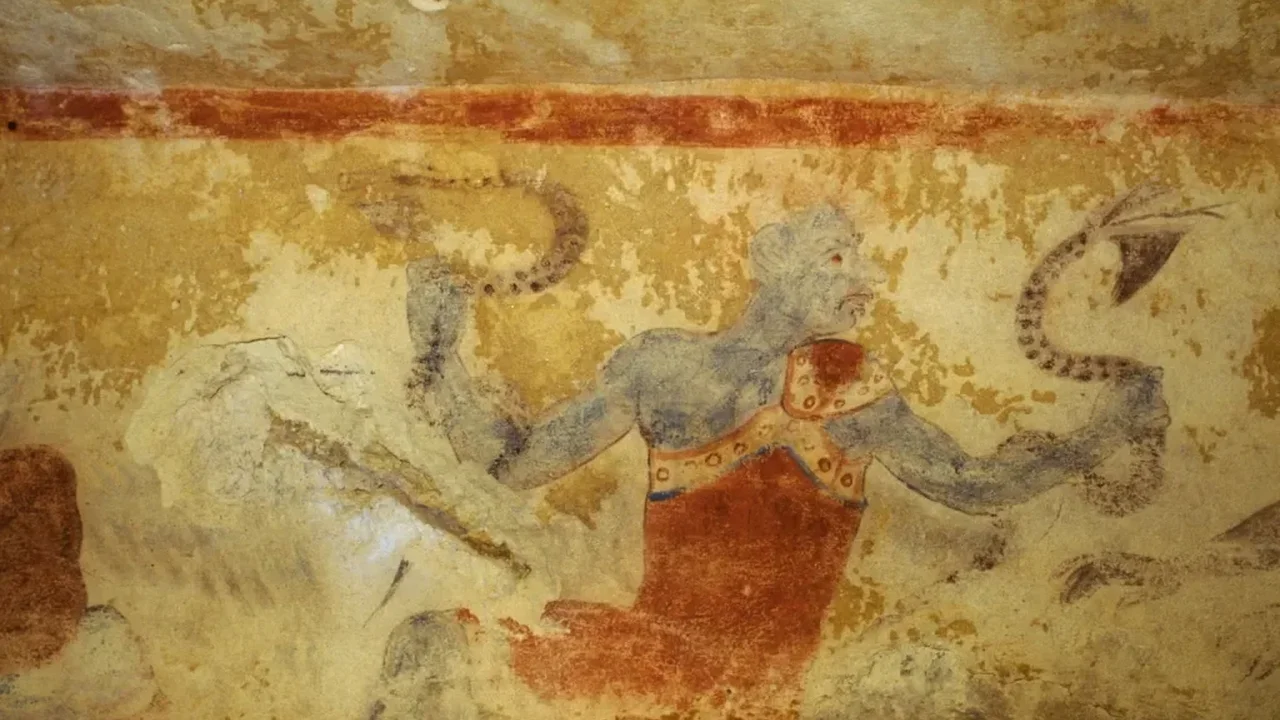
Researchers have used AI and acoustic analysis to better understand how ancient Etruscan tombs in Tarquinia, Italy, may have been experienced more than 2,500 years ago. The study focuses on two 5th-century BCE painted tombs: the Tomba del Gallo and the Tomba dei Demoni Azzurri.
Led by Maurizio Forte of Duke University and Jacqueline Ortoleva of the University of Oxford, the team explored how architecture, light, imagery, and sound may have shaped the emotional atmosphere inside these burial spaces. Their work was published in the Journal of Archaeological Method and Theory.
To reconstruct the experience, the researchers measured how handclaps echoed through the chambers and used AI to map movement through the tombs. They also considered how the interiors may have appeared under candlelight, creating a more immersive picture of ancient ritual space.
The findings suggest that these tombs were designed not only as resting places for the dead, but also as environments that influenced visitors through visual and acoustic cues. One tomb appears to have offered a calmer experience, while the other may have felt more disorienting and intense.
The study opens a wider conversation about funerary architecture in the ancient Mediterranean, showing how digital tools can reveal new dimensions of cultural heritage. In the future, this kind of research may help museums and archaeologists bring historic spaces to life with greater precision and depth.