A fossil forest preserved along the coast of southwest England is offering a rare view of Earth's earliest woodlands. Dating to around 390 million years ago, it is considered the oldest known fossil forest, predating previously identified examples in New York.
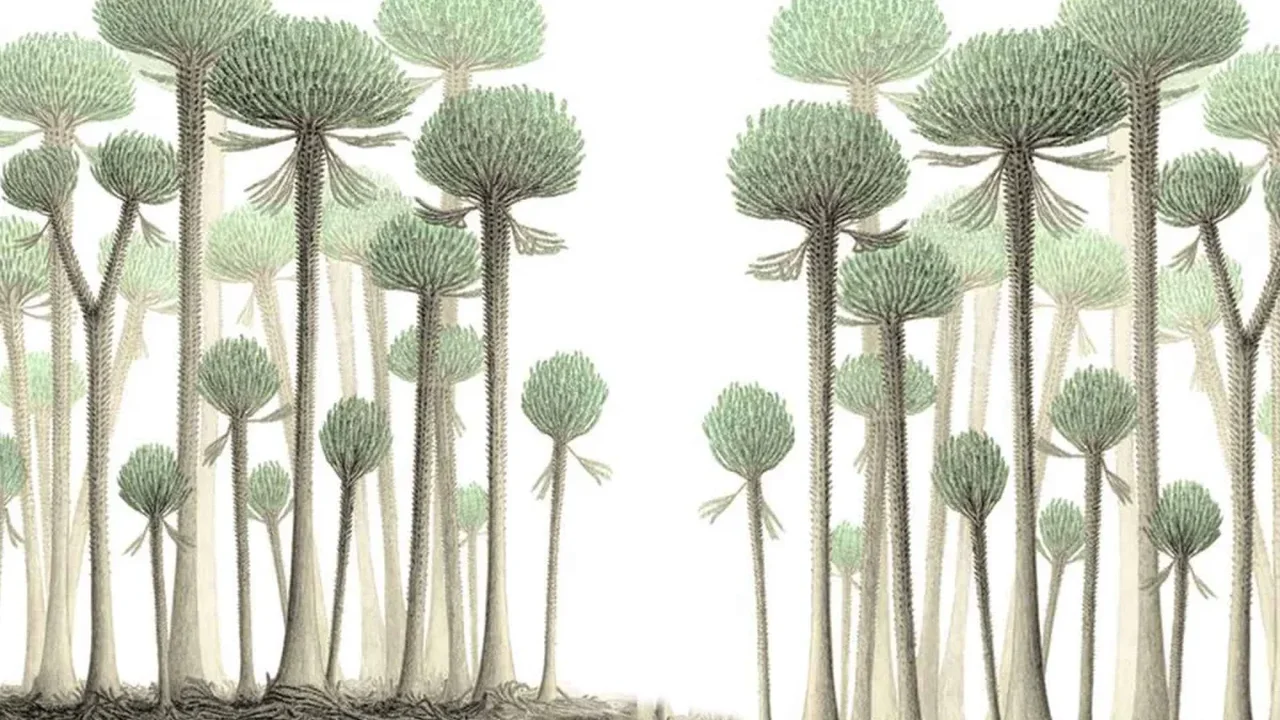
The forest was made up of Calamophyton, an extinct group related to modern ferns and horsetails. These trees stood about two to four metres tall, with slender trunks and branches covered in small, twig-like structures rather than familiar leaves. Their unusual trunks had hollow centres supported by woody strands.
Clues preserved beside an ancient river
Researchers identified the remains in sandstone along the Devon and Somerset coast. Fossilized trunks still stand where the trees grew, alongside traces of roots, fallen wood and marks left by ancient water. At Porlock Weir, the remains lie beside a former river channel about 15 metres wide.
Scour marks around the tree bases indicate that water flowed around the trunks, eroding nearby sediment. The trees and their roots also helped hold sediment in place. Together, the evidence suggests that early forests influenced how rivers moved through the landscape, encouraging more defined channels.
The discovery also offers a glimpse of forest evolution. The English site preserves a relatively simple community dominated by short trees. Fossil forests in New York, roughly four million years younger, contain more varied plant life, including trees with substantial wood and deeper root systems. The contrast suggests that forest ecosystems diversified over a geologically brief period, though the incomplete fossil record leaves the pace uncertain.
Led by researchers including Neil Davies of the University of Cambridge and Christopher Berry of Cardiff University, the study was published in the Journal of the Geological Society. By revealing how early trees interacted with water and sediment, the findings help illuminate how vegetation began shaping landscapes--an important perspective for understanding Earth's changing environments.