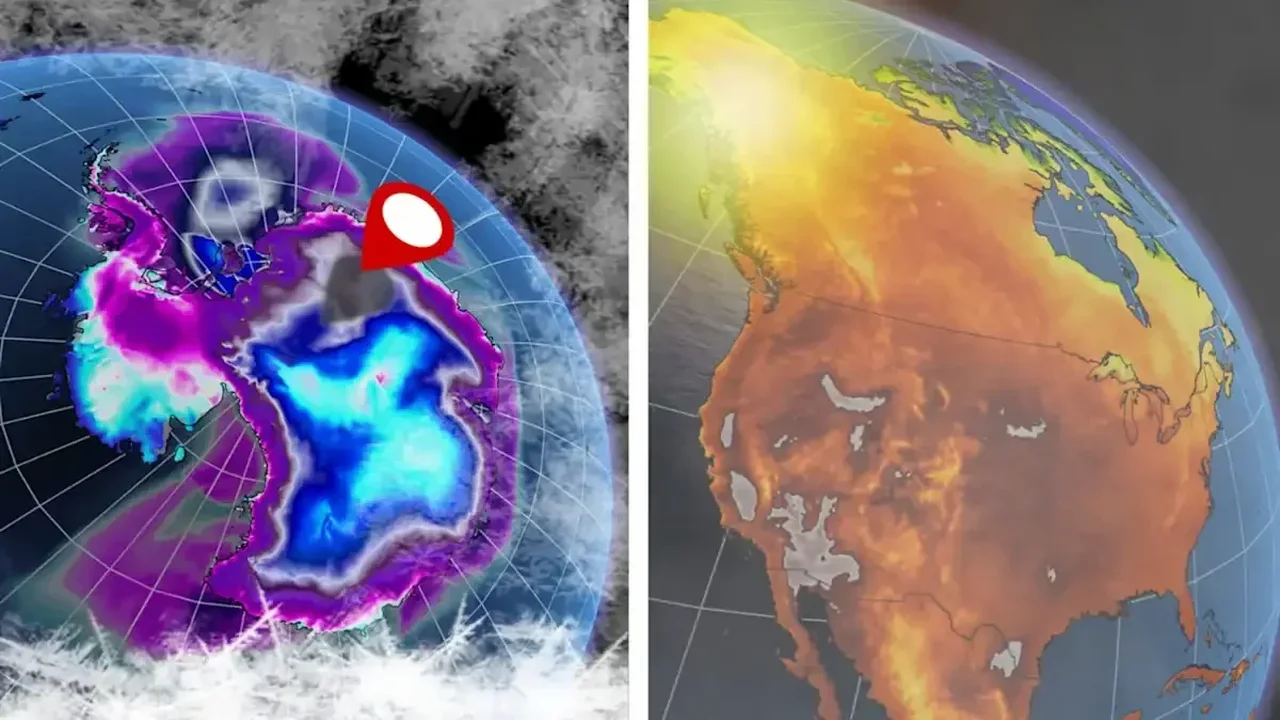
Last week, Earth's temperature extremes painted a dramatic global picture: Concordia Station in Antarctica fell to minus 84.1°C, while Omidieh in Iran reached 52.7°C. In northern Ontario, the community of Armstrong also climbed to 40.8°C, adding another striking data point to a week defined by contrast.
Measured across opposite hemispheres and seasons, the gap between the Antarctic low and the Iranian high reached 136.8 degrees Celsius. The scale is extraordinary, yet it reflects how planetary weather can diverge sharply from one region to another at the same time.
Concordia Station, located on the high East Antarctic Plateau, is built for extreme cold. Its altitude, dry air, long polar night and clear skies allow heat to escape rapidly, making it one of the coldest inhabited places on Earth. According to the French Polar Institute, the station averages around minus 55°C over the year and can dip near minus 80°C in winter.
Even so, the recent minus 84.1°C reading stands out as the lowest air temperature recorded on Earth since 2012. It remains below the official world record of minus 89.2°C set at Vostok Station in 1983, as listed in the World Meteorological Organization archive of climate extremes.
In Canada, Armstrong's 40.8°C reading marked the first time Ontario passed 40°C since 1995. Meanwhile, June 2026 was reported as western Europe's hottest June on record and the world's second warmest, while ocean surface temperatures outside the polar regions also reached a new June high.
These extremes do not cancel each other out. They show a climate system in motion, where variability still exists but the overall baseline continues to shift warmer. The coming years may bring even sharper contrasts, making climate monitoring and adaptation more important than ever.