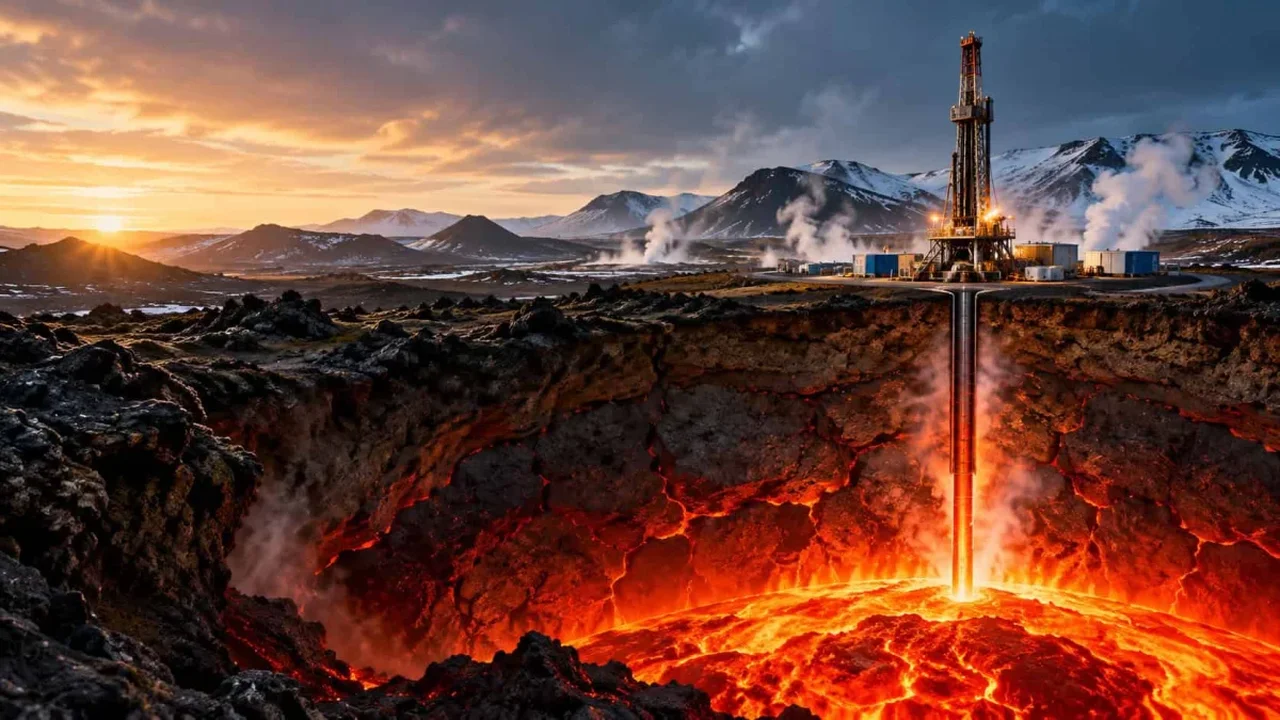
Iceland's Krafla Magma Testbed (KMT) is preparing to investigate whether heat from the region's shallow magma can support a new generation of geothermal energy. The project also aims to establish a dedicated observatory where scientists can study molten rock and volcanic processes directly.
KMT has set 2027 as the target for drilling a specialized well designed to reach temperatures above 400°C. As of October 2026, available project information does not confirm that this drilling campaign has begun. The effort is focused on research and developing technology, rather than building a commercial power plant.
Testing the limits of geothermal energy
Conventional geothermal systems use underground heat to produce steam, which drives turbines to generate electricity. Wells near magma could access much higher temperatures. Under sufficient heat and pressure, water can become supercritical--a state with the potential to carry substantially more energy than ordinary steam.
A 2009 drilling operation at Krafla unexpectedly encountered magma. The resulting well later recorded more than 100 megawatts of thermal output, demonstrating the scale of the heat available. That figure describes heat, however, and does not establish that magma-based electricity generation is commercially viable.
Turning that discovery into a reliable, long-term resource remains a major engineering challenge. Equipment and well materials must withstand extreme temperatures, corrosive fluids and intense pressure. Researchers will also need to establish whether the heat can be accessed safely and economically over time.
A scientific observatory beneath the surface
In 2024, the Icelandic government, Landsvirkjun and Reykjavík Energy joined the project in a financing agreement covering two years. Beyond its energy ambitions, KMT could give researchers an unusual opportunity to study magma directly and improve understanding of volcanic systems.
If the project succeeds, its findings may help shape future geothermal technologies in volcanic regions. For now, Krafla offers a bold test of how close science and engineering can move toward Earth's deepest sources of heat.