From ants to apes, the animal kingdom is full of inventive ways to make food easier to eat, safer, or more rewarding. While humans remain the only species known to cook with controlled fire in the wild, many animals use surprisingly sophisticated methods that echo the logic of a kitchen.
Nature's food lab
Bigheaded ants turn larvae into living digestive helpers, first cutting prey into pieces and then using larval fluids to break the food down outside the body. The adults later collect the liquid and share it across the colony, creating a highly efficient division of labor.
Loggerhead shrikes take a different approach. These birds impale insects on thorns or barbed wire and return later, after chemical defenses have weakened. It is less flame and more controlled aging, but the result is the same: food becomes more usable.
Japanese macaques famously wash sweet potatoes, and some even dip them in seawater. What began as a practical way to remove sand evolved into a social tradition passed through generations, showing how feeding habits can spread within animal communities.
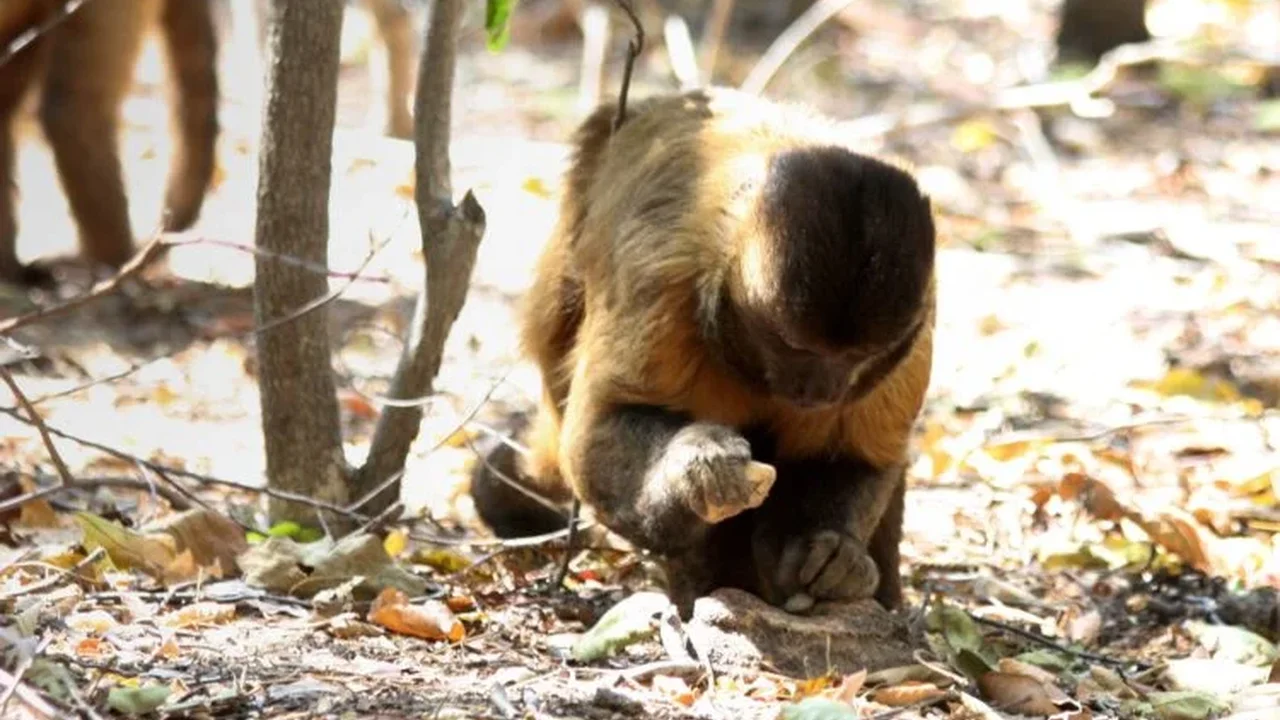
Capuchin monkeys in Brazil use stone tools with impressive precision, choosing hammer weight and nut position with growing skill over time. Their behavior resembles a small-scale processing station, where experience matters as much as strength.
Chimpanzees, meanwhile, show a preference for cooked food and will even save raw food for a chance to receive a transformed version later. In experiments, they demonstrated patience and planning, two traits closely tied to human culinary behavior.
Elsewhere, bearded vultures drop bones onto rocks to reach marrow, fungus-growing termites maintain climate-controlled gardens inside their mounds, and yeti crabs cultivate bacterial food on their claws in deep-sea environments. Desert spiders even exploit scorching sand to help subdue prey quickly.
Taken together, these examples reveal that food preparation is not uniquely human in spirit, even if true cooking is. The future of animal behavior research may continue to uncover just how inventive life can be when survival meets chemistry.