San Francisco startup Discovered Materials has announced a $1 million prize pool for AI-driven solutions to five open problems in materials science. The initiative aims to set measurable goals for tracking AI's progress in a field where questions can be harder to define than in mathematics.
Developed with input from academic advisers, the challenges address:
Superconductivity: developing a theory to explain how cuprate materials conduct electricity with no resistance at very low temperatures.
Semiconductor interfaces: creating a numerical method to predict the structures formed where silicon meets silicon dioxide.
Heat management: mapping the grain structure of materials to their thermal properties, which could support the design of more effective heat-dissipating materials.
Light and materials: explaining how light can alter a material's behavior, including effects related to superconductivity.
Atomic modeling: improving Density Functional Theory, a widely used approach for modeling atomic and molecular structures.
Stanford professor Felipe Jornada, who helped shape the challenges, said that explaining observed but poorly understood phenomena could deepen knowledge of physics and inform advances in electronics, energy storage, and materials manufacturing.
Before launching the program, the startup tested leading AI systems on the problems. The agents worked autonomously for several days on each challenge but made limited progress. Discovered Materials says the purpose is to establish clear benchmarks, regardless of whether solutions come from AI companies, academic researchers, or others.
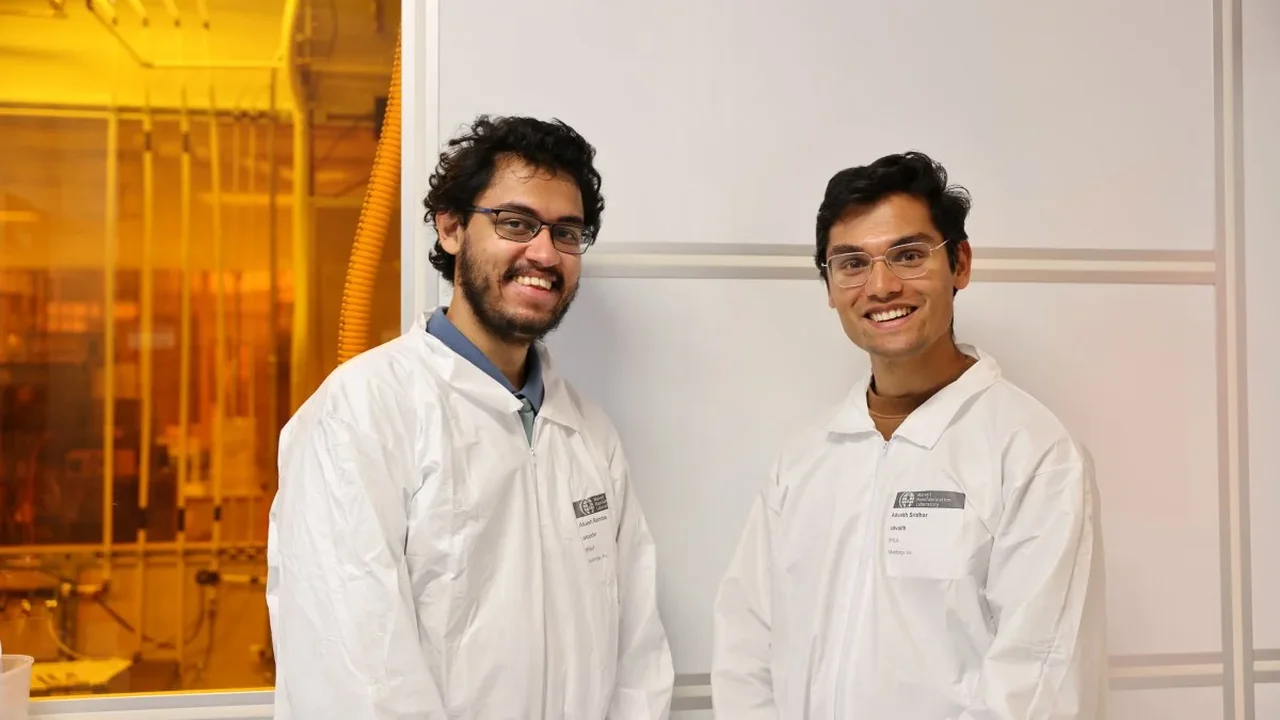
The company focuses on developing materials for semiconductors, collaborating with chipmakers while also funding its own research. Its co-founder Advaith Sridhar says the company is now more confident it can identify an industrially useful material in less than a year. Clear benchmarks such as these could help show how AI contributes to scientific discovery and, over time, accelerate the development of materials used in future technologies.