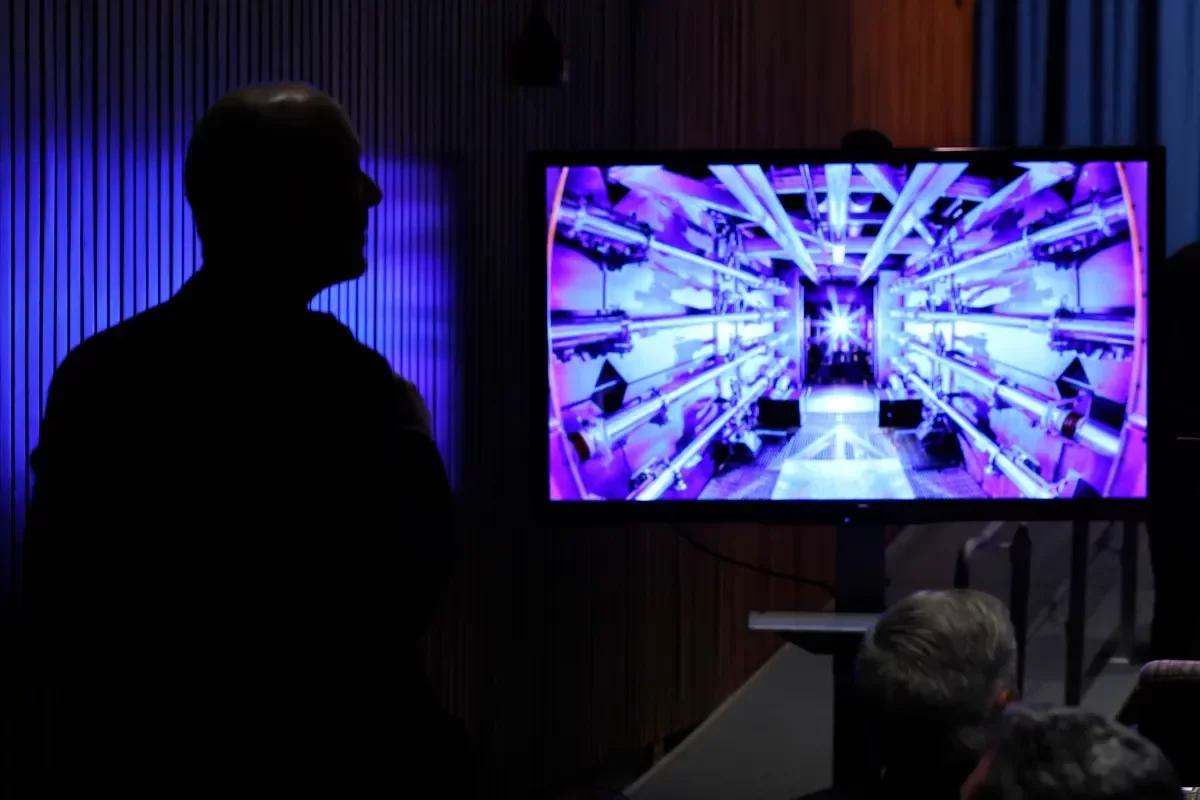
Researchers have pushed synthetic diamond into conditions far beyond everyday experience, using intense laser shocks at the Omega Laser Facility in Rochester, New York. The samples were compressed to pressures approaching one terapascal and heated to temperatures above 7,000 degrees Celsius, revealing a surprising result: diamond stayed in its familiar crystal form until it suddenly transitioned into liquid carbon.
A sharper answer to a long-standing question
The new measurements, published in Nature Physics, help resolve a two-decade debate over diamond's melting point. The team found that diamond melts at about 7,300 kelvin under roughly one terapascal of pressure, a value notably lower than an earlier estimate and much closer to modern simulations.
According to lead researcher Marius Millot of Lawrence Livermore National Laboratory, the experiment captured atomic structure, density, temperature, and reflectivity within nanoseconds. That precision was possible because the team combined shock compression with X-ray diffraction, allowing them to track how carbon behaved right up to melting.
What the carbon atoms revealed
One of the most intriguing findings was that the crystal did not appear to pass through a major intermediate phase before melting. In the pressure range where the transition occurred, the liquid became denser than the solid, creating a rare effect in which diamond could theoretically float on molten carbon, similar to ice on water.
The study also found no clear evidence for a predicted high-pressure carbon phase known as BC8 during a single shock event. The result suggests that timing matters as much as pressure itself, and that carbon atoms may need a different pathway or more time to reorganize into new structures.
Beyond fundamental physics, the findings may influence future fusion capsule design and improve models of carbon behavior inside ice giants such as Uranus and Neptune. As measurement tools continue to advance, extreme-matter research could open new paths in energy science and planetary exploration.