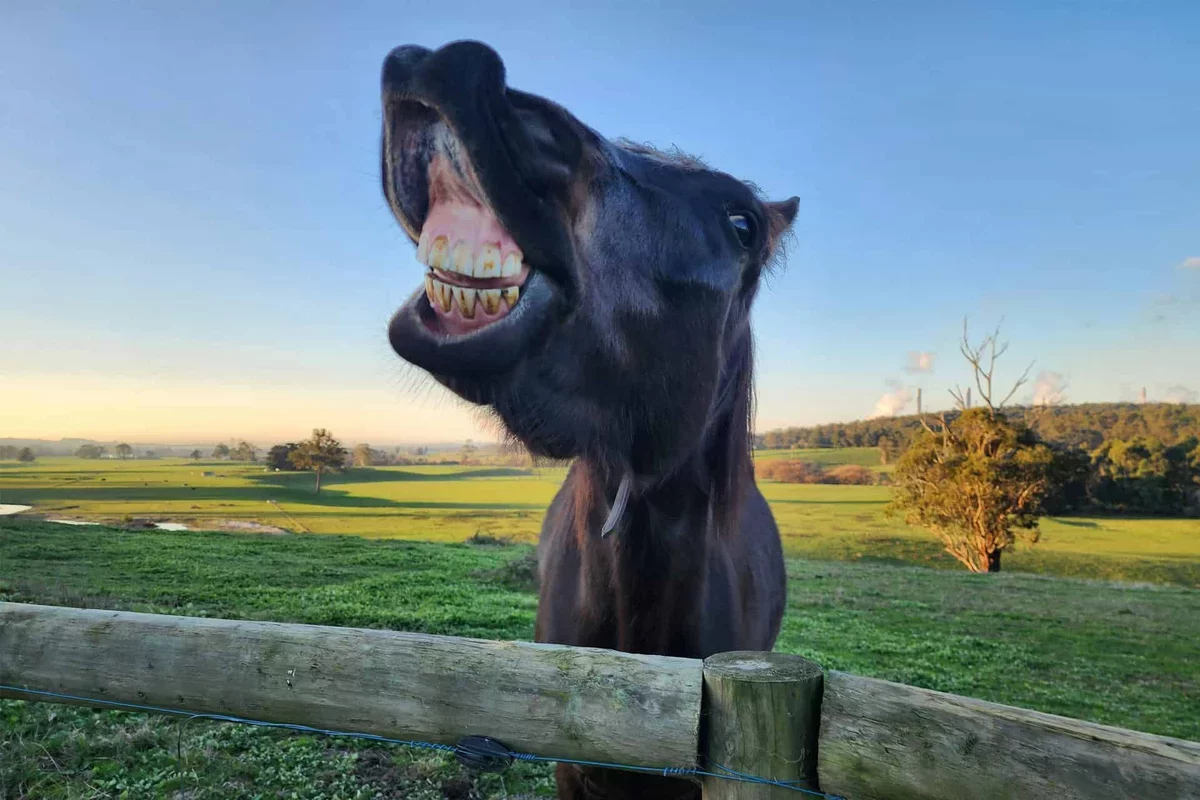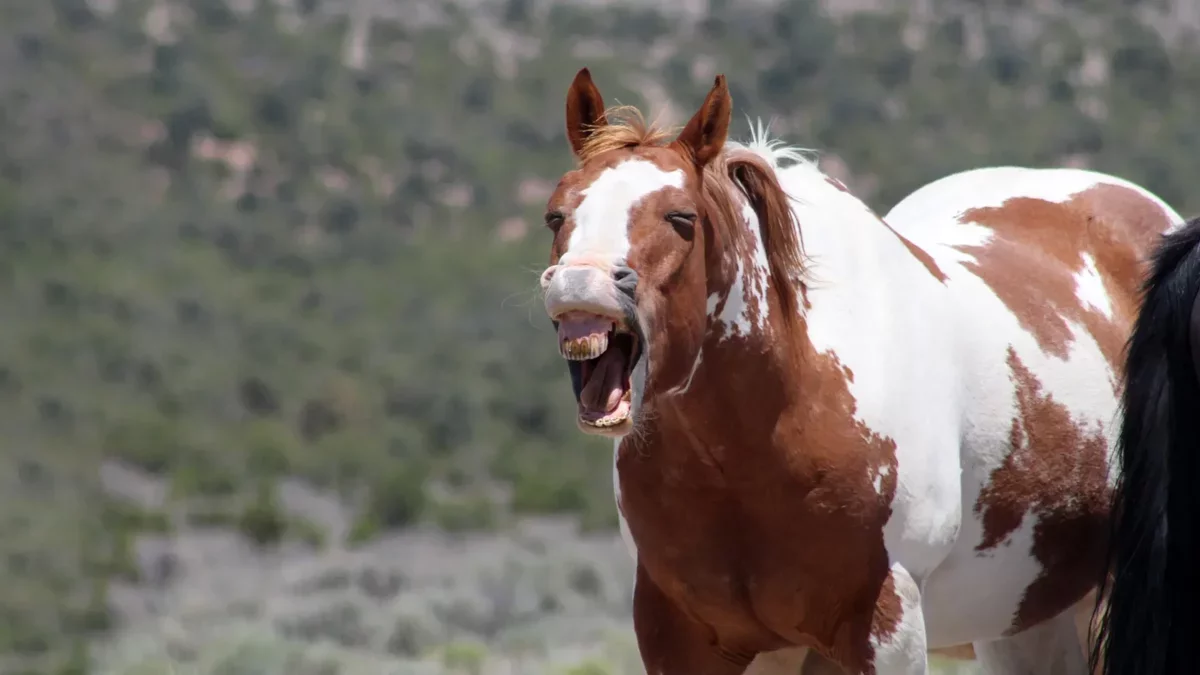
Researchers at the University of Copenhagen have uncovered the intricate mechanics behind the horse's whinny, revealing that it consists of two distinct frequencies. According to lead author Elodie Briefer, these frequencies play a crucial role in conveying the emotional state of horses. The study provides compelling evidence that these sounds arise from different physiological processes.
The Uniqueness of Horse Vocalization
Despite having coexisted with humans for over 4,000 years, the nuances of horse vocal communication remain largely uncharted. In most large mammals, a deeper voice is expected; however, horses deviate from this norm by producing unexpectedly high frequencies in their whinnies.
To delve deeper into this phenomenon, researchers investigated the mechanics behind the whinny. They identified a rare vocal occurrence known as "biphonation," where a single sound encompasses two independent frequency components: one low and one high.
Understanding Frequency Production
The low-frequency aspect of the whinny is generated through vocal fold vibrations, akin to human singing or a cat's meow. However, the origin of the high-frequency sound had remained elusive until now. The research team analyzed the anatomy of horse vocal structures, reviewed clinical data, and conducted extensive acoustic studies.
"This biomechanical puzzle required an interdisciplinary approach, combining veterinary science with acoustic physics," stated Romain Lefèvre, another researcher involved in the study.
Through their investigations, they discovered that the high-frequency sound is produced by a laryngeal whistle. This mechanism operates similarly to a human whistle, but the turbulence that creates the sound occurs within the horse's larynx rather than at the lips. While some small rodents are known to produce laryngeal whistles, horses are the first large mammals identified to use this technique, and they are unique in their ability to whistle while simultaneously vibrating their vocal folds.
Verifying the Laryngeal Whistle
To validate their findings, researchers conducted experiments using excised horse larynges. They alternated airflow between regular air and helium. Given that sound travels faster in helium, the whistle frequencies increased, while the sounds generated by vocal fold vibrations remained consistent.
The results aligned perfectly with their hypotheses. When helium was introduced, the high-frequency component's pitch increased, whereas the low-frequency component remained unchanged.
"The moment we introduced helium, the frequency shift was immediately noticeable, confirming our findings," expressed William Tecumseh Fitch from the University of Vienna, highlighting the excitement of the breakthrough.
The Evolution of Biphonation
This research clarifies how horses produce overlapping pitches, or biphonation, suggesting that this vocal skill evolved to enable horses to convey multiple independent messages simultaneously. Interestingly, Przewalski's horses, closely related to domesticated horses, also exhibit this vocal trait, while more distantly related species like donkeys and zebras do not. This indicates that horses have developed specialized vocal adaptations, resulting in a richer and more intricate range of calls compared to other mammals.
"Understanding the evolution of biphonation is vital for unraveling the origins of the remarkable vocal diversity found in mammals," concluded David Reby from the University of Lyon/Saint-Etienne.