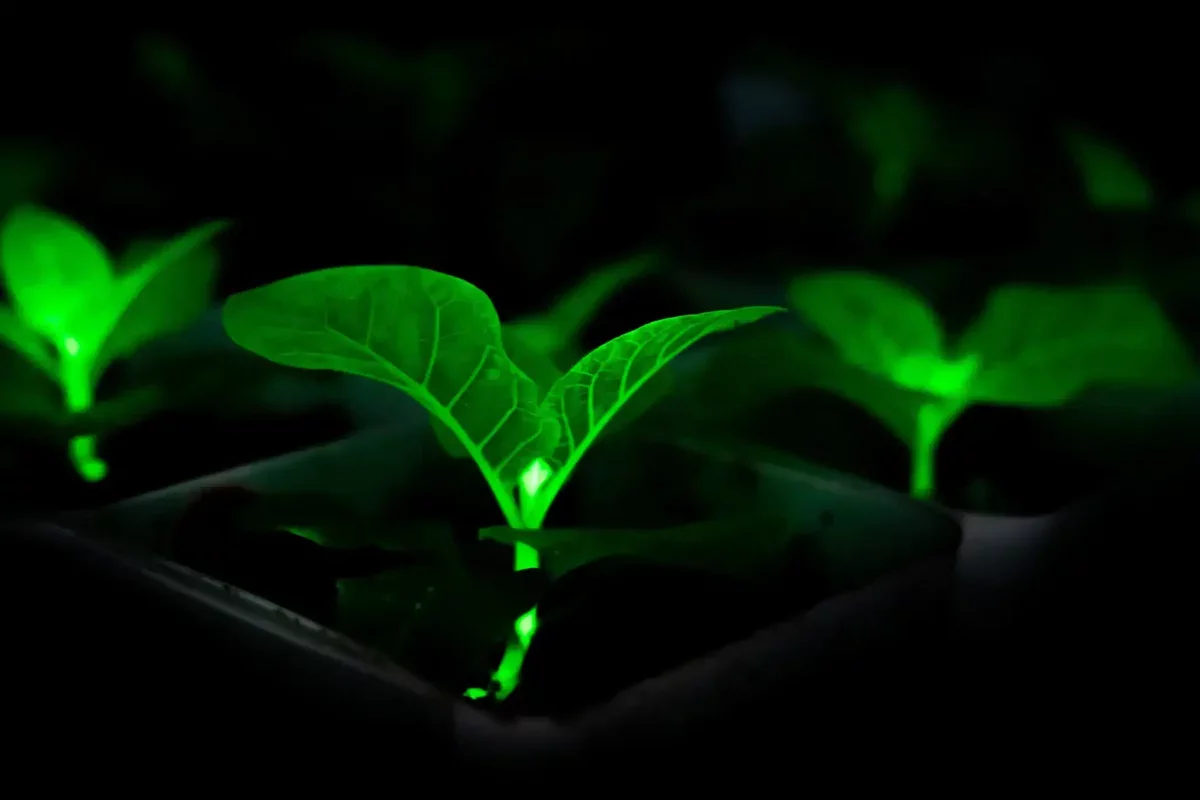
For countless years, fireflies have captivated us with their enchanting glow, utilizing a complex chemical process to attract mates in the twilight. Similarly, bioluminescent fungi have lit up the forest floors, drawing in insects for spore dispersal. Now, a group of Chinese scientists is harnessing these natural wonders to revolutionize urban lighting.
Researchers from Magicpen Bio have successfully engineered over twenty plant species to emit a consistent light, using genetic material from fireflies and luminescent fungi. This groundbreaking innovation allows plants such as orchids, sunflowers, and chrysanthemums to glow autonomously, eliminating the need for traditional power sources.
By replacing conventional streetlights with these bioluminescent plants, future urban landscapes could be transformed into serene, softly-lit environments, relying solely on water and fertilizer for sustenance.
Nature as Inspiration
The vision for these glowing gardens originated in rural China, where Dr. Li Renhan, founder of Magicpen Bio, was inspired by his childhood experiences with fireflies. His fascination with the natural world led him to explore the potential of integrating firefly genes into sunflowers, sparking a journey of scientific discovery.
"We aimed to transfer genes from fireflies into plants, enabling them to glow at night. This technology could enhance cultural tourism and energize the nighttime economy," Dr. Li shared, envisioning a landscape reminiscent of the vibrant world of 'Avatar'.
The Science Behind Bioluminescence
Bioluminescence is the result of a chemical reaction involving an enzyme that interacts with a light-emitting molecule, producing visible light. The researchers at Magicpen Bio have isolated the genetic sequences responsible for this phenomenon and integrated them into the DNA of common plants. As a result, these engineered plants continuously generate the enzymes and molecules necessary for their gentle glow.
These remarkable organisms made their debut at the Zhongguancun Forum in Beijing, where they captivated audiences with their bright, self-sustaining illumination. Importantly, these plants require no specialized care or artificial light to thrive; they operate entirely on their biological processes.
"Beyond tourism, we envision using these plants in urban parks, where they can provide light without electricity," Dr. Li noted. "They conserve energy, reduce emissions, and can illuminate our cities at night."
A New Era of Glowing Flora
Magicpen Bio's initiative places them at the forefront of a burgeoning global movement towards biological lighting solutions. This innovative approach aligns with recent efforts, such as the release of the "Firefly Petunia" by Light Bio, which also employs genetic engineering to create luminescent plants. However, Magicpen Bio's project stands out due to its ambitious scope, modifying multiple plant varieties to populate public spaces with glowing flora.
As we embark on this bioluminescent journey, we are initiating a large-scale ecological experiment. This soft illumination not only brightens our paths but also symbolizes a future where humanity actively shapes the course of evolution.