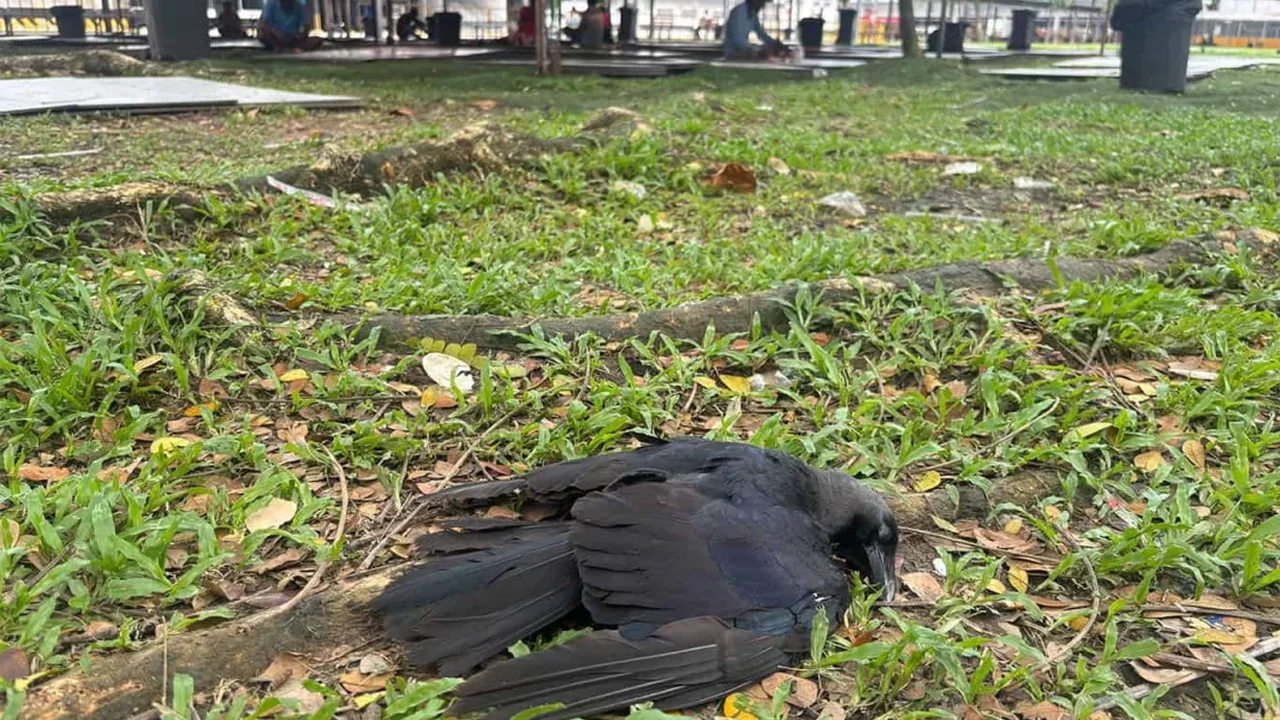
Singapore is taking a dual approach to its growing crow population: reducing numbers in crowded districts while also reshaping parts of the city into more bird-friendly environments. The debate reflects a wider question in urban ecology -- how fast-growing cities can balance human needs with wildlife adaptation.
In areas such as Sungei Tengah Lodge, authorities have used culling to respond to rising complaints about crows, pigeons and mynas. Officials say the measures are intended to manage nuisance birds, while conservation advocates argue that long-term solutions depend less on removal and more on changing the urban conditions that help these species thrive.
Researchers note that Singapore's dense landscape offers adaptable birds abundant food, nesting sites and limited predators. Hawker centers, sheltered walkways and building ledges create ideal conditions, while ongoing redevelopment and forest loss can further expand the spaces available to urban wildlife. Studies cited by ecologists suggest that repeated culling alone may only create temporary relief.
According to Singapore's National Parks Board, crow numbers have increased sharply over the past decade, and complaints have risen in parallel. At the same time, the government continues to advance housing projects and land-use plans that include forested areas such as Maju Forest and Gillman Barracks, highlighting the city-state's challenge of meeting development goals while preserving ecological balance.
Animal welfare and conservation groups are increasingly calling for coexistence strategies, including better waste management, smarter nesting controls and public education on bird feeding. Singapore's Housing & Development Board has also begun testing netting solutions on housing blocks to reduce nesting on air-conditioner ledges.
The broader lesson is clear: in highly urbanized cities, wildlife management is becoming a design issue as much as a control issue. Singapore's experience may help shape future models for cities seeking to live more intelligently alongside adaptable species.