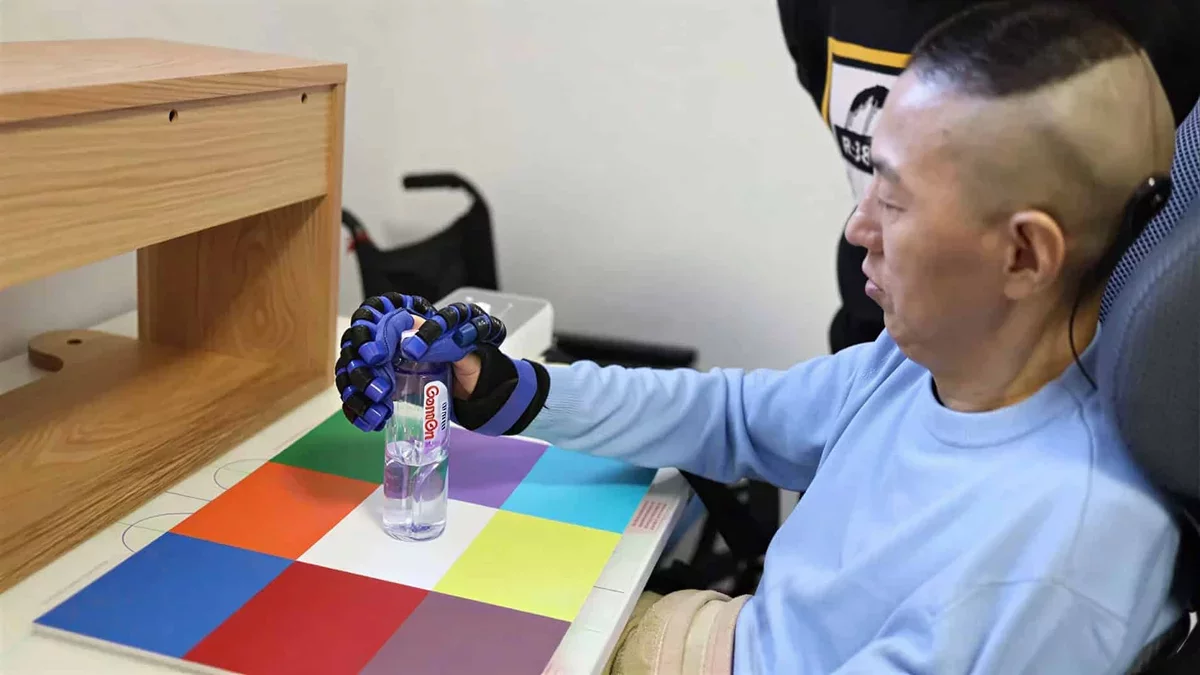
A remarkable breakthrough in neurotechnology has occurred as a tetraplegic patient recently regained the ability to independently hold a cup after a decade of paralysis, thanks to the innovative brain-computer interface (BCI) known as NEO. This minimally invasive device, developed by Neuracle Medical Technology in Shanghai, has become the first BCI globally to receive commercial approval from China's National Medical Products Administration.
Transforming Brain Signals into Movement
Unlike traditional brain implants that involve invasive procedures, NEO utilizes a more user-friendly approach. The device consists of a small wireless implant that rests on the brain's protective membrane, featuring just eight electrodes. This design minimizes the risk of complications and ensures long-term stability without the need for battery replacements, as it operates through a magnetic coil attached to the scalp.
When the user thinks about moving their hand, the electrodes detect electrical activity from the brain's sensorimotor cortex. A connected computer interprets these signals in real-time, sending commands to a soft robotic glove that enables the user to grasp and manipulate objects.
Encouraging Neural Recovery
NEO's capabilities extend beyond just controlling a robotic hand; it appears to stimulate the nervous system's healing processes. In a clinical trial, one participant achieved a 100 percent success rate in moving objects and regained the ability to perform daily tasks independently. Notably, after nine months of using NEO, this patient demonstrated significant neurological rewiring, allowing him to hold objects even without the BCI activated.
This patient, previously diagnosed with a complete C4 spinal cord injury, saw a remarkable improvement, with a 27-point increase in motor skills assessment scores. Overall, 32 participants in the trial successfully utilized the device to perform grasping movements.
China's Vision for Neurotechnology
The approval of NEO coincides with China's strategic five-year plan, which aims to position the country as a leader in the BCI industry. Experts believe this governmental support is crucial for advancing neurotechnology, shifting it from conceptualization to practical application. While American companies face regulatory challenges, China's proactive stance could accelerate the commercialization of similar technologies.
Looking Ahead
Currently, NEO is approved for adults aged 18 to 60 with limb paralysis due to spinal cord injuries, provided they retain some upper arm function. Researchers are optimistic about expanding the technology's applications, with plans to conduct trials for other types of BCIs, potentially revolutionizing rehabilitation for a broader range of patients.
The NEO trial findings, published in a pre-print, signify a pivotal moment in the journey toward thought-controlled prosthetics, promising to transform rehabilitation into a more accessible and effective process.