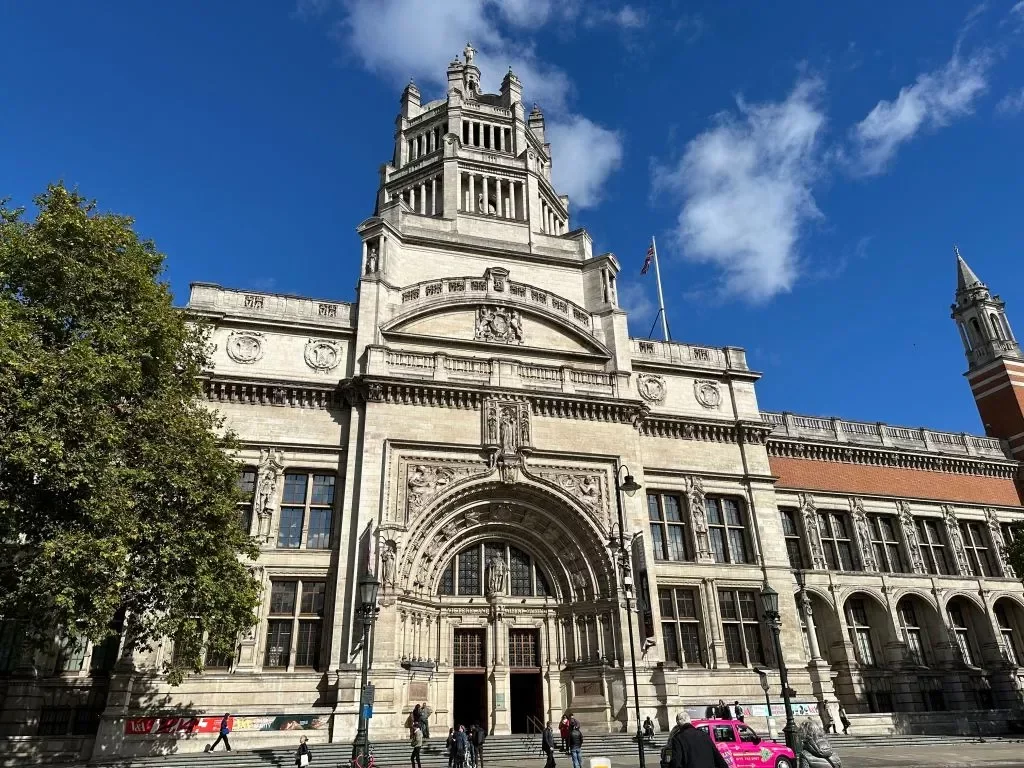
The Victoria and Albert Museum (V&A) in London has taken the step of removing certain materials from at least two recent exhibition catalogs due to requests from a Chinese printing firm. Documents obtained through freedom of information inquiries reveal that specific maps and images were identified as conflicting with China's censorship regulations.
Collaborating with international printing companies is a common practice among prominent cultural institutions, including the British Museum and Tate. However, the V&A's choice to partner with a Chinese printer has highlighted the complexities of outsourcing production. This decision has subjected its publications to the constraints imposed by the Chinese government regarding sensitive topics.
The flagged materials encompass historically significant subjects, such as the Tiananmen Square protests and issues concerning Tibet and Taiwan, which are politically sensitive in relation to Beijing's claims. For instance, in the upcoming exhibition "Music Is Black," a map illustrating British Empire trade routes, which includes China, was deemed problematic. An email from C&C Offset Printing to the museum indicated that the map was rejected due to its depiction of China's borders, suggesting it be replaced or omitted entirely.
Internal communications among museum staff revealed that the removal of these materials caused delays and confusion in the production process. One staff member noted, "It's a historic map showing British colonial rule, so it has nothing to do with China--yet it seems to be enough to warrant rejection." The printing process was halted while adjustments were made to the files.
The map was intended to accompany an introduction by Gus Casely-Hayford, director of V&A East, but it was too late to find an alternative printer. Additionally, the V&A agreed to withdraw content from its 2021 exhibition "Fabergé: Romance to Revolution," which included another map and an image of Vladimir Lenin, due to similar restrictions from the Chinese printer.
In response to inquiries, the V&A characterized the changes made to the catalogs as "minor," emphasizing that they carefully evaluate where to print their publications. They stated, "We were comfortable making minor edits, as they did not affect the narrative." Meanwhile, other institutions like Tate and the British Library reported no censorship challenges, and the British Museum did not comment on potential censorship issues.
This situation reflects the ongoing dialogue surrounding the balance between global collaboration and the preservation of artistic integrity. As cultural institutions navigate these complexities, the future may see a greater emphasis on transparency and adaptability in international partnerships.