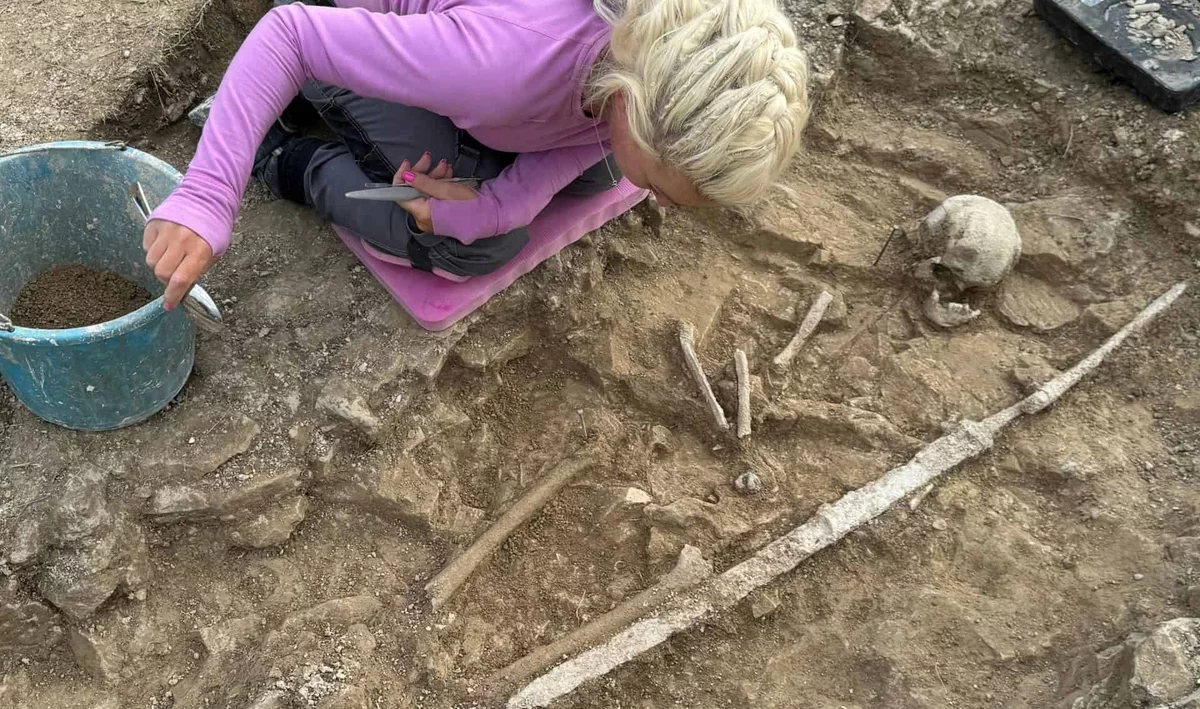
A recent archaeological dig has unveiled a remarkable early medieval grave containing a child buried alongside weapons, including a spear and shield. This discovery raises intriguing questions about the significance of weapons in Anglo-Saxon culture. Were they simply tools for battle, or did they carry deeper meanings?
Weapons in this era were often symbolic, much like the esteemed Jedi knights wielding lightsabers in popular culture. Today, while modern militaries utilize advanced technology for warfare, the ceremonial sword remains a powerful emblem in many armies, highlighting the enduring value placed on weaponry.
The excavation, led by archaeologist Andrew Richardson and a team from the University of Lancashire, uncovered four Anglo-Saxon swords among approximately 40 graves. These findings are part of a larger project documented in BBC2's "Digging for Britain."
Among the remarkable artifacts is a sword adorned with a silver pommel, indicative of high status in the 6th century, housed in a luxurious beaver fur-lined scabbard. Another sword features a unique blend of artistic styles, showcasing the historical evolution of weaponry.
The burial practices of this time reveal that swords were cherished possessions, often passed down through generations. The Old English epic "Beowulf" reflects this sentiment, emphasizing the emotional ties to weapons as heirlooms, which were revered not just for their utility in battle but also for their historical significance.
Interestingly, the grave of the child, estimated to be between 10 and 12 years old, included a spear and shield, despite the child's physical limitations for wielding such weapons. This suggests a tribute to the potential they represented in life.
Additionally, another grave belonging to a younger child contained a large silver belt buckle, typically associated with adult men, hinting at a cultural practice of honoring familial connections through burial items.
These findings illustrate the intricate relationship between weapons and identity in early medieval society. The graves serve as poignant reminders of the hopes and aspirations that families held for their children, reflecting a rich tapestry of history and emotion.
As we delve deeper into these archaeological discoveries, we uncover not only the physical artifacts but also the stories and legacies of those who lived in a time long past.