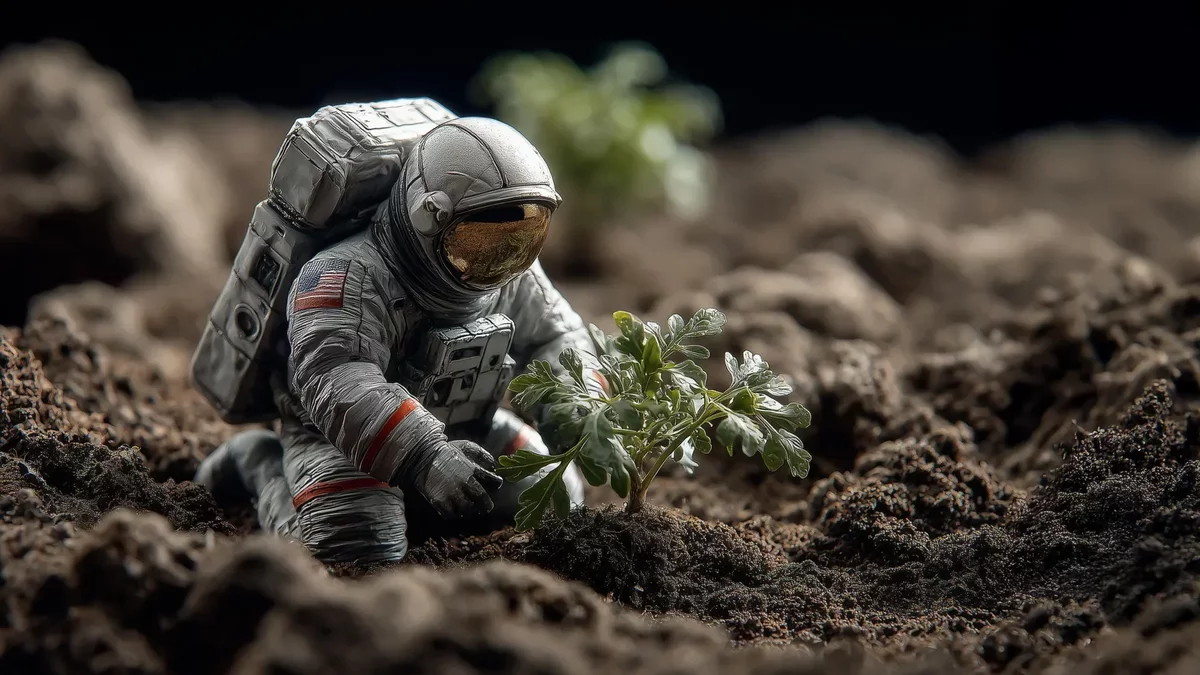
In an innovative experiment, researchers have successfully cultivated and harvested chickpeas using a simulated lunar soil, marking a groundbreaking achievement in space agriculture. This research, conducted in collaboration with Texas A&M University, was published in the journal Scientific Reports.
Sara Santos, the principal investigator of the project, emphasized that these findings are crucial for exploring the potential of growing crops on the Moon. "Our research focuses on how we can make lunar regolith suitable for plant growth," stated Santos, a distinguished postdoctoral fellow at the University of Texas Institute for Geophysics (UTIG) within the Jackson School of Geosciences.
Understanding Lunar Soil Challenges
Lunar regolith, the fine dust covering the Moon's surface, lacks the microorganisms and organic matter essential for plant growth on Earth. While it contains minerals beneficial for plants, it also has heavy metals that can hinder plant development.
To assess the viability of growing crops in such conditions, the team utilized a simulated lunar soil created by Exolith Labs, designed to mimic the composition of lunar samples collected during the Apollo missions.
Enhancing Soil Quality with Worm Compost
To optimize the growing environment, researchers incorporated vermicompost, a nutrient-rich material produced by red wiggler earthworms that digest organic waste. This compost not only provides essential nutrients but also introduces a diverse microbiome that promotes plant health.
In a potential space mission scenario, these worms could recycle food scraps and other organic materials into compost, reducing waste.
Prior to planting, chickpea seeds were coated with arbuscular mycorrhizae fungi, which form a beneficial partnership with plants, enhancing nutrient absorption while limiting the uptake of harmful metals.
Successful Growth of Chickpeas
The research team experimented with various mixtures of simulated lunar soil and vermicompost to plant chickpeas. Results indicated that plants thrived in mixtures containing up to 75% lunar soil. However, when the proportion of lunar soil exceeded this threshold, the plants faced stress and exhibited reduced longevity.
Notably, the plants treated with fungi demonstrated greater resilience compared to those without, underscoring the fungi's role in supporting plant growth. The fungi successfully established themselves in the simulated lunar soil, suggesting they could be introduced just once in a real lunar farming system.
Assessing the Safety of Moon-Grown Chickpeas
While the successful harvesting of chickpeas from simulated lunar soil is a remarkable milestone, questions about their safety remain. Scientists need to investigate whether these plants absorb harmful metals and if they provide the necessary nutrients for astronauts.
"We aim to evaluate their viability as a food source," explained Jessica Atkin, the paper's lead author and a doctoral candidate at Texas A&M University. "How nutritious are they? Are they safe for consumption?"
This project, initially self-funded by Santos and Atkin, has garnered additional support through a NASA FINESST grant, propelling research into sustainable food sources for future lunar missions.