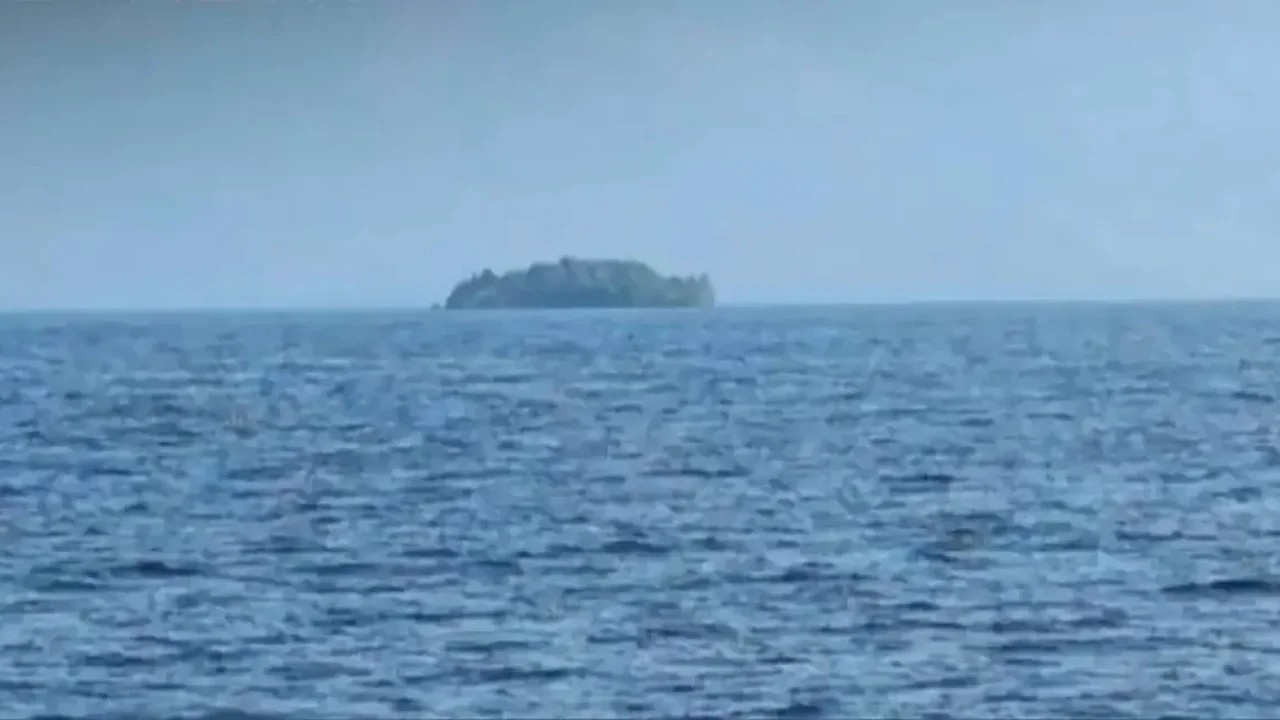
A curious natural formation on British Columbia's Williston Reservoir has drawn attention after satellite imagery confirmed a forested mass drifting across the water before later vanishing from view.
Boaters first reported seeing what looked like a small island covered with mature trees, prompting early doubts that the footage might be digitally altered. But an image captured on July 21 from orbit showed a clear patch of vegetation floating west of Finlay Bay, about 100 kilometers from the W.A.C. Bennett Dam.
The formation measured roughly 140 meters by 70 meters, covering nearly 9,800 square meters -- close to the size of two football fields. By Aug. 5, however, updated satellite scans no longer showed it in the same place.
How a forest can float
Experts say the phenomenon is unusual but scientifically plausible. Floating mats of peat, roots, driftwood and plants can become buoyant enough to support shrubs and even trees. Rising water levels, wind and seasonal changes can then detach the mass and move it across a reservoir.
In this case, B.C. Hydro believes years of accumulated driftwood and vegetation may have formed a dense shoreline mat that broke free when water levels rose. The reservoir reached full capacity this year for the first time in 14 years, following heavy snowpack and summer rainfall.
Williston Reservoir is vast, spanning about 1,760 square kilometers, which helps explain how a large floating structure could travel unnoticed. Later reports from residents suggested the island may have reappeared farther east, indicating it may have simply shifted position rather than disappeared.
Natural floating islands are known in other parts of the world as well, and researchers have documented how wind, rainfall and water levels influence their movement. B.C. Hydro continues to monitor the reservoir, where floating debris is already a regular part of operations.
This unusual island highlights how dynamic freshwater ecosystems can be, and how satellite observation is reshaping the way we understand them. In the future, such natural events may offer new insights into reservoir ecology and environmental monitoring.