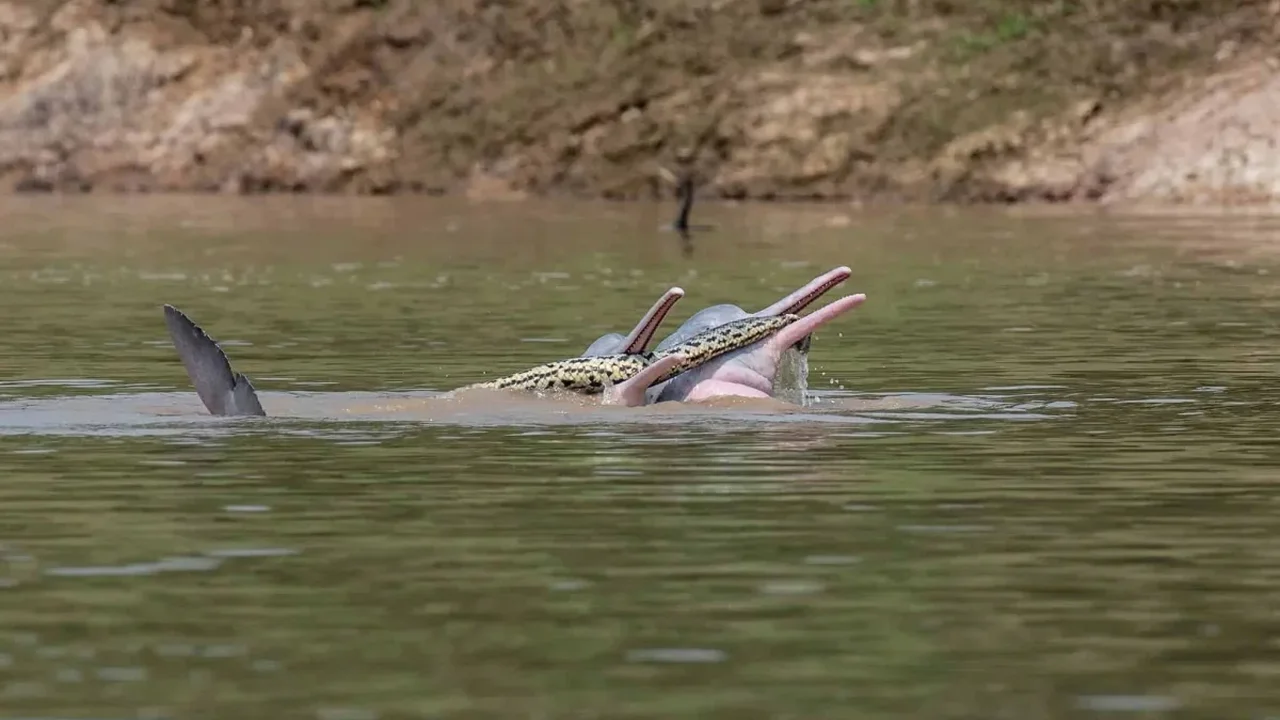
In Bolivia's river systems, a rare wildlife moment has drawn the attention of biologists: Bolivian river dolphins were observed holding an anaconda in their mouths, a behavior documented by researchers from the Noel Kempff Mercado Museum of Natural History and later analyzed in the journal Ecology.
The sighting, recorded in the Mamoré basin, became the first documented interaction between Inia boliviensis and a Beni anaconda. The dolphins appeared to manipulate the snake for several minutes, while juvenile dolphins watched nearby. Scientists say the scene may reflect play, social learning, or another form of behavioral expression, but no single explanation has been confirmed.
A later diet study published in 2025, based on stable isotope analysis, did not find evidence that these dolphins regularly eat snakes. The sample was small, however, so researchers say occasional unusual interactions cannot be fully ruled out.
The episode also highlights a broader scientific truth: river dolphins remain far less studied than their ocean-dwelling relatives. Their hidden lives continue to reveal unexpected behaviors, while ongoing research is helping clarify how they adapt to complex freshwater ecosystems.
As studies advance, such discoveries may deepen understanding of river dolphin intelligence and strengthen conservation strategies for South America's freshwater biodiversity in the years ahead.