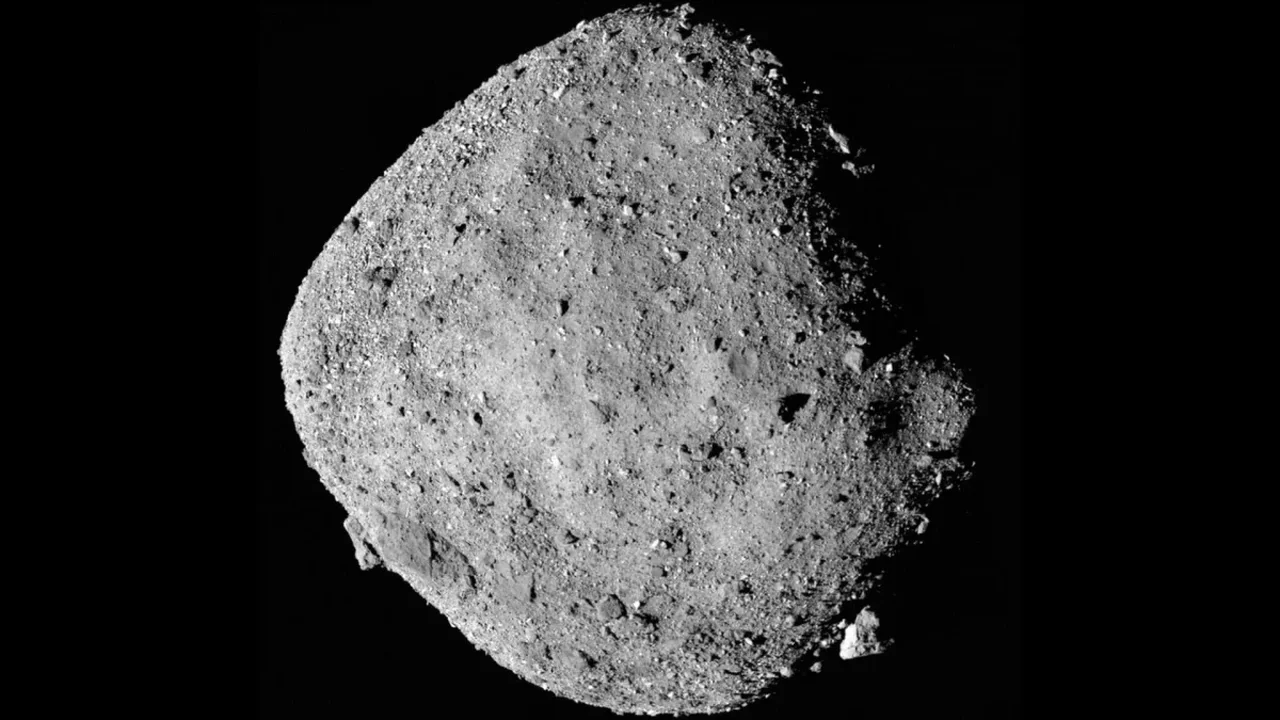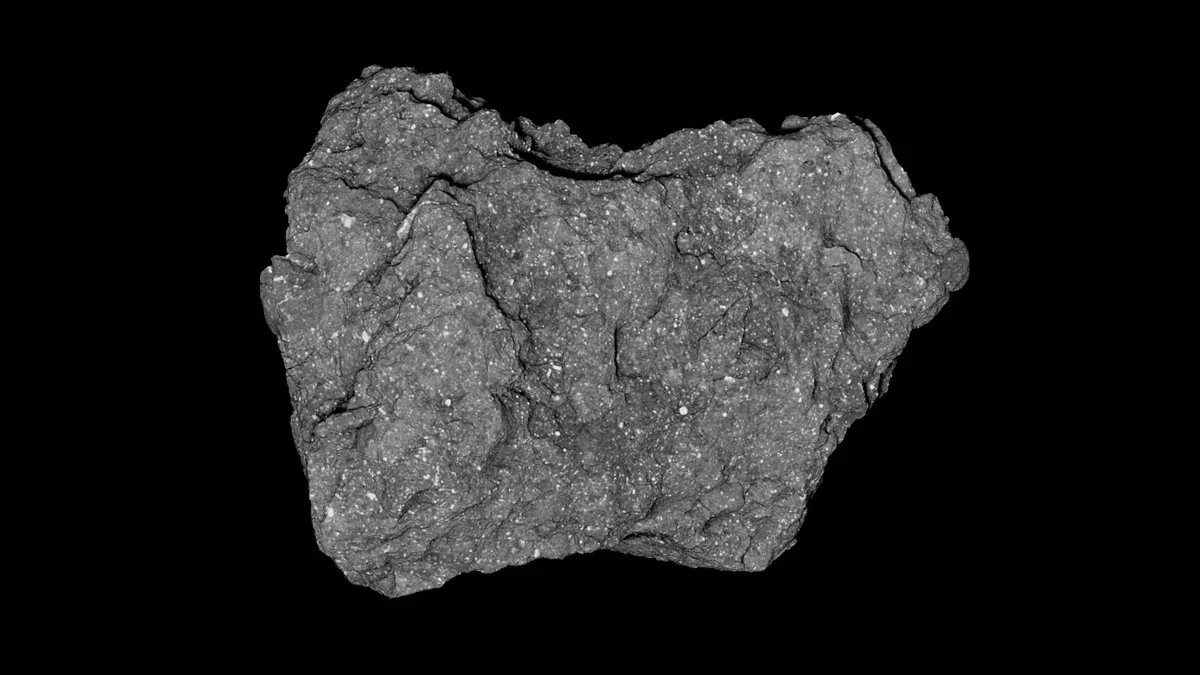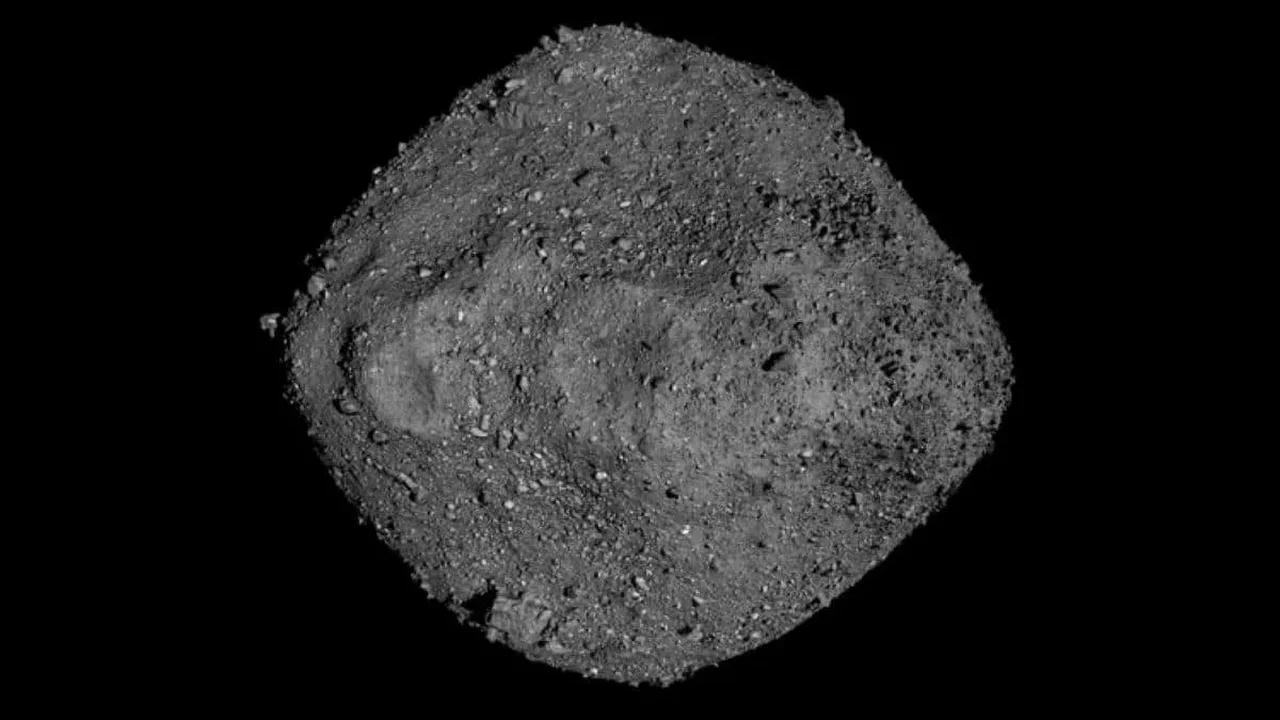
Material returned from asteroid Bennu is helping scientists refine the story of how the early solar system took shape. NASA's OSIRIS-REx mission delivered 121.6 grams of asteroid material to Earth in 2023, creating a rare opportunity to examine particles that preserve conditions from before the planets formed.
A research team at ETH Zurich studied subtle isotope variations in iron, titanium and chromium within Bennu grains. Isotopes act as long-lasting chemical signatures, allowing researchers to trace where ancient material may have originated and how it moved through the young solar system.
A shared reservoir of early cosmic dust
The iron and titanium patterns were remarkably consistent across the samples, indicating that Bennu's building material came from an unusually well-mixed dust reservoir. The signatures also resemble those found in material from asteroid Ryugu and in rare CI chondrite meteorites.
Chromium isotopes, however, showed small differences between grains. Researchers suggest these variations developed later, when liquid water interacted with minerals inside Bennu's former parent body. This distinction helps separate the asteroid's original chemical makeup from changes that occurred during its long evolution.
Jupiter as a filter for planetary ingredients
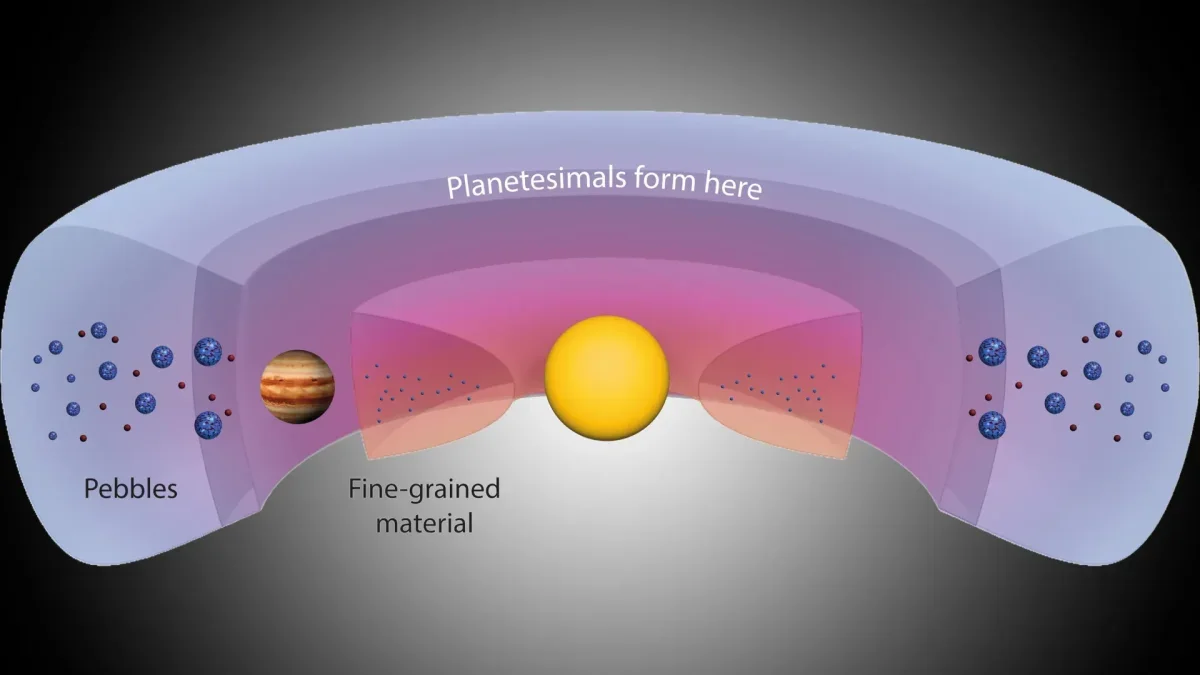
The findings support a model in which Bennu's ancestral body formed near the water-ice line, a region where cooling temperatures allowed water vapor to freeze onto dust grains. The study proposes that this may have happened inside the orbit of the growing Jupiter, rather than far beyond it.
As Jupiter gained mass, it likely created a gap in the disk of gas and dust around the young Sun. Larger particles could have been held back around this barrier, while tiny dust grains remained carried by gas flows and continued moving inward. Ongoing collisions would have replenished these fine particles, enabling a broad mixture of material to travel across the disk.
Near the water-ice line, icy coatings may have helped grains adhere and gather into larger bodies. This process could explain why Bennu contains both water-altered minerals and chemical proportions that closely resemble the Sun's overall elemental composition.
Published in Science Advances, the research presents Bennu as a valuable record of material exchange in the solar system's earliest era. As sample analysis continues, these microscopic grains could sharpen models of how the ingredients of rocky planets were assembled.
This work may help future planetary missions identify where the most revealing remnants of solar system history can be found.