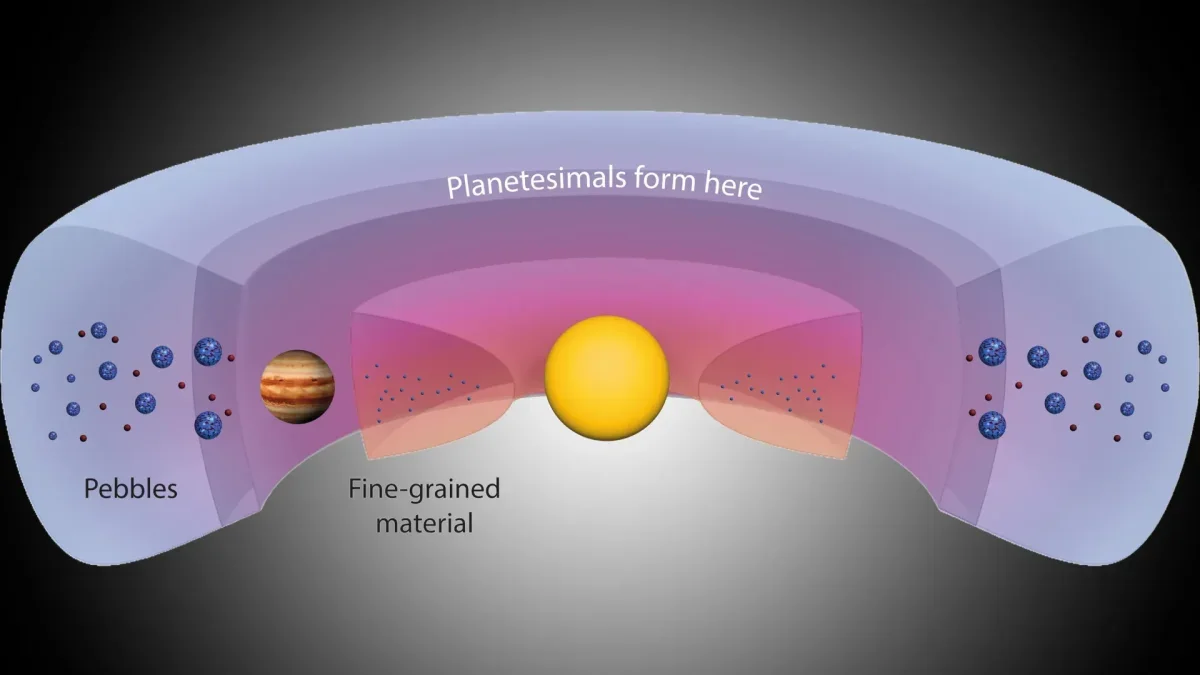
Researchers from the Max Planck Institute for Solar System Research (MPS) in Germany have made a groundbreaking discovery regarding one of the Solar System's key regions for planet formation. Their recent study, published in The Astrophysical Journal, highlights a ring-shaped area just beyond Jupiter's orbit that has served as an efficient and remarkably versatile "breeding ground" for planetesimals.
Utilizing advanced computer simulations, the team revealed that this region produced planetesimals with varying compositions over a span of approximately two million years. "Different types of planetesimals apparently formed in the same region of the early dust and gas disk, only at different times. The region just outside Jupiter's orbit offered excellent conditions for this," explained Joanna Drążkowska, head of the Lise Meitner Group on planet formation.
Jupiter's Role in Creating a Cosmic Dust Trap
The study focused on the period between two and four million years after the formation of the Solar System. By this time, Jupiter had gathered most of the nearby material around its orbit, resulting in a gap within the surrounding gas and dust disk. This process is believed to have created a ring of higher gas pressure just beyond Jupiter, effectively trapping significant amounts of dust and allowing small clumps known as pebbles to accumulate. Previous studies suggested that such "dust traps" could facilitate rapid planetesimal formation during the early stages of the Solar System.
However, it was previously unclear whether these dust traps could continue to produce diverse types of bodies over extended periods. The new simulations indicate that they indeed could.
The researchers demonstrated that varied populations of planetesimals likely formed in this same region over millions of years. Their findings also link these simulated objects to known meteorite groups found on Earth. "For the first time, we have succeeded in accurately reproducing the results of laboratory studies of meteorites using computer simulations of the early Solar System. The meteorites serve as a touchstone for theories of planetary formation," noted MPS Director and cosmochemist Thorsten Kleine.
Meteorites as Windows into the Solar System's History
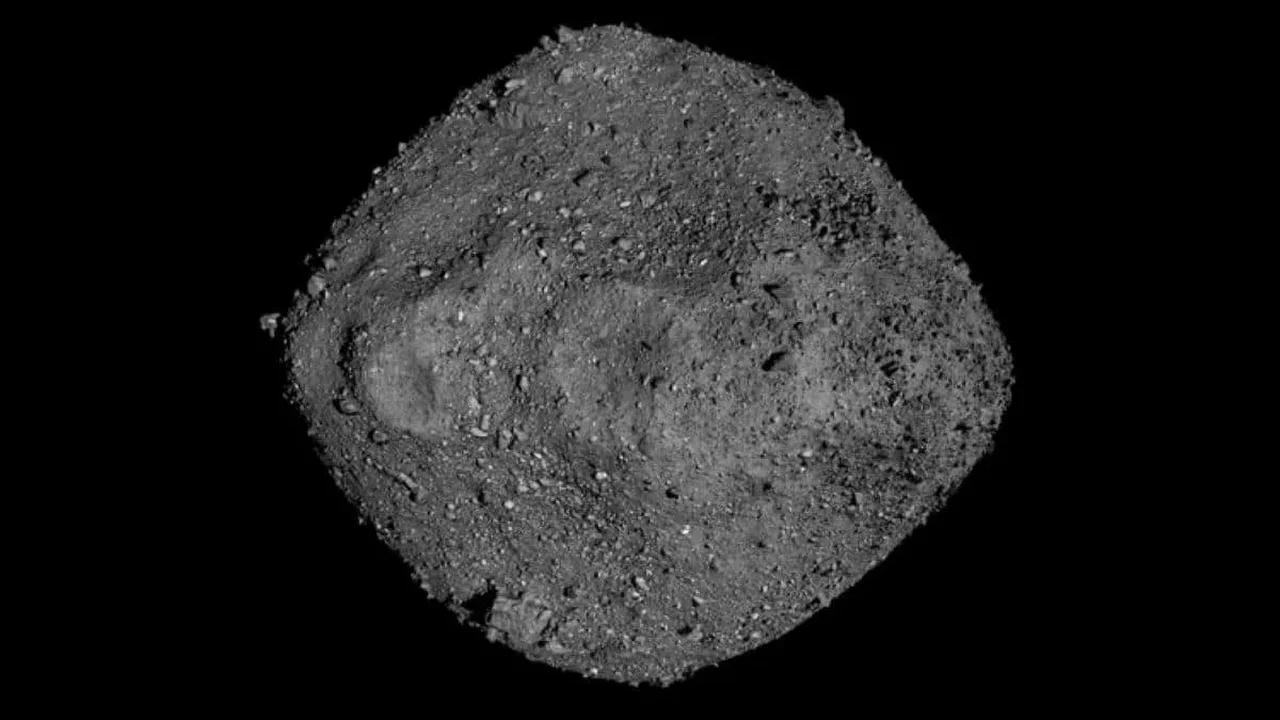
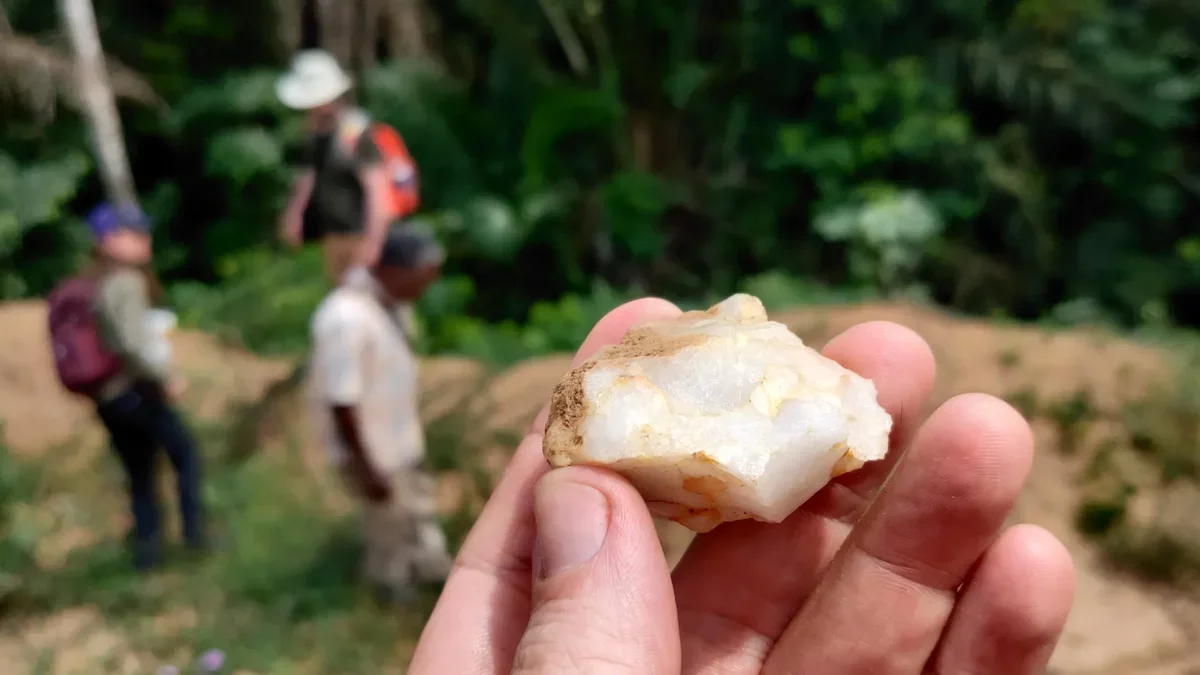
Meteorites are remnants of space rock that survive their journey through Earth's atmosphere and land on the planet's surface. Many are believed to be fragments of ancient planetesimals that have remained largely unchanged since the Solar System's formative days. The researchers particularly focused on carbonaceous chondrites, a type of meteorite abundant in carbon. Laboratory studies suggest these meteorites formed beyond Jupiter during the same time frame explored in the simulations.
Scientists categorize carbonaceous chondrites into six groups based on their age and composition. Some are delicate and composed mainly of fine-grained material, while others are more robust and contain visible inclusions within the finer material. The simulations revealed that these two components matched distinct types of matter thought to exist in the early Solar System.
Simulations Unveil Multiple Generations of Space Rocks
The team's models tracked both microscopic particle interactions and large-scale movements throughout the vast gas disk. Particles could fragment, coalesce, drift towards the Sun, or become trapped in specific regions. The simulations indicated that Jupiter acted as a more substantial barrier for larger and sturdier particles compared to smaller dust grains. Over time, the formation of new planetesimals gradually consumed available material, leading to the emergence of distinct generations of planetesimals.
As millions of years passed, the changing balance of materials resulted in the formation of different types of planetesimals. The researchers suspect that additional meteorite types beyond carbonaceous chondrites may have also originated in the same dust trap during earlier Solar System history. "There is strong evidence that dust traps were the preferred birthplace of planetesimals in our Solar System," concluded Drążkowska.