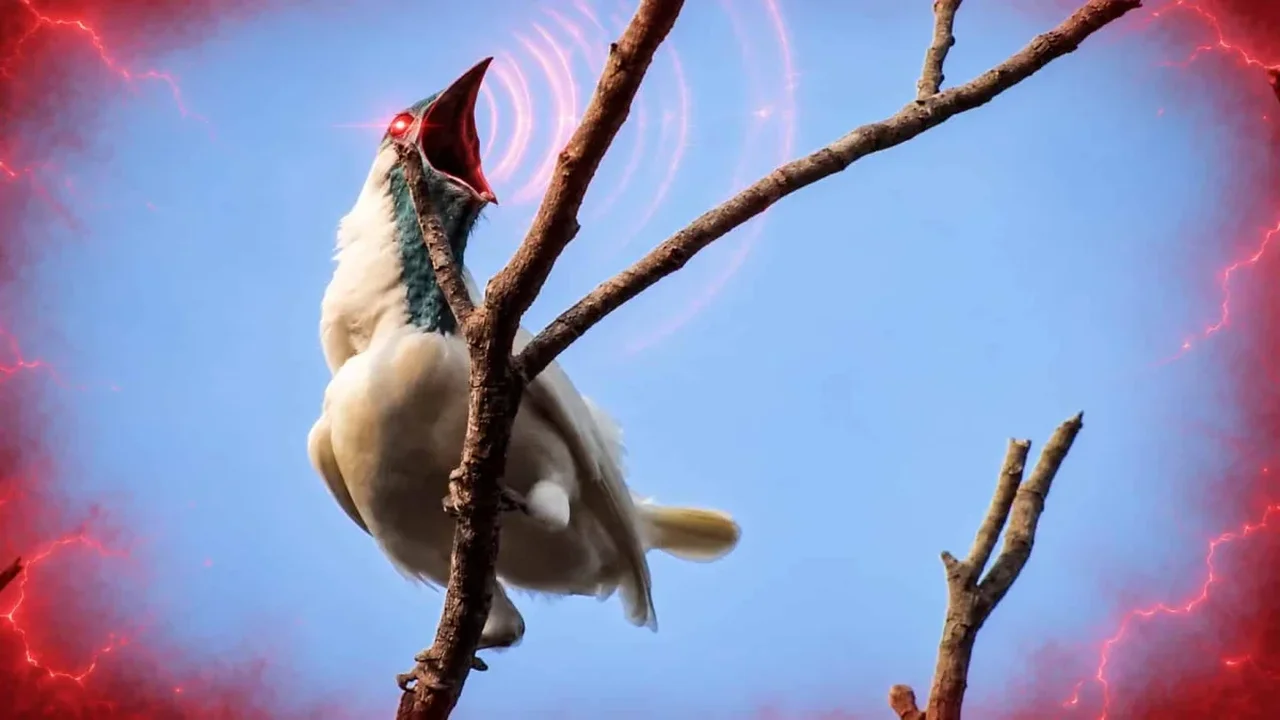
Some bird calls can reach sound levels comparable to industrial equipment. A new study examining 123 bird species found that Brazil's bare-throated bellbird and red-legged seriema are among the most powerful vocal performers measured in the wild.
The bare-throated bellbird recorded an average call level of 122.4 decibels, with a brief peak of 130.9 decibels at a one-metre standard distance. The red-legged seriema followed closely, reaching an average of 121.2 decibels and a peak of 126.5 decibels.
Measuring sound in the wild
Evolutionary biologists João C. T. Menezes and Jeff Podos used portable sound meters alongside laser rangefinders to accurately calculate both the distance to a calling bird and the intensity of its vocalisation. This approach helped standardise recordings that are often challenging to obtain in dense forests or open habitats.
The survey added amplitude data for 113 species that had previously lacked reliable measurements. Across the wider sample, the findings indicated that body size and beak opening are important physical factors behind a bird's maximum volume. Larger species may generate greater air pressure through stronger respiratory and vocal muscles, while wider beaks can project more acoustic energy into their surroundings.
An evolutionary question remains
The research did not identify one universal environmental reason for exceptionally loud calls. Forest habitat, flight ability and mating systems did not consistently predict which birds would produce the strongest sounds. Bellbirds inhabit forests and use calls in courtship displays, while seriemas typically live in open landscapes and form long-term pairs--yet both exceed 120 decibels.
Published in Evolution, the study highlights how much remains to be discovered across the world's roughly 11,000 bird species. As bioacoustic monitoring becomes more precise, researchers may uncover new extremes in animal communication and better understand the evolutionary design of natural sound.
These findings could help shape future tools for biodiversity monitoring, offering new ways to track ecosystems through the distinctive acoustic signatures of wildlife.