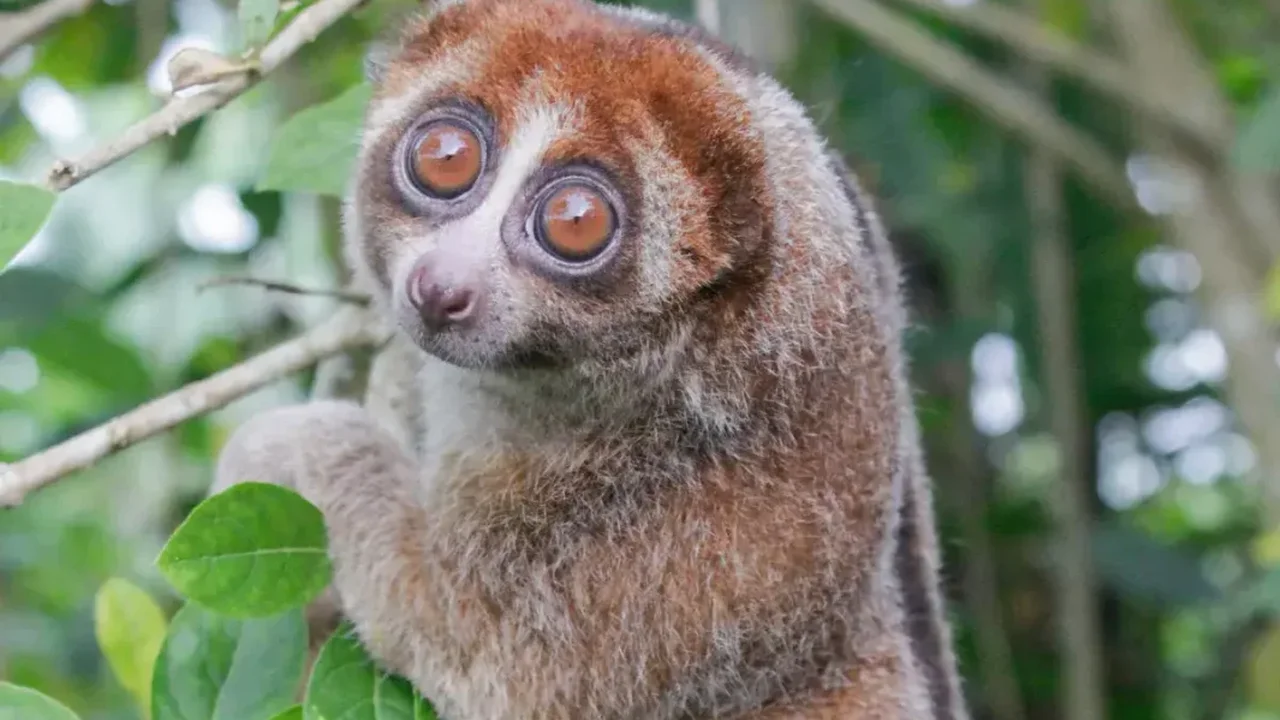
Long considered possibly extinct, the Bangka slow loris is still living on Indonesia's Bangka Island. A new study documents years of encounters that had been familiar to local wildlife rescuers but largely absent from scientific research.
Researchers reviewed records of more than 90 slow lorises rescued between 2015 and 2025. Of these, 86 were returned to the wild. Reports included animals found in homes and gardens, along roads and near power lines. One was spotted feeding on guavas.
Local records add to scientific knowledge
The nocturnal primate was first described in 1906 and recognized as a distinct species in 2013. Its last historical scientific account dated to 1937. In 2020, the International Union for Conservation of Nature listed it as critically endangered and possibly extinct.
Researchers accessed the rescue records through the Alobi Wildlife Rescue Center, a local conservation organization. The study, published in Spixiana, brings these observations into the scientific record, but they cannot establish how many lorises remain or where they live across the island. The researchers also note that the survival of released animals has not been tracked.
Questions for future research
Bangka slow lorises are small, tree-dwelling primates with a distinctive feature: like other slow lorises, they can produce venom by combining a glandular secretion with saliva. Much remains unknown about this species' behavior, diet, population and genetics.
The researchers recommend systematic population surveys, genetic analysis and monitoring after releases, alongside protection of remaining forest. By connecting local observations with scientific study, this work can help guide future research and conservation of the Bangka slow loris.