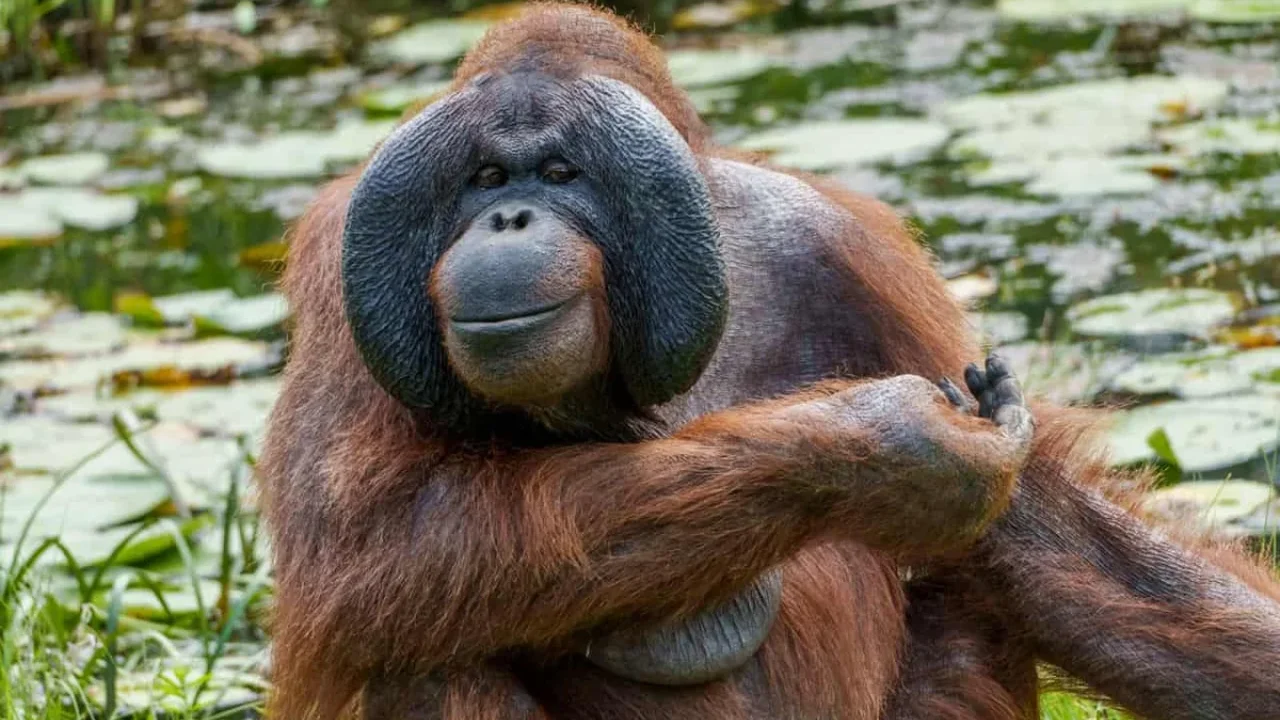
When two choices offer the same reward, what makes one more appealing? An experiment with six orangutans suggests that the sound of laughter may influence the answer.
Researchers led by Daan Laméris of Indiana University trained orangutans at zoos in Belgium and the United States to find food hidden beneath different materials. The animals then learned to associate two materials with equal treats: before searching one, they heard recordings of orangutans laughing and squeaking during play; before searching the other, they heard wind-like sounds.
Laughter tipped the balance
When given 30 chances to choose between the materials, all six animals favored the one associated with laughter. Across the group, it received about 67% of the choices, with four orangutans showing a statistically significant preference.
The recordings did not appear to help the animals learn faster. Instead, the results suggest that laughter may have influenced how they valued an experience they had already learned to associate with food.
The study, published in Biology Letters, offers a way to investigate positive experiences in animals through their later behavior. The researchers did not directly measure the orangutans' emotions, so the findings do not establish that the animals felt joy. The small group size also means the results will need further investigation.
Even so, the pattern adds to research into how social sounds and emotional cues shape memory and preference. Future studies could help clarify how positive experiences influence the choices and everyday lives of other animals.